

Doña Rosa’s Legacy: Exploring the Origins of Black Pottery in San Bartolo Coyotepec, Oaxaca
A warm welcome to the world of black pottery
If you have ever held a piece of gleaming black pottery from Oaxaca and wondered how such beauty is created without glaze or paint, you are about to discover one of the most remarkable stories in Mexican craft. In the village of San Bartolo Coyotepec, just 15 minutes south of Oaxaca City, a humble woman named Doña Rosa Real changed the course of Oaxacan pottery forever. Her discovery in the 1950s gave the world the distinctive polished black pottery that has become one of Oaxaca’s most treasured symbols. Today, her legacy lives on in family workshops where you can watch, touch, and take home a piece of living history.
I always tell visitors that a trip to San Bartolo Coyotepec feels like stepping into a family kitchen rather than a factory. The air carries the earthy scent of clay, and the gentle rhythm of polishing stones fills the courtyards. Whether you are a first-time traveler or a returning friend, this village offers an intimate, authentic experience that few places in Mexico can match.
The story of Doña Rosa and her accidental revolution
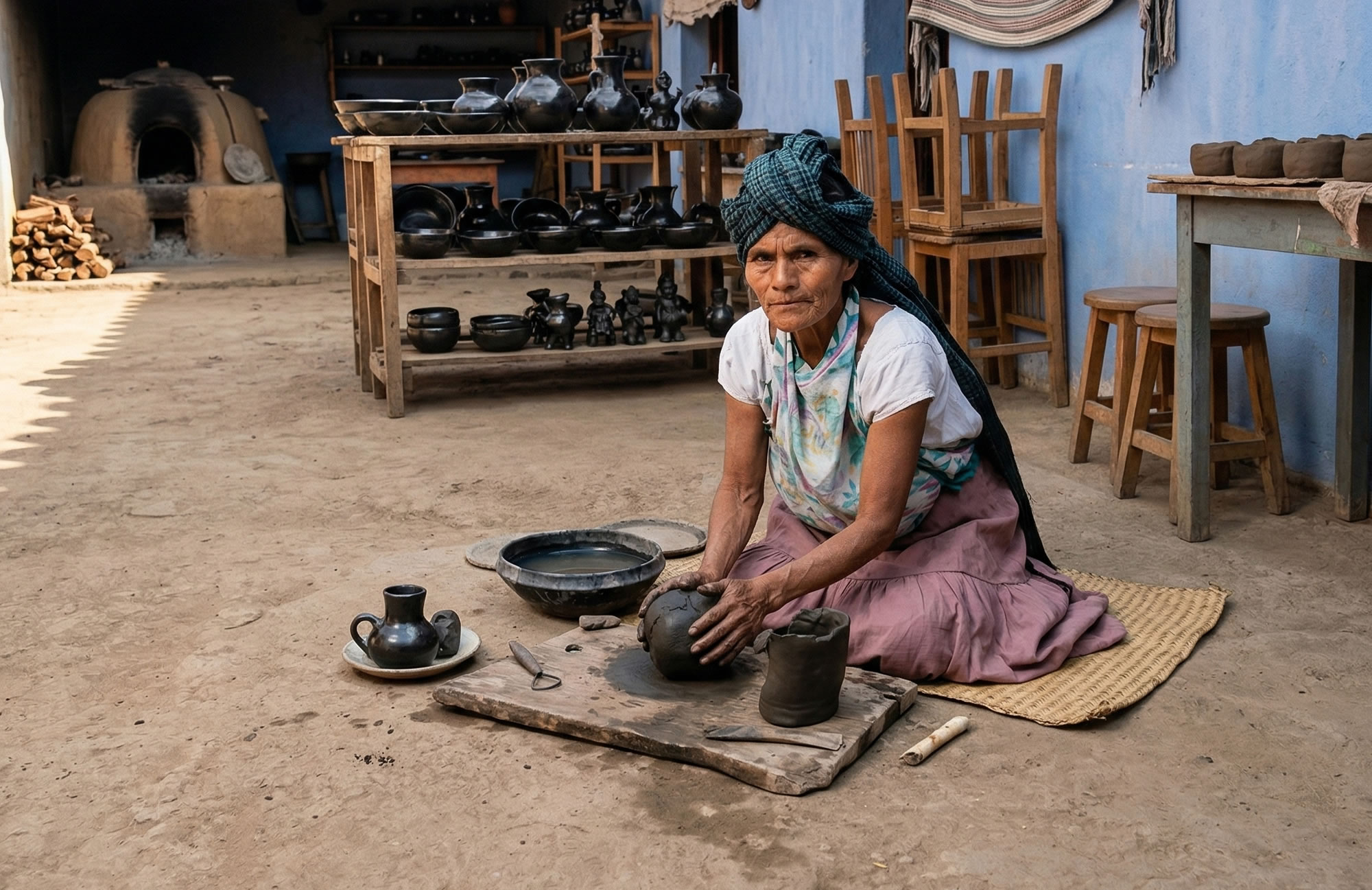
Doña Rosa Real was born in San Bartolo Coyotepec in the early 20th century into a family of traditional potters. For generations, the village had made utilitarian red and gray pottery using local clay. In the 1950s, while trying to repair a cracked pot, Doña Rosa rubbed it with a stone to smooth the surface. To her surprise, the piece turned a deep, shiny black after firing. She had accidentally discovered a reduction firing technique combined with stone polishing that created a mirror-like finish without any glaze.
Word spread quickly. Tourists and collectors began arriving, and Doña Rosa’s simple innovation became the foundation of a new industry. She taught her family and neighbors, and soon the entire village adopted the technique. Today, the black pottery of San Bartolo Coyotepec is recognized worldwide and protected as part of Oaxaca’s cultural heritage.
What makes this story so special is that it happened not in a laboratory but in a humble backyard, driven by a woman’s curiosity and skill. Doña Rosa passed away in 1980, but her spirit lives in every polished piece you see today.
How black pottery is made today – the traditional process
The process begins with local clay dug from the hills around Coyotepec. Artisans mix it by hand, shape it using the ancient coil or wheel method, and let it dry slowly in the shade. The real magic happens in the firing. Pots are placed in an open pit kiln covered with wood, sawdust, and sometimes manure to create a smoky, oxygen-poor environment. This reduction firing turns the clay black. While still hot, each piece is polished with a smooth stone or quartz tool, creating the signature high shine that reflects light like a mirror.
No glazes or paints are used – the color and shine come entirely from the clay, the firing, and the patient polishing. Every piece is unique, and you can often see the artisan’s fingerprints or the subtle variations that make each vessel special. The entire process is done by hand in family workshops, preserving techniques that have changed very little since Doña Rosa’s time.
When you visit, you will see multiple generations working together – grandparents shaping, parents firing, and children learning to polish. This living tradition is what makes Coyotepec so special.
Visiting San Bartolo Coyotepec today – what to expect
The village is small, friendly, and easy to explore on foot. Most workshops are open daily, and families are happy to show you the entire process from raw clay to finished piece. You can watch firing demonstrations, try polishing yourself, and purchase directly from the makers. Prices are fair and much lower than in city shops, and every peso supports local families.
The atmosphere is relaxed and genuine – no high-pressure sales, just proud artisans sharing their craft. Many workshops have small courtyards where you can sit and chat while watching the work. It is one of the most rewarding day trips from Oaxaca City, and I always recommend it to visitors who want to understand the soul of Oaxacan craftsmanship.
The best time to visit is in the morning when the light is soft and the kilns are often being prepared for the day’s firing. Bring cash, a reusable bag for your purchases, and plenty of curiosity.
How to get to San Bartolo Coyotepec
From Oaxaca City, the easiest way is by colectivo (shared van) from the corner of Armenta y López and Niños Héroes or near the Abastos market. Look for vans marked “Coyotepec” or “Tilcajete – Coyotepec.” The ride costs about 25–35 MXN and takes 20–30 minutes. They drop you right in the village center.
Taxis cost 200–300 MXN one way. Many hotels can arrange a private round-trip for 500–700 MXN including waiting time. Organized tours from the city often combine Coyotepec with other villages for 600–900 MXN per person.
Return colectivos run until late afternoon. If you want a relaxed pace, a private driver is the most comfortable choice and allows you to stay as long as you like.
Looking to the future of black pottery
The younger generation in San Bartolo Coyotepec is actively keeping the tradition alive while adapting to modern demands. Many families are experimenting with new shapes and sustainable practices, ensuring the craft continues for generations to come. Tourism helps support this continuity, but the heart of the tradition remains the families who work with their hands every day.
When you buy directly from the artisans, you become part of this living story. Your support helps preserve not just an art form, but an entire way of life that has defined this village for decades.
I always leave Coyotepec feeling hopeful – the future of black pottery is bright because the people who make it are passionate and proud.
Why you should visit San Bartolo Coyotepec
A visit here is more than shopping – it is a chance to meet the living heirs of Doña Rosa’s legacy. You will leave with a deeper appreciation for Oaxacan craftsmanship and the warm memory of conversations with the families who keep this tradition alive. Whether you take home a small bowl or a large sculpture, you will carry a piece of Oaxaca’s soul with you.
I truly believe that no trip to Oaxaca is complete without spending time in San Bartolo Coyotepec. The village welcomes you with open arms and the gentle rhythm of a craft that has survived for generations.
Come see for yourself – Doña Rosa’s legacy is waiting to be discovered.