


Ecotourism Guide to Oaxaca 2026: The 5 best Places To Be
The Oaxacan Spring and the rise of bio cultural ecotourism
In 2026, Oaxaca is widely seen as Mexico’s most compelling destination for regenerative and community-based travel. What makes this moment feel new is not a single resort opening or a trend on social media, but a long, deliberate shift toward territorial equity, indigenous sovereignty, and environmental stewardship often described as the Oaxacan Spring. For travelers, the experience is a rare alternative to mass-market beach corridors, combining deep cultural immersion with landscapes that still feel intact.
The defining feature of Oaxacan ecotourism is its bio-cultural matrix, the idea that biodiversity conservation cannot be separated from the protection of living cultures. Oaxaca has Mexico’s highest biodiversity and is also home to sixteen distinct indigenous linguistic and social groups, with communal governance systems known as usos y costumbres shaping land decisions. In practice, that means many of the places you visit are managed by communities through voluntarily conserved areas and local assemblies, not only by distant agencies.
Logistics have also changed. The Barranca Larga to Ventanilla superhighway has shortened the trip between Oaxaca de Juárez and the coast to roughly three hours, and expanded air connectivity via Puerto Escondido and Huatulco has brought in more eco-conscious international travelers. The best experiences still reward patience and respect, because many communities choose to cap visitation, guide access, and protect sacred or fragile zones.
1. Sierra Norte and the Pueblos Mancomunados
If you want to understand why Oaxaca leads Mexico in community-run ecotourism, start in the Sierra Norte with the Pueblos Mancomunados, a collective of eight Zapotec villages that chose sustainable forestry and tourism over industrial logging. At elevations between about 2,200 and 3,200 meters, the region holds pine-oak forests and cloud forest pockets where moist air and cold peaks support orchids, ferns, and thick moss.
From Oaxaca City, the villages are roughly 52 to 70 kilometers away, often about 1.5 to 2 hours by road depending on the route. In 2026, common transport options include shared colectivo taxis from Terminal de Segunda Clase and suburban vans from the Monumento a Juárez area, with private taxis and organized tour vans also available. The most local way to travel is to use community guides and stay in cabañas ecoturísticas, which are typically owned and operated by village assemblies so that benefits remain in the community.
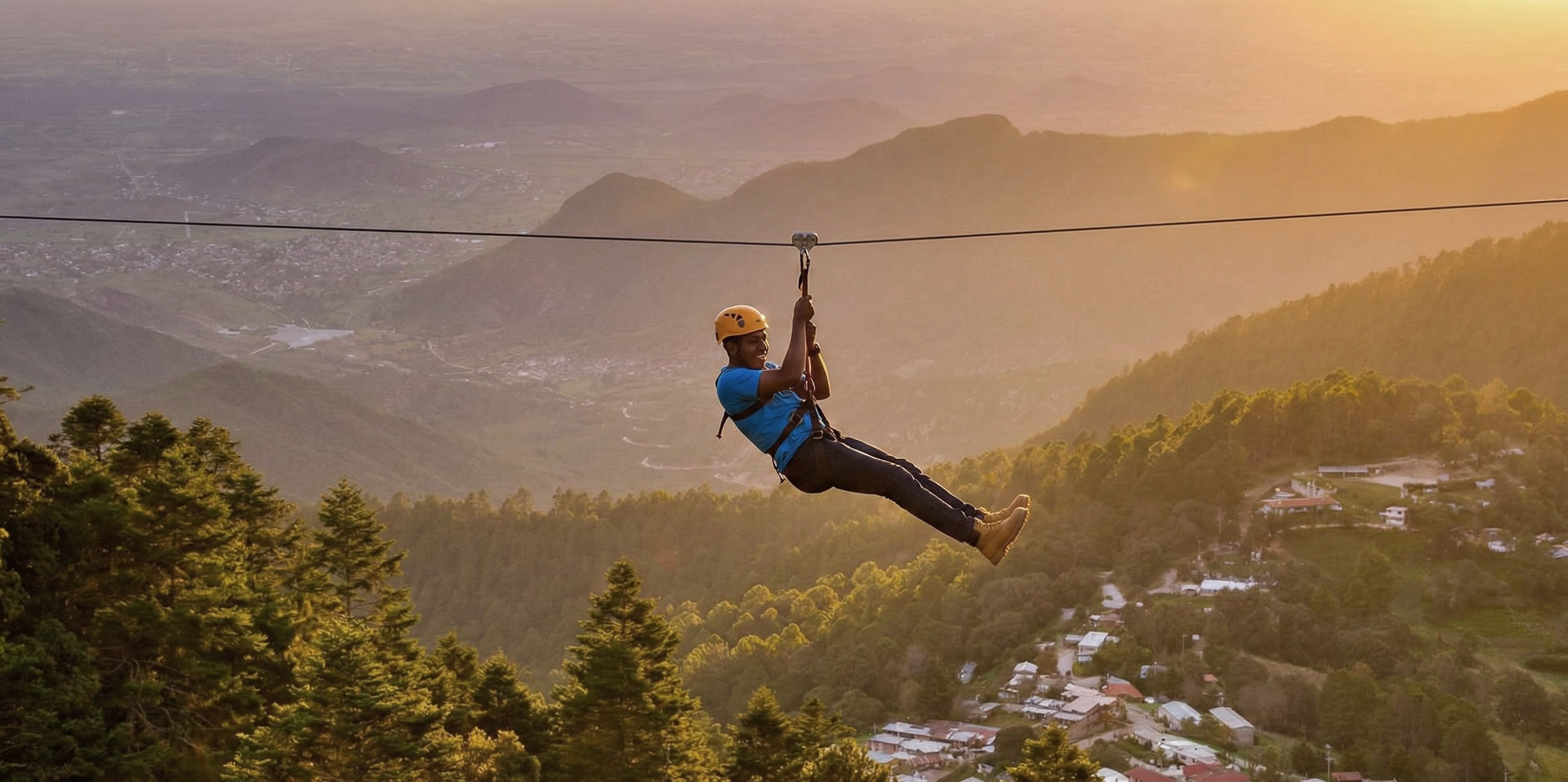
Activities here feel rooted in place. Hikers and cyclists can follow a connected network of more than 100 kilometers of trails, including sections of the Camino Real, an ancestral route linking communities across the range. In Benito Juárez, a suspension bridge and zip line system offers a canopy perspective that also appeals to birders looking for regional endemics. In Cuajimoloyas, local guides often focus on ethnobotany and fungi identification, linking forest knowledge to Zapotec food and medicine.
2. Costa Chica, Mazunte, and La Ventanilla
Oaxaca’s coast has always been magnetic, but 2026 is defined by improved access and a continued emphasis on small-scale, conservation-oriented travel. The Barranca Larga to Ventanilla superhighway has transformed a journey that once felt like an expedition into a manageable trip of about 2.5 to 3.5 hours from the capital to the Mazunte area, depending on connections. That said, the region’s identity is still shaped by community projects, wildlife protection, and a low-density rhythm.
La Ventanilla is a standout example of community governance in action. The mangrove ecosystem is navigated by hand-paddled canoes as a form of quiet, low-impact tourism designed to avoid motor noise and water contamination. Visitors typically see crocodiles, iguanas, and a variety of herons, with interpretation led by local guides who treat the lagoon as both livelihood and responsibility.
Nearby Mazunte is closely linked to marine turtle conservation, with travelers often joining supervised releases at sunset in partnership with local groups. Further west, Puerto Escondido’s coastline has been framed by the World Surfing Reserve designation for conservation-focused coastal management, helping protect beaches and habitats around the Zicatela break. The coastal experience in 2026 also includes design-led sustainability, with projects such as Casa Wabi and solar-powered Hotel Terrestre frequently cited as models of low-emissions hospitality.
3. Hierve el Agua and ancient hydrology in the Central Valleys
Hierve el Agua remains one of Oaxaca’s most iconic natural landmarks, known for petrified waterfall formations created by mineral springs over long periods of time. It is also an archaeological and hydrological site associated with ancient water management, which adds depth to a visit that might otherwise be framed only as scenery. The setting, on the edge of the Central Valleys with wide views toward the Sierra Norte, makes it a strong day trip, though many 2026 travelers aim for an overnight nearby to reduce crowd pressure during peak hours.
The site is about 70 kilometers east of Oaxaca City and commonly takes 1.5 to 2 hours to reach via the Tlacolula Valley. Public transport often involves a two-step route, first from Oaxaca to Mitla, then a pickup or shared transport onward. In 2026, options range from colectivos to private drivers and guided small-group tours. Entry and on-site management are tied to the local community of San Lorenzo Albarradas, a reminder that stewardship and access are closely linked.
Travelers come for the cliffside pools and the surreal stone cascades, but the most rewarding visits slow down on the surrounding trails. The semi-arid landscape supports birdlife adapted to thorn scrub and open slopes, and the viewpoints make it easy to understand why water engineering mattered historically in this highland environment. In 2026, visitor rotation and limits are part of the site’s sustainability approach, helping protect both the mineral formations and the spring-fed pools.
4. Santiago Apoala, the Mixtec canyon landscape
Santiago Apoala, in the Mixteca Alta, is often described as one of southern Mexico’s most dramatic canyon destinations. The village sits in a limestone gorge shaped by year-round springs, vertical greenery, and waterfalls, and it is also associated with Mixtec origin narratives preserved in codices. Because Apoala is small and relatively isolated, it remains quieter than many better-known sites, which is part of its ecological value and its appeal for travelers who prioritize silence.
From Oaxaca City, travel is typically around 115 to 125 kilometers and often takes 2.5 to 3 hours on winding roads, usually via Nochixtlán. There is no simple direct public link from the capital, so many travelers combine a bus to Nochixtlán with a colectivo taxi onward, or arrange a private driver. The extra planning is worth it if you want a destination where the landscape still sets the pace.
The hallmark experience is the hike to the main waterfall and pools, which can involve steep access down into the canyon. Local guides also lead hikes deeper into the gorge to observe cliff-adapted plants, canyon geology, and areas where pre-Hispanic rock art has been reported. Lodging and meals offered through local ecotourism services tend to emphasize a small-scale, community-led model that fits the village’s size and priorities.
5. Lagunas de Chacahua National Park and night ecology
Lagunas de Chacahua National Park is one of Oaxaca’s defining wetland landscapes, combining lagoon systems, mangrove forests, and long stretches of Pacific coastline. It is frequently framed as an off-grid destination where solar power and community-run lodging are common, and where visitors come for birdlife, mangrove navigation, and the feeling of being far from urban noise.
From Oaxaca City, the route often involves traveling to the coast and then continuing toward the Zapotalito area, the main dock for lagoon transport. In 2026, travelers commonly connect by bus to Puerto Escondido, then take a colectivo taxi toward Zapotalito, and finally a boat across the lagoon to Chacahua town. Total travel is often described as around four hours when connections align, including the boat transit.
Chacahua is especially known for night ecology. Bioluminescence tours, when conditions allow, interpret the glowing water as a living phenomenon rather than a spectacle, and community guides often explain how minimizing disturbance helps protect the lagoon. Daytime boat routes pass through mangrove tunnels where travelers can look for spoonbills, storks, and kingfishers, and a short hike to the lighthouse viewpoint offers a wide sunset panorama where lagoons meet the open Pacific.
Practical ethics and safety for 2026 travel
Oaxaca is widely regarded as one of Mexico’s safer states for travelers, including solo and female travelers, but ecotourism works best when it is careful. In remote mountain regions such as the Sierra Juárez and Mixteca, choose guides accredited by local communities or official tourism bodies so you do not accidentally cross communal boundaries or enter sacred areas without permission. If a community sets a cap or asks visitors to follow specific rules, treat that as part of the experience, not an obstacle.
Even with improved highways, night driving is still best avoided in rural mountain zones due to livestock, fog, and rockfall risk during rainy periods. Environmentally, follow Leave No Trace practices and respect local restrictions around water quality. In sensitive lagoons and mineral pools, avoid chemical sunscreens when communities ask for it, and prioritize shade, clothing, and mineral-based alternatives that reduce ecological impact.
Why these five places matter
The strongest Oaxacan travel stories in 2026 share one theme: sovereignty as conservation. Much of Oaxaca’s territory is held under communal or ejidal tenure, and many ecotourism projects function as proof that local governance can protect ecosystems while supporting dignified livelihoods. For visitors, that means the most meaningful trips are less about consuming a landscape and more about entering it respectfully under local rules.
Whether you hike ancestral trails in the Sierra Norte, paddle through La Ventanilla’s mangroves, soak in spring-fed pools above the Central Valleys, descend into Apoala’s canyon waters, or watch Chacahua glow at night, the same lesson appears. In Oaxaca, nature and culture are not separate attractions. They are a single living system, and the traveler’s role is to help keep it that way.


