


Where Did All the Zapotec People from Monte Albán Go?
Introduction to the Zapotec Legacy
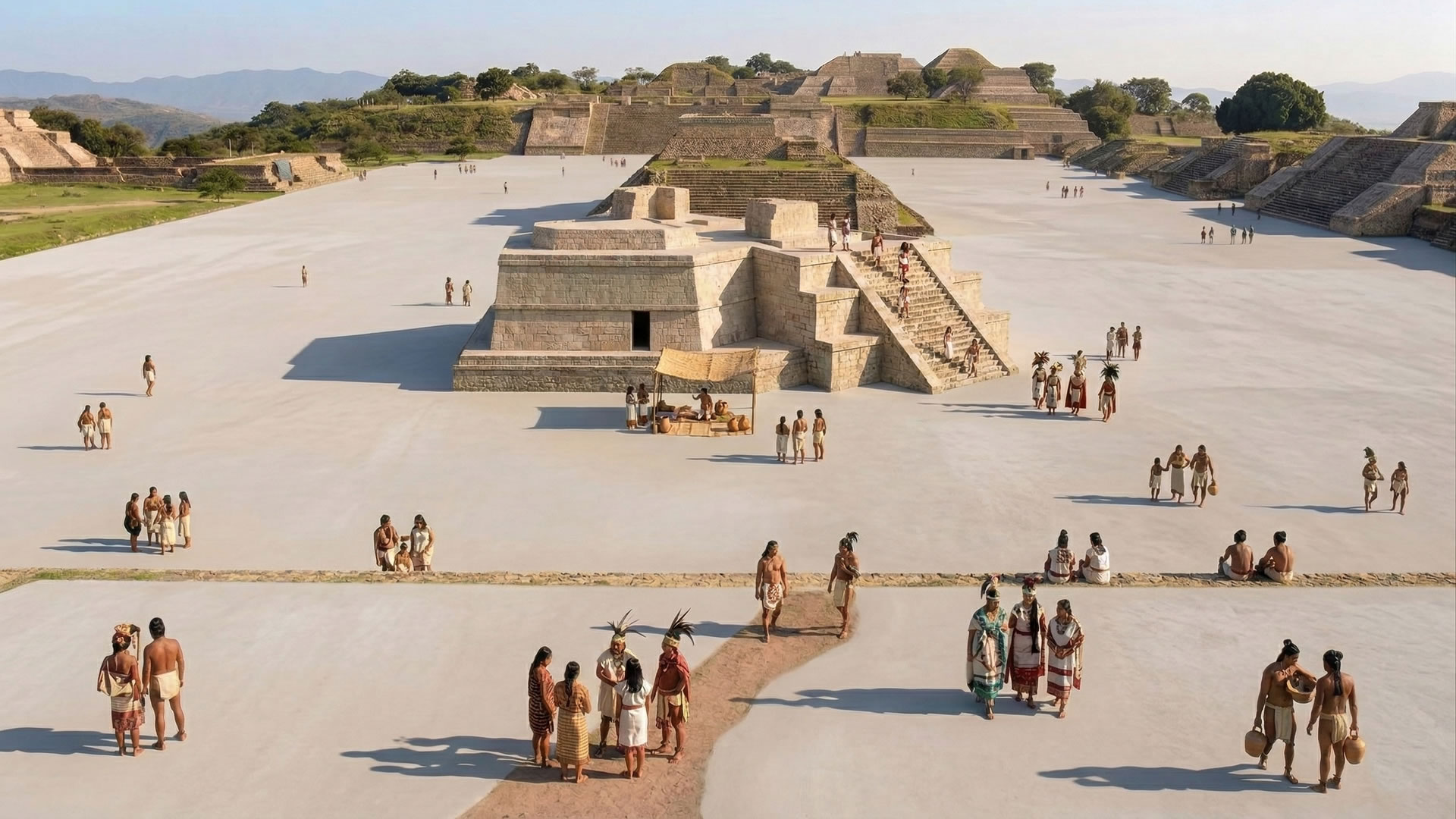
The Zapotec people did not disappear; their descendants, numbering between 400,000 and 650,000 today, primarily live in the state of Oaxaca, Mexico, across regions like the Valley of Oaxaca, Sierra Norte, Sierra Sur, and the Isthmus of Tehuantepec, with some diaspora communities in other parts of Mexico and the United States. Monte Albán, their ancient capital, dissolved gradually around 800-900 CE due to environmental degradation, resource depletion, climate changes, and social fragmentation, leading to a shift toward smaller, decentralized communities. Nestled in the vibrant landscapes of Oaxaca, the story of the Zapotec people unfolds like a rich tapestry woven through time. Often called the "cloud people" for their highland dwellings, the Zapotecs built one of Mesoamerica's earliest urban centers at Monte Albán. This ancient city, perched atop a leveled mountain, served as a hub of political, economic, and cultural life for centuries.
The Zapotecs' influence extended far beyond their monumental architecture. They developed sophisticated writing systems, calendars, and agricultural techniques that sustained a growing population. Yet, like many ancient societies, they faced challenges that led to significant changes. In this article, we explore the dissolution of Monte Albán, the factors contributing to its decline, and the enduring presence of Zapotec descendants in modern Oaxaca and beyond.
The Dissolution of Monte Albán
Monte Albán reached its zenith between 250 and 700 CE, home to around 25,000 inhabitants and dominating the Valley of Oaxaca. This period marked the height of Zapotec power, with impressive structures like the Grand Plaza, ball courts, and observatories showcasing their engineering prowess. However, by the 8th century, signs of decline became evident. Buildings fell into disrepair, and the population dwindled from its peak to just a few thousand by 700 CE.
The abandonment was gradual, culminating around 800 to 900 CE. The once-bustling capital was largely deserted, with power shifting to smaller centers like Mitla. This transition reflected a broader fragmentation in Zapotec society, where centralized authority gave way to more localized governance. Later, Mixtec peoples occupied parts of the site, adding layers to its complex history.
Walking through Monte Albán today, one can sense the echoes of this shift. The site's UNESCO status preserves these remnants, inviting visitors to reflect on the impermanence of even the mightiest cities.
Reasons Behind the Decline
Scholars point to a combination of environmental and social factors for Monte Albán's decline. Resource depletion played a key role; intensive agriculture and construction likely exhausted local wood supplies and eroded fertile soils. By 200 BCE, flourishing farmlands within a ten-mile radius had collapsed, forcing people to cluster in larger communities for survival.
Climate change may have exacerbated these issues, with droughts contributing to demographic pressures similar to those affecting distant Maya cities. Internal strife and competition from neighboring polities, such as Lambityeco and Jalieza, further weakened the central authority. Epidemics, though more devastating post-contact, might have played a pre-Columbian role in population reduction.
These challenges highlight the delicate balance ancient societies maintained with their environment. In Oaxaca's rugged terrain, such factors could tip the scales, leading to the dispersal and reorganization of communities.
Geophysical and Demographic Breakdown of Zapotec Descendants
Far from vanishing, the Zapotec people adapted and persevered. Today, estimates place their population between 400,000 and 650,000, primarily in Oaxaca's central and mountainous regions. This resilience is evident in their continued presence across diverse geophysical zones: the fertile Valley of Oaxaca, the northern Sierra Madre, the southern Sierra Sur, and the coastal Isthmus of Tehuantepec.
Demographically, many Zapotecs are bilingual in Spanish and their native tongue, with some communities remaining monolingual in Zapotec. Urban migration has spread descendants to cities like Oaxaca City and even abroad, particularly to the United States, where they maintain cultural ties through traditions and remittances.
In villages like Teotitlán del Valle, known for weaving, or the Pueblos Mancomunados in the Sierra Norte, Zapotec life thrives amid cloud forests and valleys. These areas offer glimpses into sustainable practices rooted in ancestral knowledge.
Current Locations of Zapotec Communities
The heart of Zapotec culture remains in Oaxaca, spanning 67 municipalities. Valley Zapotecs inhabit the central plains, ideal for agriculture. Sierra Norte communities, or serranos, dwell in the northern mountains, preserving traditions in places like the Pueblos Mancomunados. Southern Zapotecs reside in the Sierra Sur's rugged highlands, while istmeños thrive in the Isthmus, blending coastal influences.
Beyond Oaxaca, smaller groups live in neighboring states like Veracruz and Puebla. Emigration has created vibrant diasporas in Mexico City and the U.S., where festivals and language classes keep the heritage alive.
Visiting these locales, travelers often encounter warm hospitality, from temazcal ceremonies in the mountains to colorful calendas in the valleys.
The Zapotec Language and Its Dialects
The Zapotec language family, part of the Otomanguean group, encompasses over 50 varieties, many endangered but vital to cultural identity. These tonal languages, where pitch alters meaning, divide into four main branches: Northern, Valley, Southern, and Isthmus Zapotec.
Northern dialects echo in the Sierra Norte's misty peaks, while Valley variants flourish in the central heartlands. Southern forms resonate in the Sierra Sur, and Isthmus Zapotec, like Diidxazá in Juchitán, carries poetic traditions. Features include fortis-lenis consonants and laryngealized vowels, adding unique phonetic depth.
Efforts to revitalize these languages include dictionaries, like the Tlacolula Valley Zapotec one, and digital projects preserving colonial texts. Hearing Zapotec spoken in markets or ceremonies connects us to millennia of oral history.
Reflections on Continuity and Change
The Zapotec story is one of adaptation amid transformation. From Monte Albán's heights to today's vibrant communities, their legacy endures in Oaxaca's landscapes and people. As descendants navigate modernity, they honor ancient roots through art, language, and communal bonds.
Exploring this heritage reminds us of the strength found in cultural continuity. Whether hiking Sierra trails or admiring woven textiles, the Zapotec spirit invites all to appreciate Oaxaca's timeless allure.


