
'/%3E%3Cpath%20fill='%2330c2dc'%20d='M493%20379c-14-6%2010-16%2014-16-8-1-21%203-27%203l-57-3c-7-1-12-10-10-10-3%203-37-9-27%200l9%2014c15-3%2030%208%2013%2014%203%200%2057-4%2085-2'/%3E%3Cpath%20fill='%23f9aa51'%20d='M475%20366v13q-1%207-7%207h-35q-6-1-7-7v-13q0-6%207-7h35q7%201%207%207'/%3E%3Cpath%20fill='%230c8489'%20d='M388%20335c-11%205-28-12-25-24%203-13%2028-2%2029%2014%207-2%2020%202%2025%207%209-11%2038-3%2041%2010%2011-13%2028-9%2034-3%2013-10%2033-4%2030%207-3%2012-29%2015-37%206-1%201-20%200-22%2016h-11c-3-4-2-14-1-15-11%204-29-3-34-10-7%204-25-1-29-8'/%3E%3Cpath%20fill='%23fcca3d'%20d='m419%20304-3%203c-7-4-11%208-19-2-2-3-3-10%205-16%205-3%2018-5%2019%200%203%206%207%206%204%209l4%203v9zm56%2031c-15%204-16%209-15%2012q-7-6-1-10c-9-8-10%206-8-6%201-8%2024%205%2018-15h9q-1%2015%2017%2019c0%2024%202-3-6%205-2%200-5-6-14-5'/%3E%3Cpath%20fill='%238f4620'%20d='M418%20268c-4-24%2020-46%202-44-16%201-18-2-18-2-6-7%2010-11%209-20q2%2011%205-4c2%206%204%208%205-3%205%207%2017%205%2025%2010q-3-6-10-11c-12-11%2012-9%2012-9%2033-11%2044%2012%2061%2012-17%203%2013-2%2038%2058-18-11%2012-1-7%2067%200%200-45-57-36-39-10-5-20-18-20-18-11%203-2%204-1%2020%200%200%2043%2030%2045%2036%201%206-10%204-25%207-16%202-23-20-22-10s-16%205-16%205-19-29-19-9c-39-3-20-15-20-15s10%202%208-2c-2-3-12-4-16-29m-7-66'/%3E%3Cpath%20fill='%23f9c83a'%20d='M407%20220c10%203%2015-3%2016%204%204%204-22%209-19%2014-7%203-18-10-5-16%201-5%206-3%206-3l6-8q3%207-4%209'/%3E%3Cpath%20fill='%23a8ac71'%20d='M403%20309c-15%201-19%205-23-16-18-16-8-25-7-28%201-8-12-11-15-10-1-8%2022-1%2021%209-1%209-7%2011%206%2024%205%204%203%2014%2011%2011-1%204%203%2010%207%2010m6-18c10-8-24%202-26-24-1-15%2027-22%2023-34l-5-3q1-4%207-3c19%2015-11%2027-14%2038-4%2024%2031-5%2025%2029l-3%205q-7-4-7-8m-11-54c-25%206-23-35-7-35%201%2020-15%2015%205%2015-8%200-13%2011-3%2012q1%206%205%208'/%3E%3C/svg%3E)


Carving Stories in Radishes: La Noche de los Rábanos Returns December 23, 2025

A tradition sprouted from a bumper crop
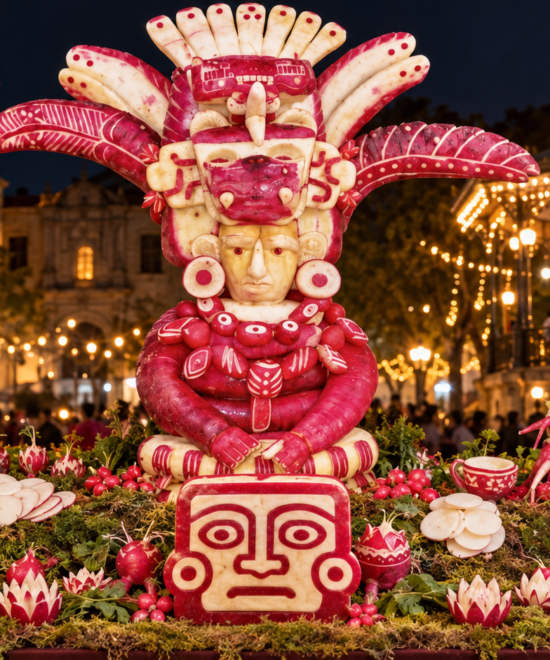
Noche de los Rábanos (Night of the Radishes) might sound whimsical, yet its origins are deeply practical. In the late 1800s, Oaxaca’s Christmas Eve market was bustling with vendors selling fish, herbs and vegetables. One year, local farmers discovered a surplus of large, odd‑shaped radishes. To attract customers, they carved the radishes into figurines—saints, animals and humorous scenes. The carved vegetables drew crowds, and in 1897 the city’s mayor formalised a competition with cash prizes. Thus, a quirky marketing trick became an annual event celebrating Oaxacan ingenuity and culture.
Fast forward to 2025, and the radishes are still central. Local authorities now plant special crops for the event—oversized Raphanus sativus that can grow over 50 cm long. Each December 23, artists receive fresh radishes, often weighing several kilos, to carve on-site. The tradition has endured through droughts, wars and pandemics because it embodies community resilience: even perishable vegetables can be transformed into art that tells a story.
Competition categories: radish, husk and flower
What makes Noche de los Rábanos unique is its variety of categories. The main competition focuses on radish carving and is split into a traditional category—featuring nativity scenes, Zapotec motifs and depictions of village life—and an open‑theme category where anything goes. Sculptors use the natural curves of the radishes to render dragons, mermaids and modern characters. In addition to radish carving, there are two sister contests: totomoxtle, where artisans create scenes using corn husks, and Flor Immortal, using dried wildflowers. Each category awards cash prizes to the top three entries, encouraging creativity across generations.
Participants often learn their craft from family members; many Oaxacan families have competed for decades. Children carve alongside grandparents, passing down stories through vegetal sculptures. When you visit, look for recurring motifs: carved agave fields, scenes of mole preparation, and dancers from the Guelaguetza. These miniature tableaux celebrate everything that makes Oaxaca vibrant.
What to expect on December 23, 2025
The 2025 edition of Noche de los Rábanos will take place on Tuesday, December 23 in Oaxaca’s main square (Zócalo). The program follows a consistent rhythm each year. Artists begin carving in the morning; by noon most sculptures are complete and on display. The official festival opens at 3 p.m., but the magic builds towards evening when the radishes are illuminated and crowds gather. Expect long lines; locals recommend arriving by 4:30 p.m. and being prepared to wait several hours. Around 9 p.m., judges announce winners for each category.
In recent years the city has added a pre‑festival parade, featuring bands and dancers escorting artisans to the plaza. Food stalls line adjacent streets selling tamales, atole and buñuelos. The event lasts only one night—radish sculptures wilt quickly—so locals treat it like a fleeting gift. If you’re planning to attend, book accommodation early; December is peak season and hotels fill up weeks in advance. Comfortable shoes, water and patience are essential, and don’t forget your camera: the illuminated radishes create surreal photo opportunities.
Carvings that mirror Oaxaca’s soul
Beyond competition, Noche de los Rábanos is a mirror of Oaxaca’s identity. Many sculptures depict scenes from daily life—women grinding cacao, farmers harvesting agave, children flying kites. Others recreate historic landmarks like Santo Domingo church or Monte Albán’s ballcourt. Mythical creatures such as Quetzalcóatl appear, carved with swirling motifs reminiscent of Mixtec codices. Even radishes that crack or split are embraced; artisans incorporate imperfections into designs, turning flaws into features.
The other categories add layers of meaning. Corn husk sculptures, known as totomoxtle, transform humble husks into elaborate costumes and floral arrangements. In the Flor Immortal category, dried flowers are arranged into miniature villages and biblical scenes. Each medium reflects Oaxaca’s agricultural heritage—corn, flowers and radishes become canvases, connecting food production to art and ritual.
Why a radish festival matters in 2025
At first glance, carving radishes might seem trivial. Yet the festival carries deep significance. It preserves agricultural varieties that are otherwise disappearing; the radishes grown for Noche de los Rábanos are a local cultivar rarely eaten but cultivated specifically for the event. The competition also supports artisans financially through prize money and sales of small crafts. For visitors, the festival offers an alternative lens on Oaxaca’s holiday season—one that celebrates creativity and community rather than consumerism.
More broadly, Noche de los Rábanos illustrates how traditions adapt over time. What began as market promotion is now a cornerstone of Oaxaca’s cultural calendar. In 2025, expect innovations such as an expanded youth category and digital storytelling booths where participants record the stories behind their sculptures. Whether you’re a first‑time visitor or a lifelong resident, standing among thousands of glowing radish creations while a brass band plays in the background is a reminder that cultures thrive when they nurture both roots and imagination.