
'/%3E%3Cpath%20fill='%2330c2dc'%20d='M493%20379c-14-6%2010-16%2014-16-8-1-21%203-27%203l-57-3c-7-1-12-10-10-10-3%203-37-9-27%200l9%2014c15-3%2030%208%2013%2014%203%200%2057-4%2085-2'/%3E%3Cpath%20fill='%23f9aa51'%20d='M475%20366v13q-1%207-7%207h-35q-6-1-7-7v-13q0-6%207-7h35q7%201%207%207'/%3E%3Cpath%20fill='%230c8489'%20d='M388%20335c-11%205-28-12-25-24%203-13%2028-2%2029%2014%207-2%2020%202%2025%207%209-11%2038-3%2041%2010%2011-13%2028-9%2034-3%2013-10%2033-4%2030%207-3%2012-29%2015-37%206-1%201-20%200-22%2016h-11c-3-4-2-14-1-15-11%204-29-3-34-10-7%204-25-1-29-8'/%3E%3Cpath%20fill='%23fcca3d'%20d='m419%20304-3%203c-7-4-11%208-19-2-2-3-3-10%205-16%205-3%2018-5%2019%200%203%206%207%206%204%209l4%203v9zm56%2031c-15%204-16%209-15%2012q-7-6-1-10c-9-8-10%206-8-6%201-8%2024%205%2018-15h9q-1%2015%2017%2019c0%2024%202-3-6%205-2%200-5-6-14-5'/%3E%3Cpath%20fill='%238f4620'%20d='M418%20268c-4-24%2020-46%202-44-16%201-18-2-18-2-6-7%2010-11%209-20q2%2011%205-4c2%206%204%208%205-3%205%207%2017%205%2025%2010q-3-6-10-11c-12-11%2012-9%2012-9%2033-11%2044%2012%2061%2012-17%203%2013-2%2038%2058-18-11%2012-1-7%2067%200%200-45-57-36-39-10-5-20-18-20-18-11%203-2%204-1%2020%200%200%2043%2030%2045%2036%201%206-10%204-25%207-16%202-23-20-22-10s-16%205-16%205-19-29-19-9c-39-3-20-15-20-15s10%202%208-2c-2-3-12-4-16-29m-7-66'/%3E%3Cpath%20fill='%23f9c83a'%20d='M407%20220c10%203%2015-3%2016%204%204%204-22%209-19%2014-7%203-18-10-5-16%201-5%206-3%206-3l6-8q3%207-4%209'/%3E%3Cpath%20fill='%23a8ac71'%20d='M403%20309c-15%201-19%205-23-16-18-16-8-25-7-28%201-8-12-11-15-10-1-8%2022-1%2021%209-1%209-7%2011%206%2024%205%204%203%2014%2011%2011-1%204%203%2010%207%2010m6-18c10-8-24%202-26-24-1-15%2027-22%2023-34l-5-3q1-4%207-3c19%2015-11%2027-14%2038-4%2024%2031-5%2025%2029l-3%205q-7-4-7-8m-11-54c-25%206-23-35-7-35%201%2020-15%2015%205%2015-8%200-13%2011-3%2012q1%206%205%208'/%3E%3C/svg%3E)


Christmas in Oaxaca: Las Posadas – Nine Nights of Processions, Songs, and Piñatas
Introduction to Las Posadas
As the holiday season approaches in Oaxaca, the air fills with anticipation for one of the most cherished traditions: Las Posadas. This nine-night event, held from December 16 to 24, reenacts the journey of Mary and Joseph seeking shelter in Bethlehem before the birth of Jesus. In Oaxaca, Las Posadas brings communities together in a heartfelt display of faith, music, and shared meals, reflecting the region’s deep cultural roots. Families and neighbors participate eagerly, creating a sense of unity that warms the cool December evenings.
The name “Las Posadas” comes from the Spanish word for “inn” or “lodging,” symbolizing the search for a place to stay. Celebrated across Mexico and Latin America, it holds a special place in Oaxacan hearts, where local customs add unique flavors to the festivities. Whether in bustling Oaxaca City or quieter villages, the event fosters bonds among participants, making it a highlight of the Christmas season.
Visitors to Oaxaca during this time can witness or even join these gatherings, experiencing the warmth of Oaxacan hospitality firsthand. The celebrations not only honor religious history but also preserve community traditions passed down through generations.
Historical Origins of the Tradition
Las Posadas traces its roots back to the 16th century in Mexico, introduced by Spanish missionaries as a way to teach indigenous peoples about the Nativity story. In 1586, Friar Diego de Soria, an Augustinian friar near Mexico City, received papal approval to hold special Christmas masses from December 16 to 24. These “misas de aguinaldo” evolved from church settings to community events in homes and estates.
The timing aligned with pre-existing Aztec winter solstice celebrations honoring Huitzilopochtli, allowing a seamless blend of indigenous and Catholic elements. This fusion helped the tradition take hold, spreading across Mexico. In Oaxaca, with its rich Zapotec and Mixtec heritage, Las Posadas incorporates local indigenous influences, such as community processions that echo ancient rituals.
Over centuries, the practice has adapted, but its core remains a novena—a nine-day devotional period representing Mary’s pregnancy. Today, it serves as both a religious observance and a cultural cornerstone in Oaxacan life.
How Las Posadas Is Celebrated in Oaxaca
In Oaxacan neighborhoods, Las Posadas unfolds with a different family or street hosting each night. One household provides the venue, while residents contribute food, drinks, or piñatas, emphasizing collective effort. The first night often begins with a mass at a local church or chapel, setting a reflective tone.
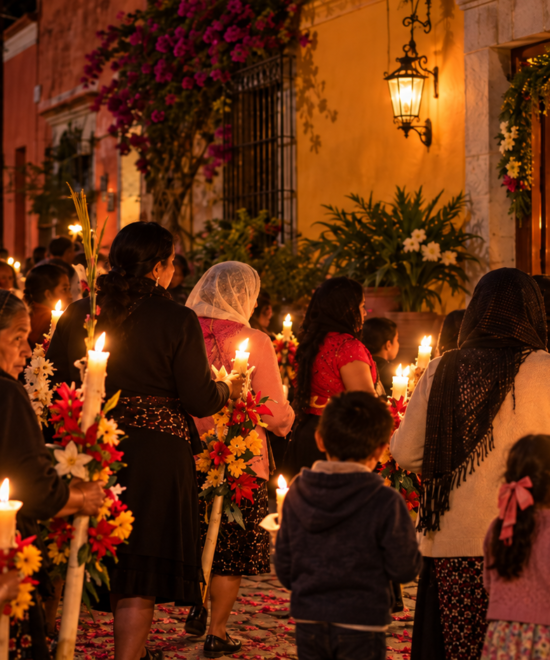
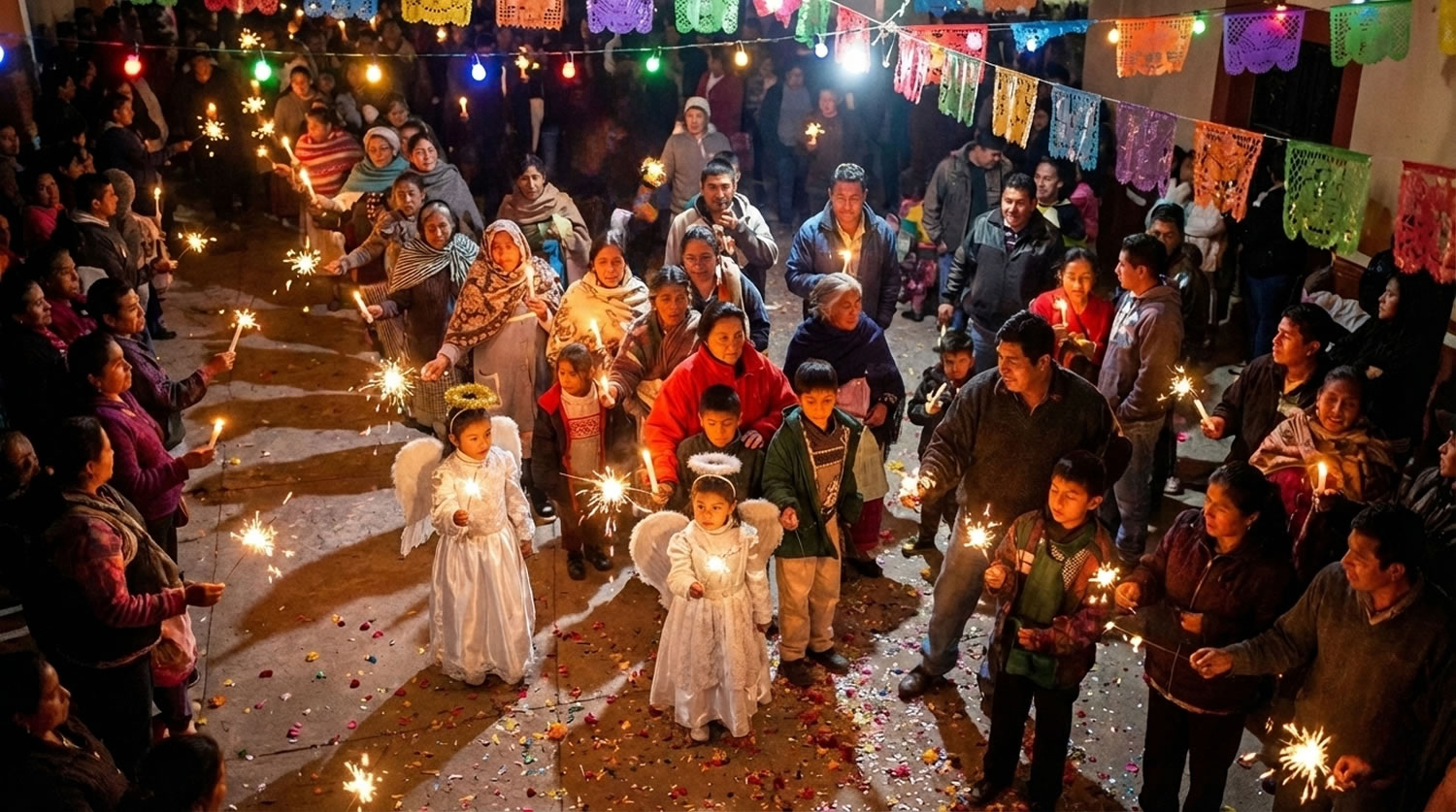
Participants, including children dressed as Mary and Joseph, form a procession carrying candles, lanterns, or figures of the Holy Family. They move through the streets, singing hymns and villancicos (Christmas carols), creating a festive atmosphere. This communal march highlights the strong neighborhood ties in Oaxaca.
On Christmas Eve, the final Posada culminates in midnight mass, known as Misa de Gallo, followed by family gatherings. The images of Mary and Joseph, carried throughout the novena, return to the church, marking the end of the journey.
The Procession and Traditional Songs
The heart of each Posada is the procession, where pilgrims knock on doors requesting shelter through song. The group outside sings as Joseph, pleading for lodging for his weary wife, while those inside respond as the innkeeper, initially denying entry. Songs like “Canto Para Pedir Posada” alternate verses, building drama until the door opens in welcome.
Other carols, such as “Los Peces en el Río,” add joy to the march. In Oaxaca, these processions often start from churches like those in Jalatlaco, with participants holding lit lanterns and lyric sheets. The singing unites voices young and old, echoing through cobblestone streets.
Once inside, a brief prayer or Bible reading follows, grounding the celebration in faith before the merriment begins.
Feasting, Piñatas, and Festive Foods
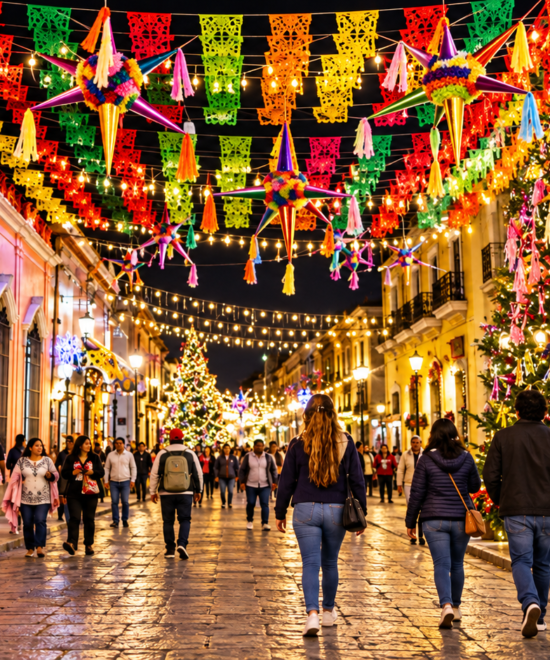
After entry is granted, the focus shifts to celebration. Children eagerly break star-shaped piñatas filled with candies, fruits, and small toys, symbolizing the triumph over temptation. The excitement of swinging at the piñata brings laughter and delight to all.
Traditional foods abound, including ponche navideño—a warm fruit punch with tejocotes, guavas, and cinnamon. Tamales oaxaqueños, wrapped in banana leaves and filled with mole, pair with atole, a cornmeal drink. Buñuelos, fried dough drizzled with syrup, and media tortas (sandwiches with beans and cheese) round out the offerings.
These shared meals strengthen community bonds, with everyone contributing to the feast. In Oaxaca, the flavors reflect local ingredients, adding a regional touch to the national tradition.
Oaxacan Twists and Indigenous Blends
Oaxaca infuses Las Posadas with unique elements drawn from its indigenous heritage. Processions may incorporate local music or dances, blending Catholic rites with Zapotec customs. The use of fireworks, like toritos and castillos, lights up the nights, a nod to pre-Hispanic celebrations.
Related festivals, such as those honoring Virgen de la Soledad on December 18, feature parades with Chinas Oaxaqueñas dancers in colorful skirts, carrying baskets. This integration of indigenous artistry and colonial traditions makes Oaxacan Posadas distinct.
The emphasis on community in Oaxaca’s valleys and villages ensures the event remains a living cultural practice, adapting while honoring its roots.
Tips for Visitors Experiencing Las Posadas
For travelers, joining a Posada in neighborhoods like Jalatlaco offers an authentic experience. Check church schedules on social media for start times, usually around 6:30 pm. Dress warmly for evening processions and be respectful of religious elements.
Stay in central areas for easy access to events. While some Posadas are private, public ones welcome observers. Pair your visit with other December festivities, like Noche de Rábanos, for a fuller holiday immersion.
Remember, these celebrations emphasize sharing and joy, so approach with an open heart to fully appreciate Oaxacan culture.