Beginning the visit at the Tomb 7 exhibit
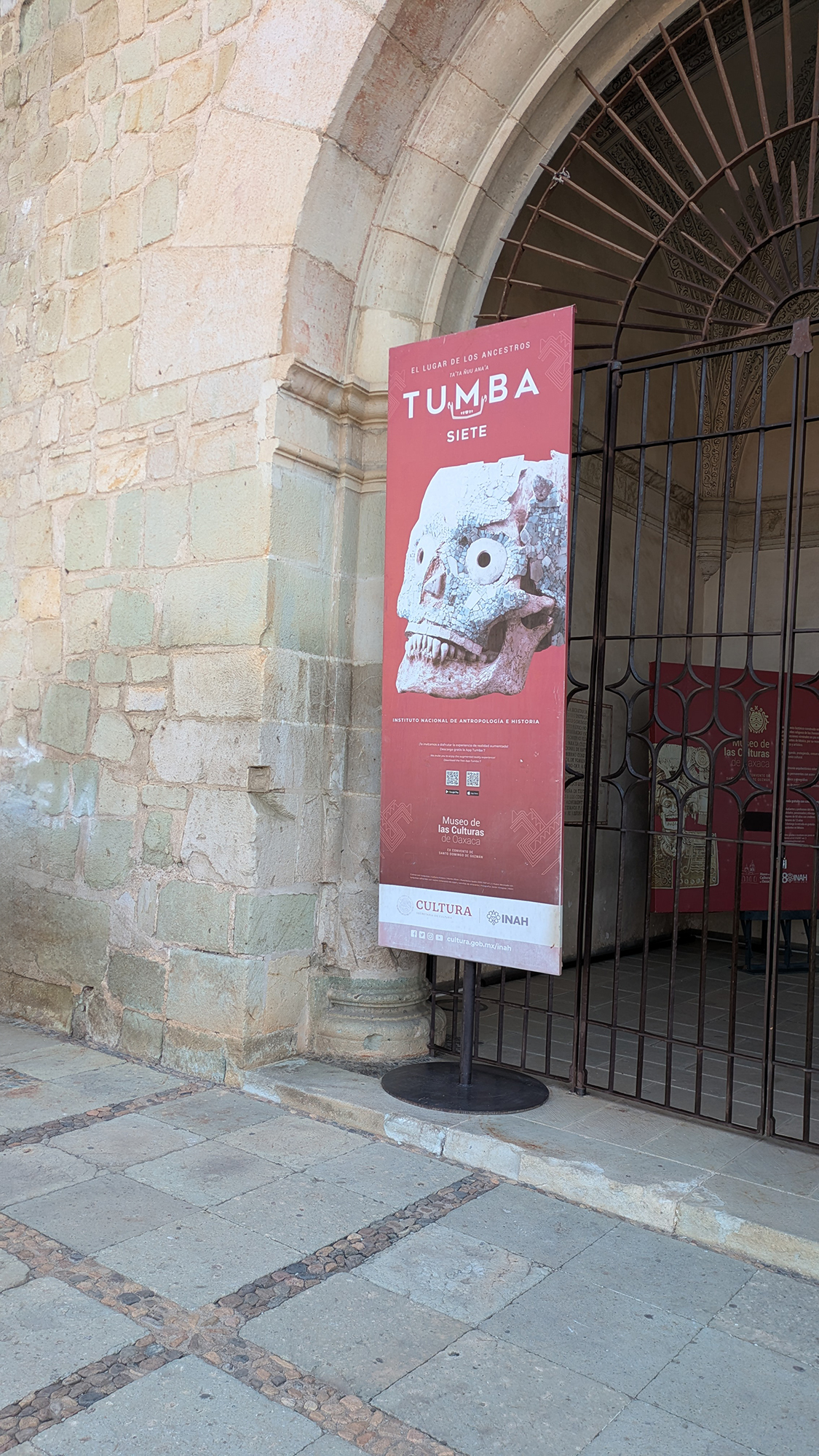
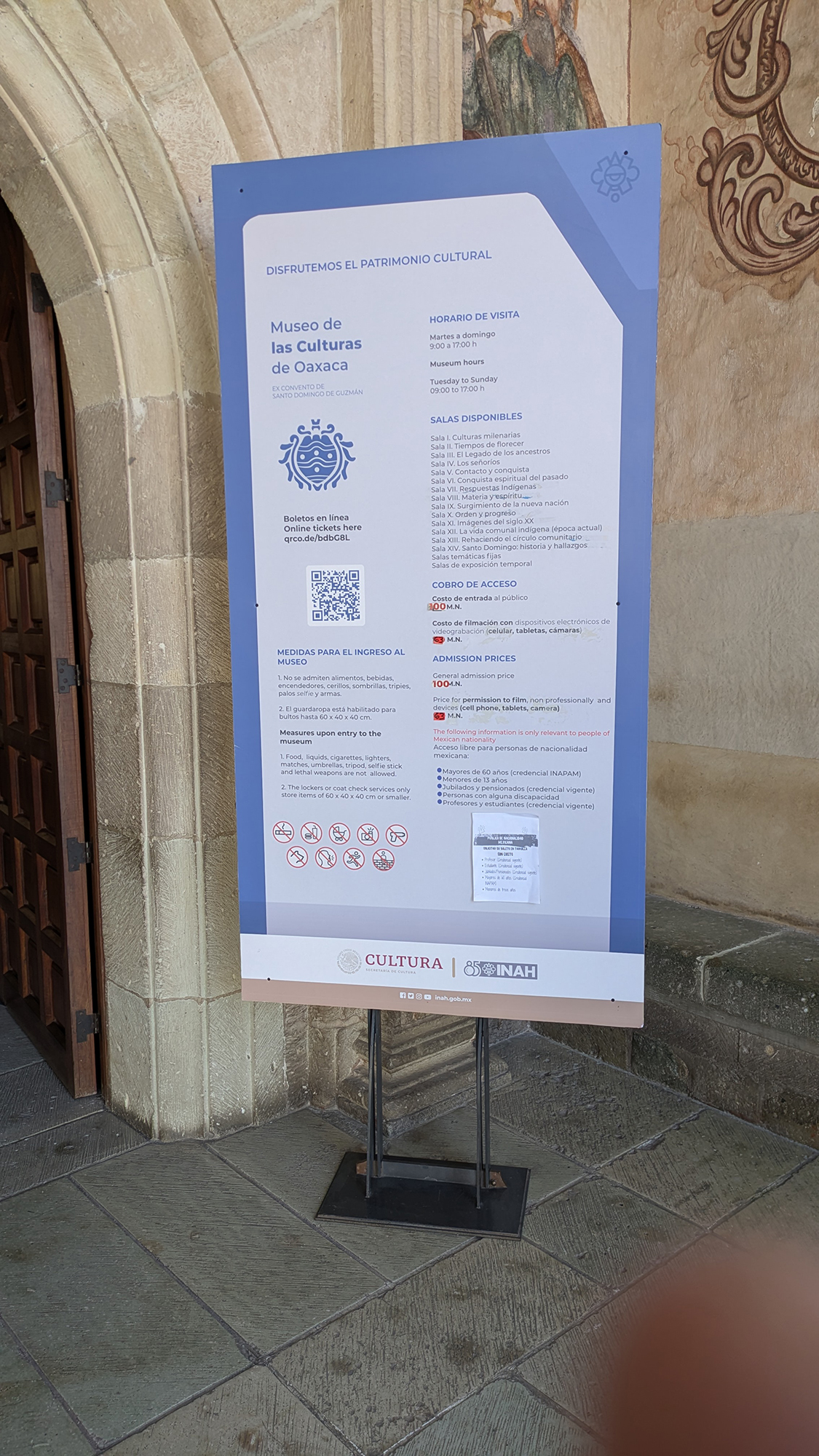
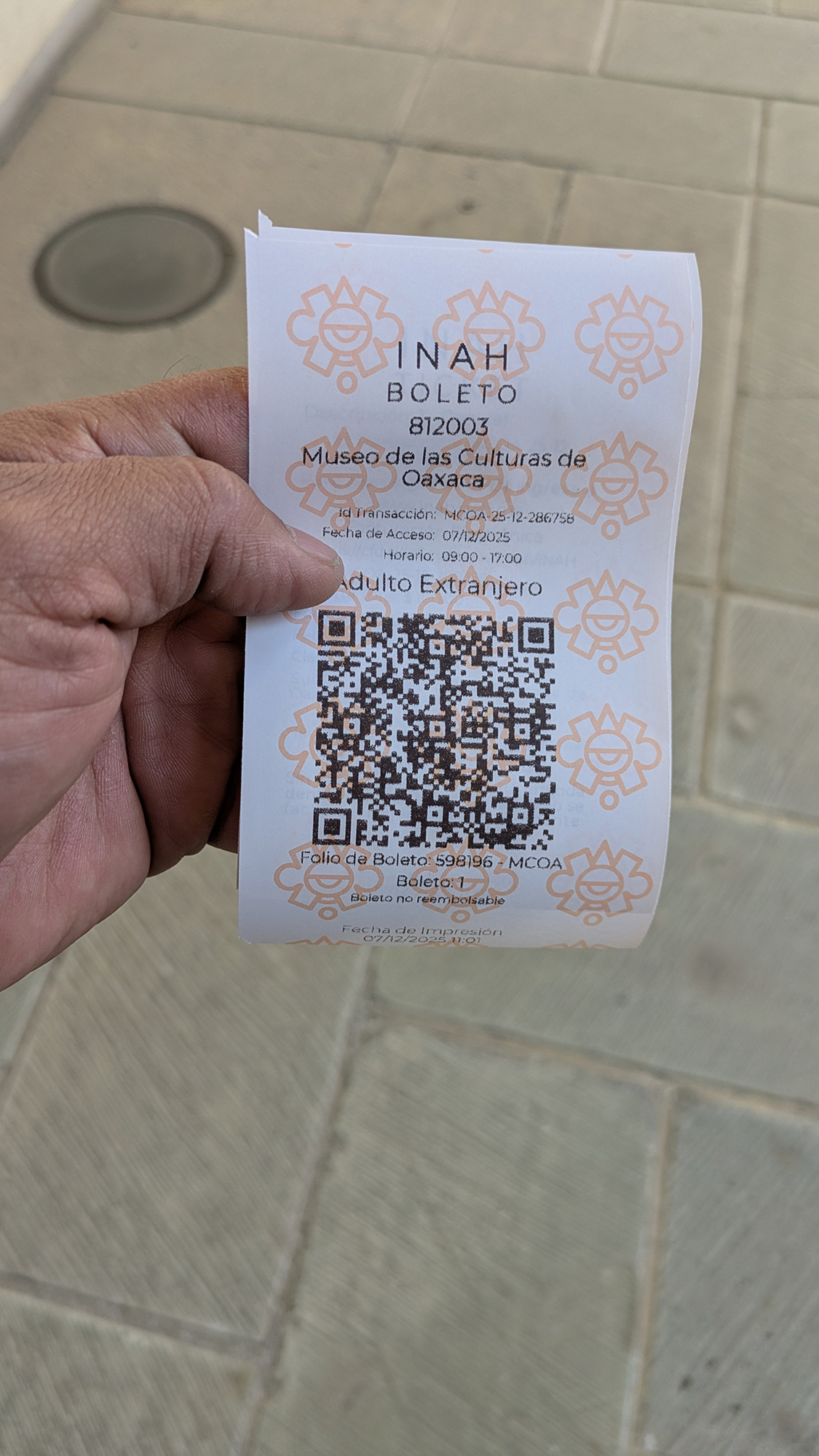
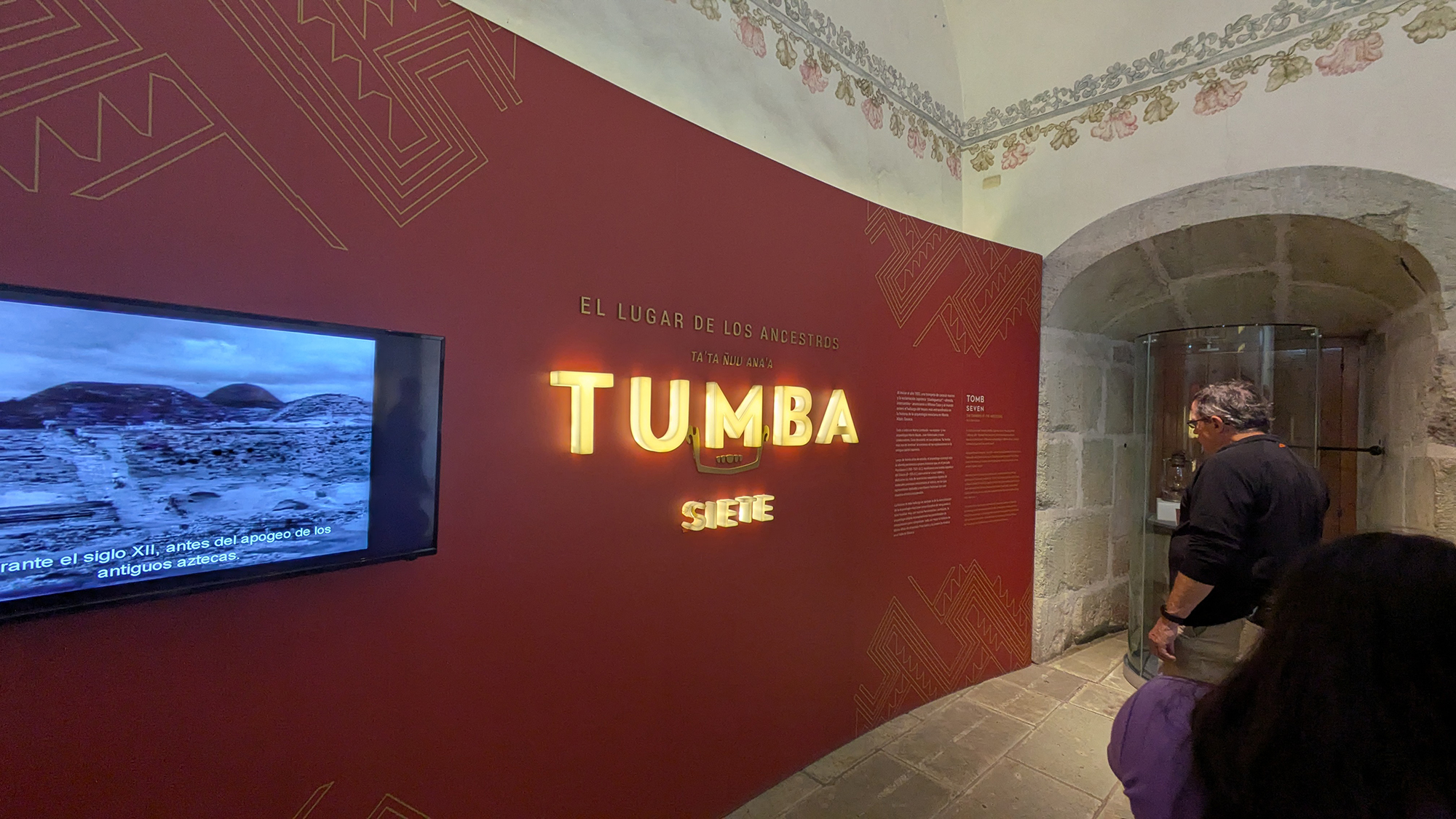
I decided to take a trip to the Santo Domingo Museum in order to document what they have on display there. Tomb 7 being my main goal of course. It costs $100 mexican pesos to get in if your a tourist but on Sunday people from Mexico and foreigners with permanent residence, like me, can get in for free. After entering the building and going up a huge ballroom-like staircase, I followed the scant signs to the Tomb 7 exhibit. Because Tomb 7 is so often associated with elaborate gold pieces and well known imagery, I was expecting to see something spectacular but the exhibit turned out to be smaller than I had imagined, and the well known gold ornaments were not present during my visit.
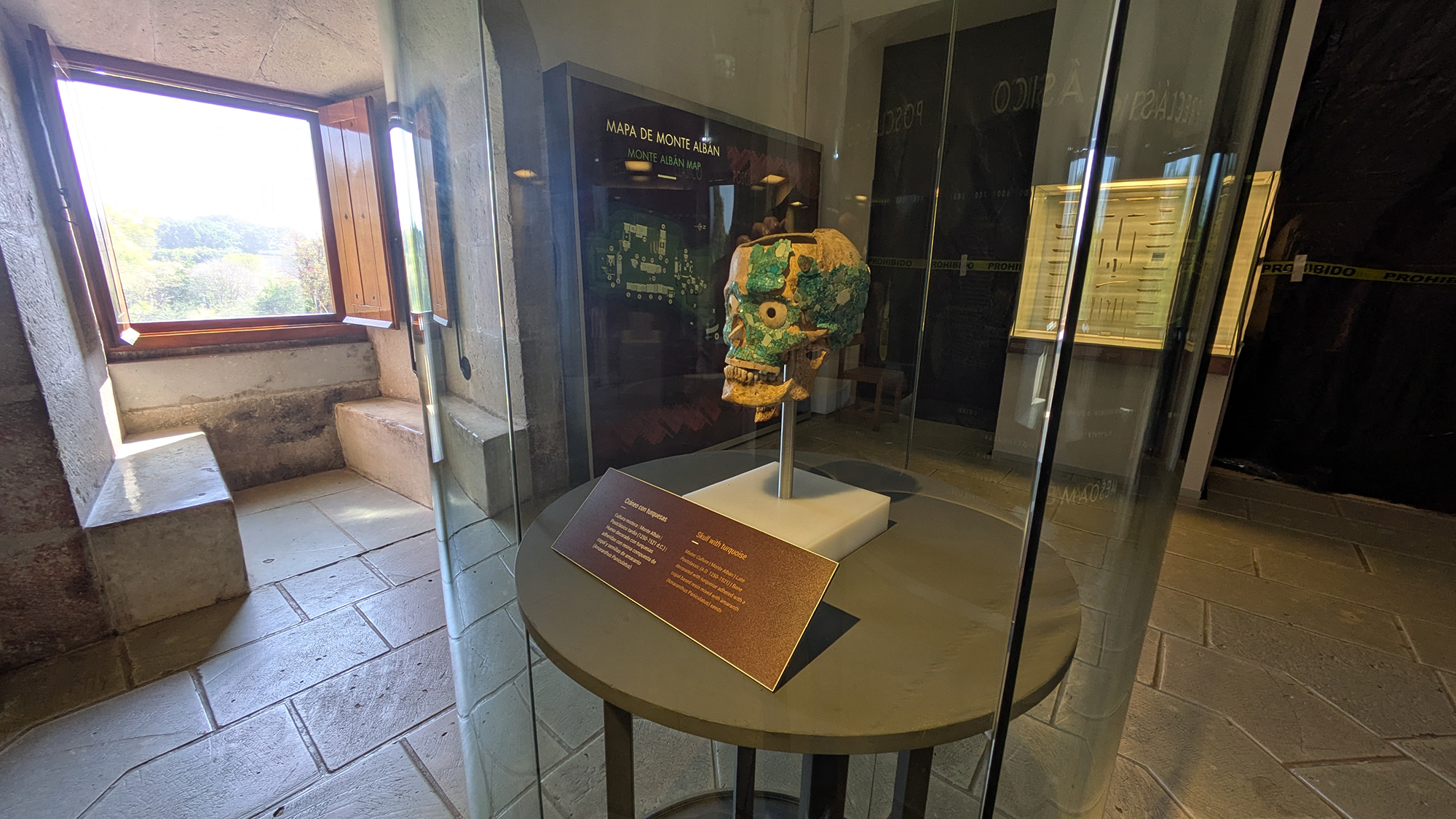
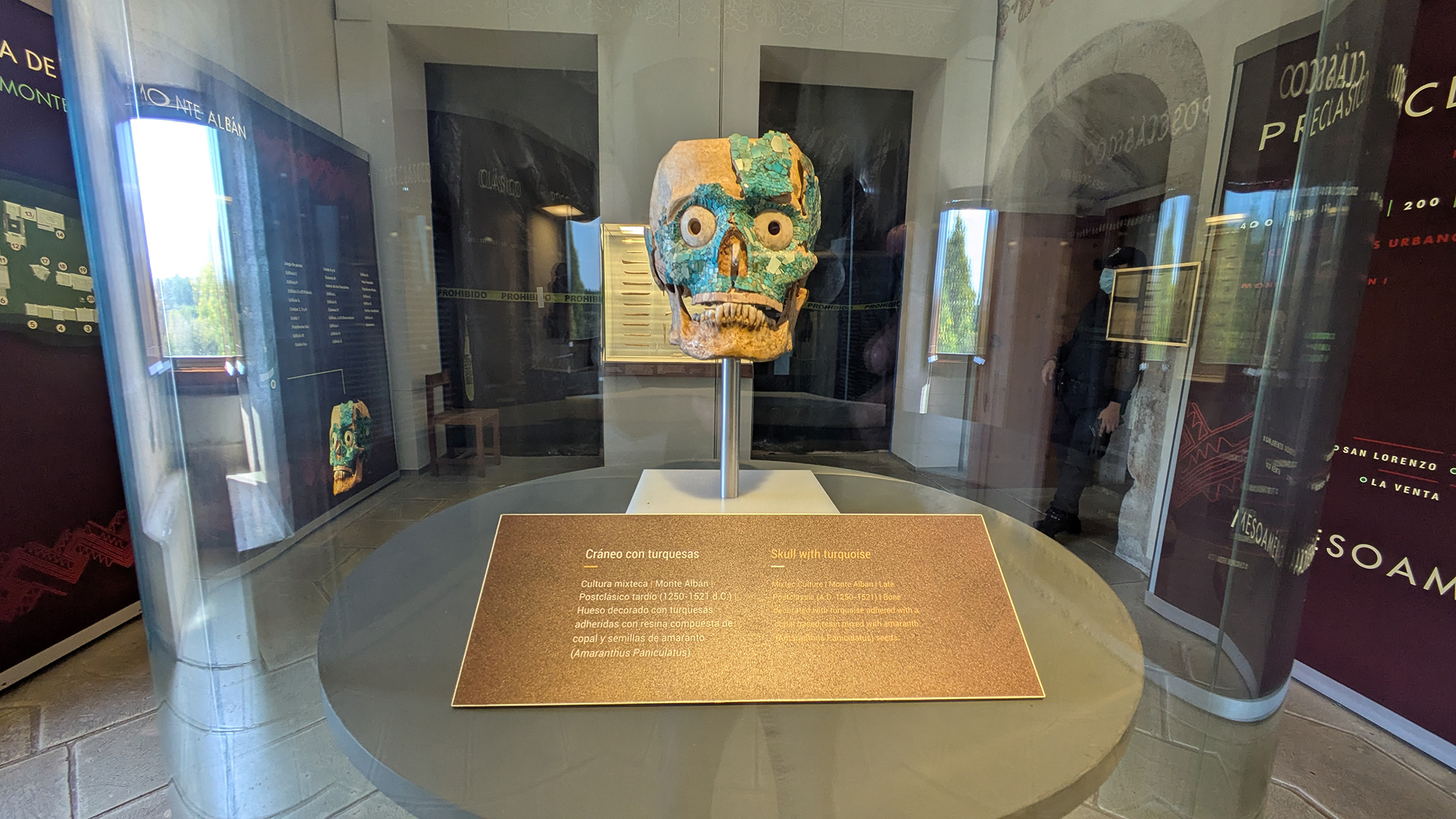
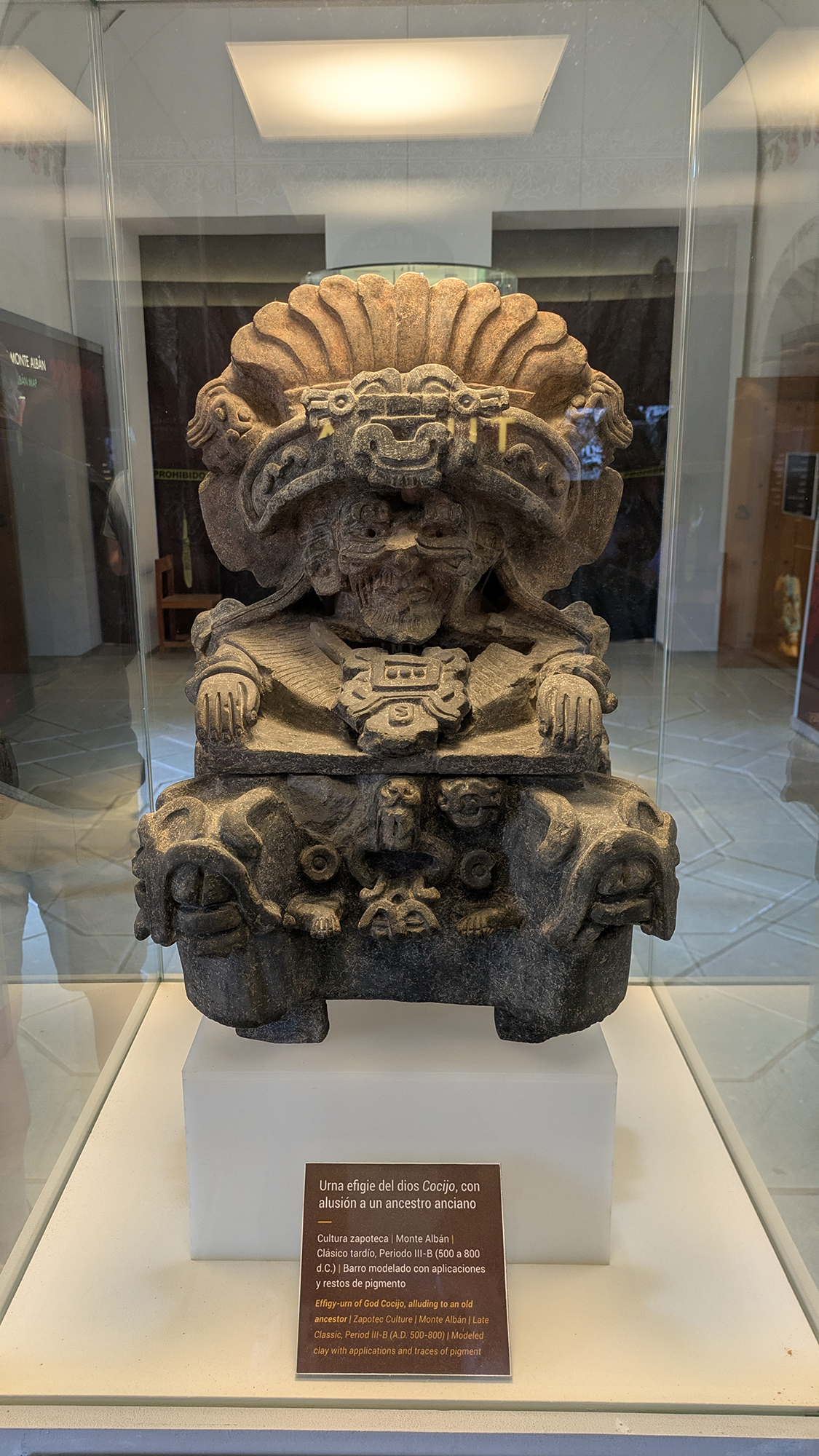
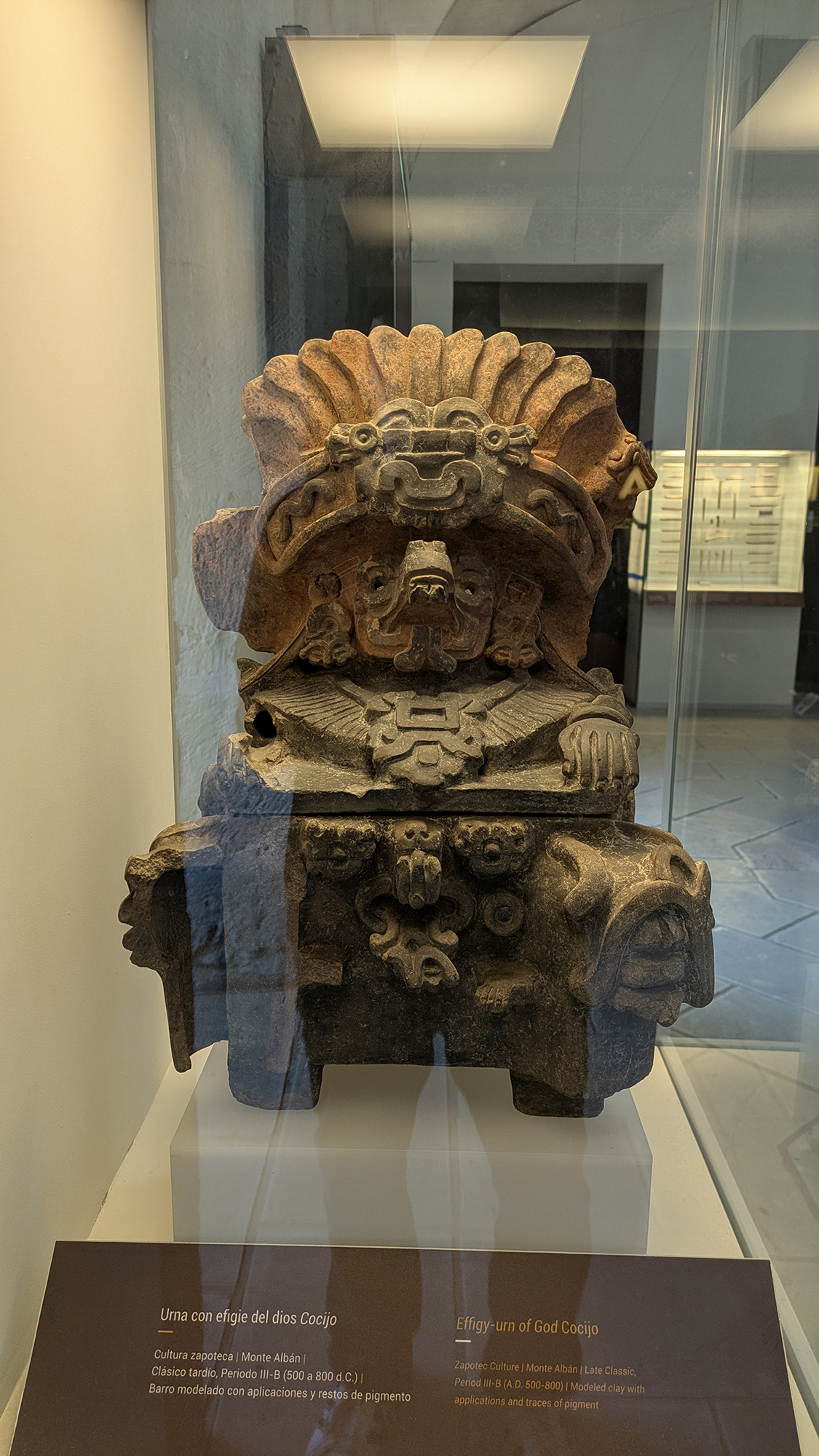
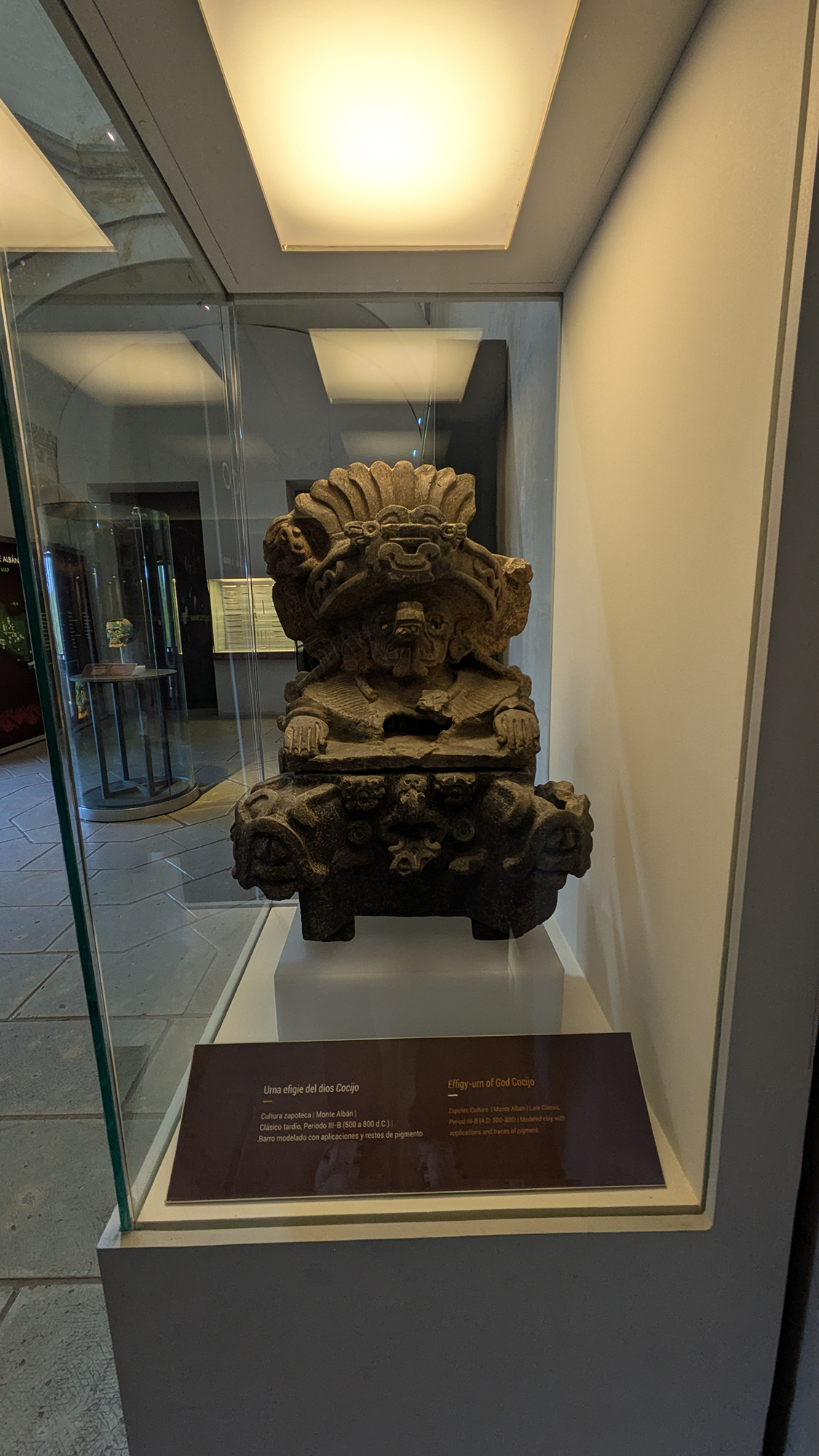
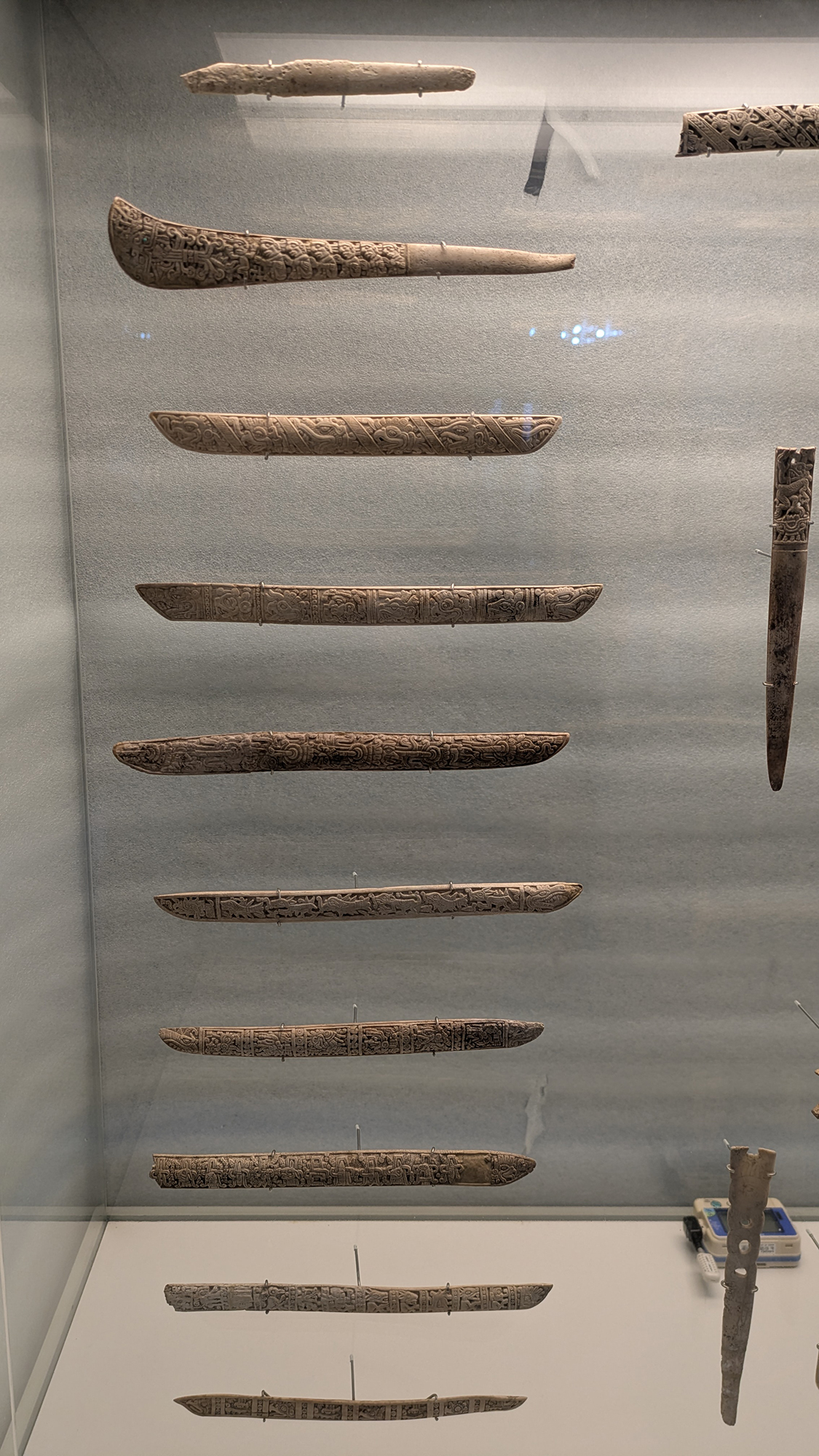
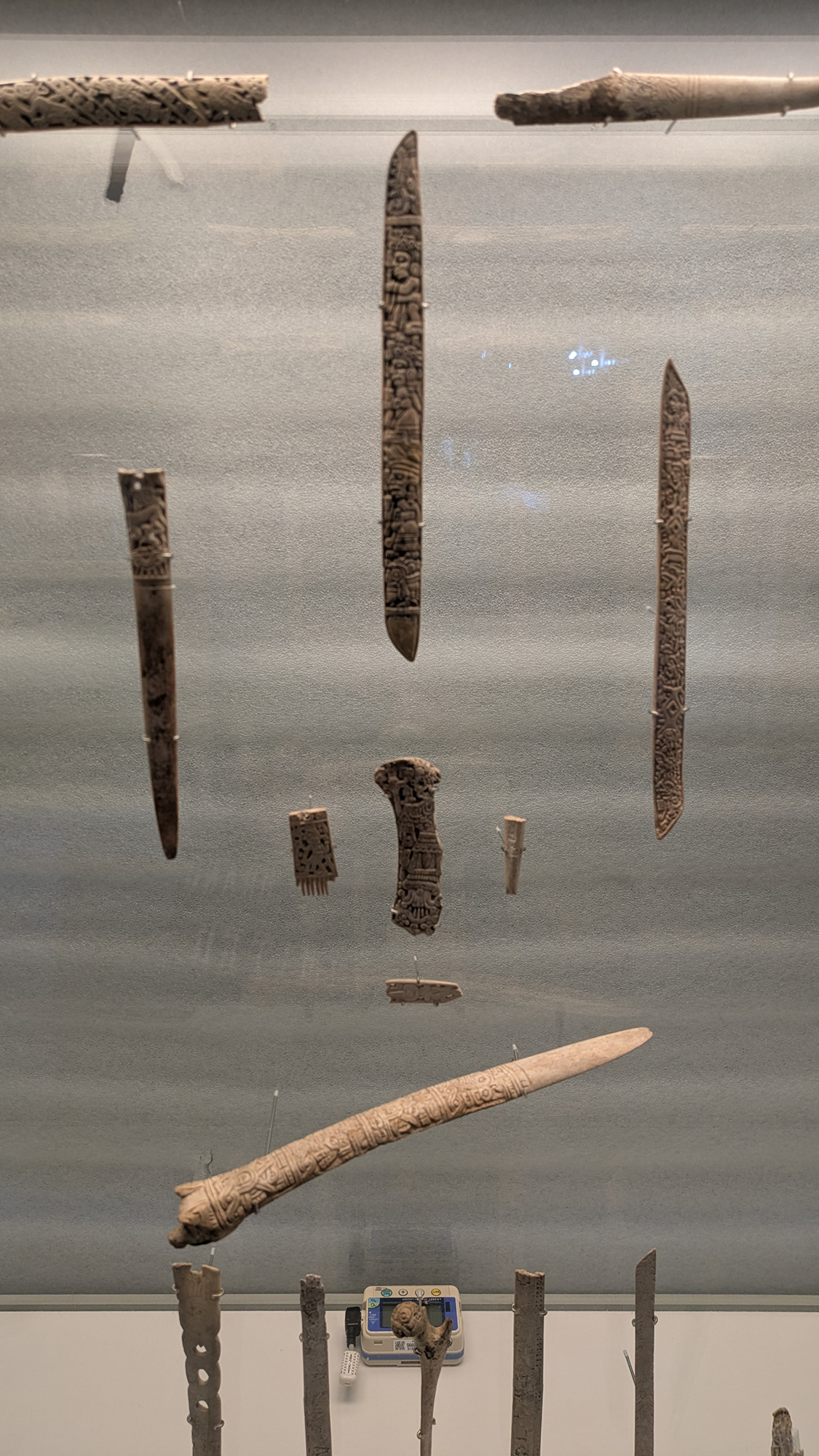
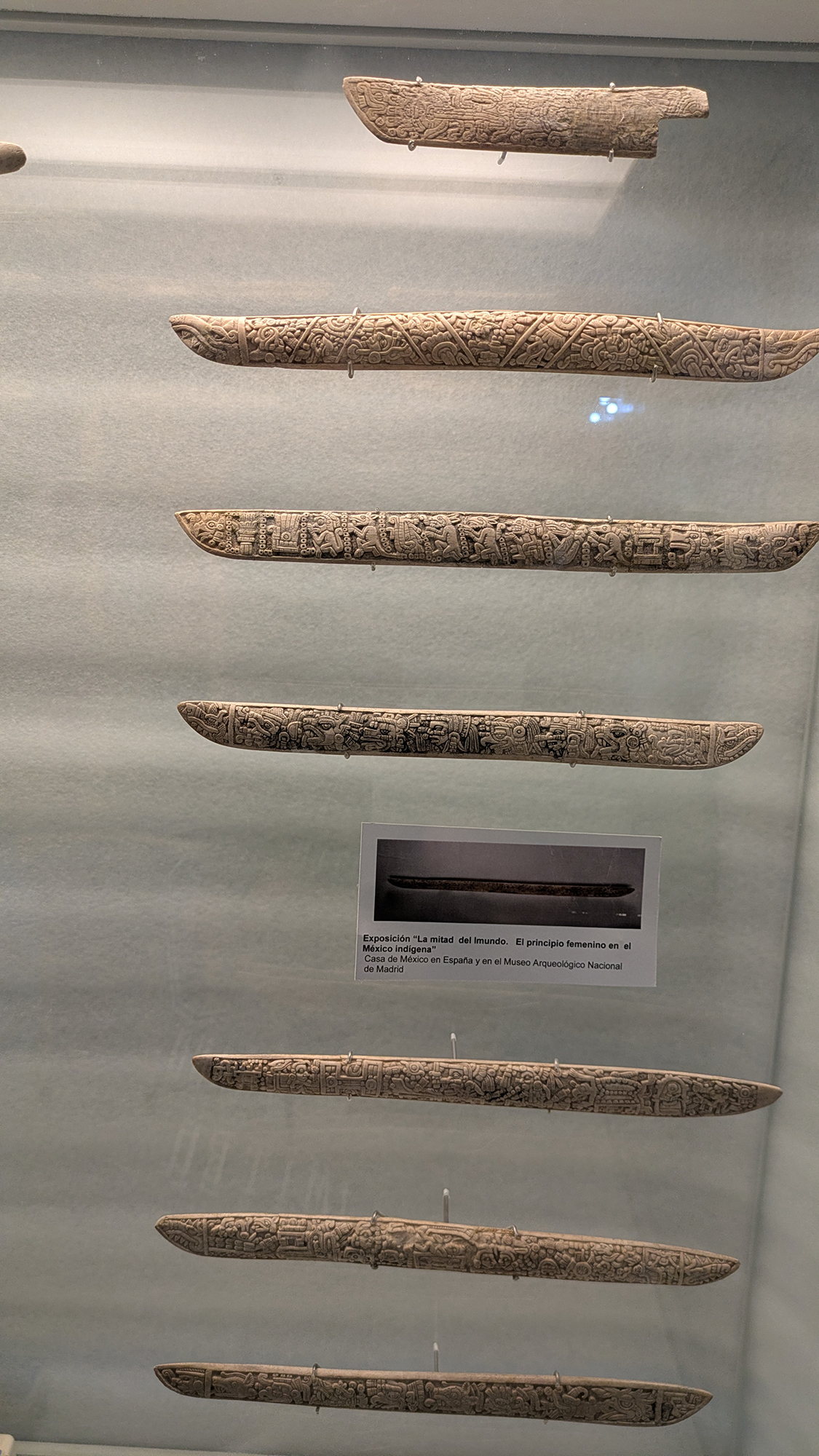
The pieces that were there, however, held their own kind of weight. The jade encrusted skull is immediately arresting. It is the type of artifact that encourages a careful, steady look. Nearby, clay effigies and carved bones offered a range of quiet details. Their craftsmanship felt deliberate, and the room invited a slower pace to appreciate them. The exhibit did not overwhelm with quantity, but it did provide a sense of closeness to the objects themselves.
Moving out into the museum’s architecture
After stepping out of the Tomb 7 gallery, the scale of the museum became more apparent. So many little knooks and crannies to explore and each seems to have there own little display of some part of Oaxaca’s history. The building is expansive, and the long corridors, stone arches, and high ceilings create a strong sense of presence. Light filters in from open air walkways and inner courtyards, making the place quiet and pleasantly peaceful.
Several galleries display artifacts from Oaxaca’s central valleys. The arrangement of the pieces is simple, allowing each object to stand on its own. Ceramics, carved stone, and everyday items appear throughout the rooms. The side rooms slash galleries have small doorways that require visitors over 180 cms tall to duck down while entering. Since the rooms are inside the museum, branching off the inner corridors, they have no windows, or most of them don’t, so the rooms are dark and the displays are lit by dim lights. You can’t take videos in the museum nor can you use flash so, since the rooms are so dark you are going to have to increase the ISO on your camera to get any good shots.
Rooms shaped by the building’s past
Some rooms contain religious artifacts from the convent era. Their presence changes the tone of the visit, adding a more somber atmosphere. Wooden carvings, devotional paintings, crosses, altars and liturgical objects appear in several sections, and their placement seems to reflect the energy and purpose of the building rather than a curated narrative with a specific emotional direction. These rooms feel still and self contained, as if the walls have absorbed long periods of silence.
Without rushing, I moved from one gallery to the next. The spaces vary in scale, yet they share a unified simplicity. Even when the exhibits shift from indigenous objects to religious works, the architecture ties everything together through repeated patterns of stone, height, and quiet.
Views that anchor the experience
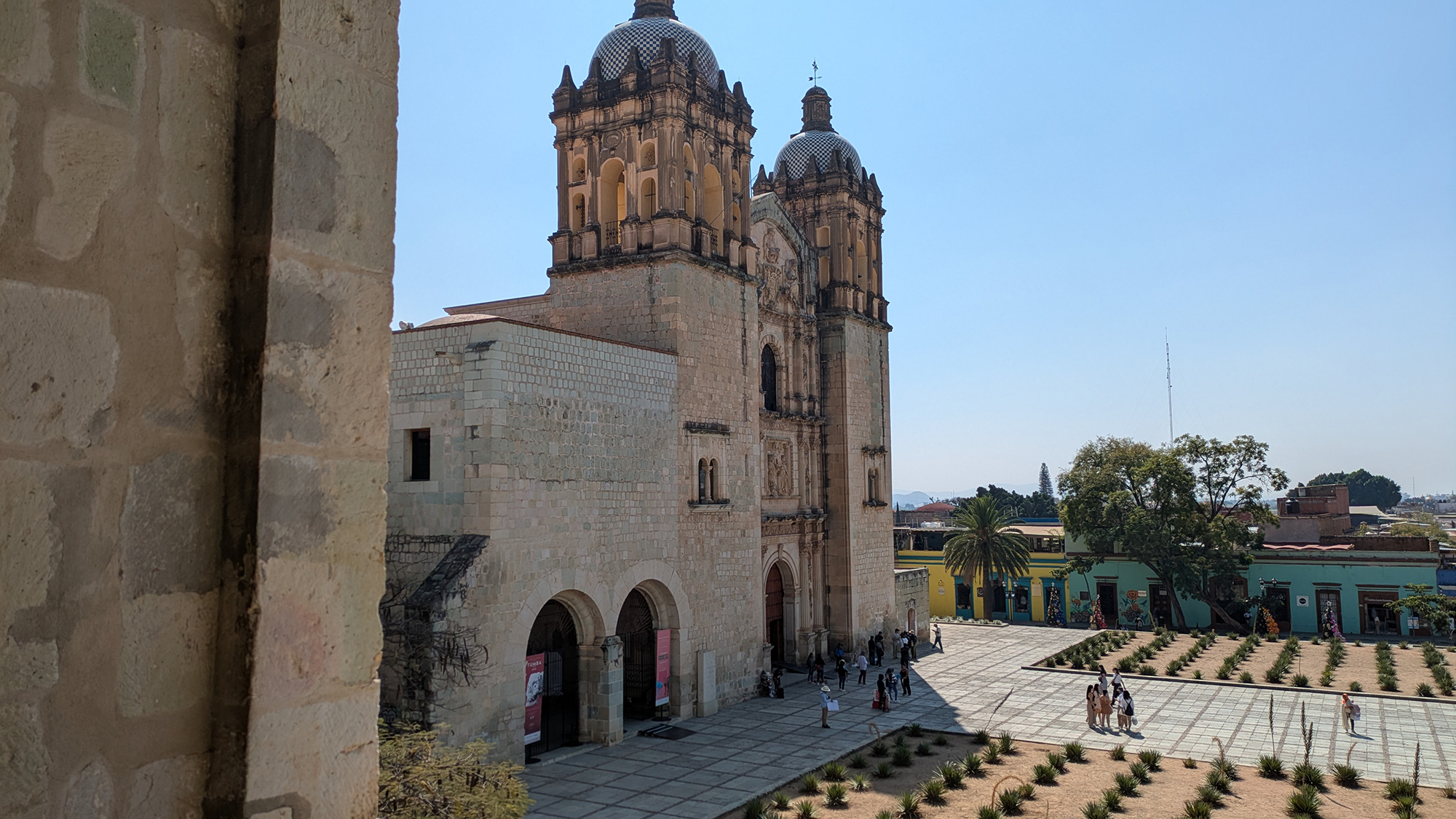
Eventually I reached the upper corridors overlooking the Ethnobotanical Garden. From there, the geometric layout of the plants creates a striking contrast with the heavy stone of the museum walls. The view toward the Santo Domingo church is one of the defining sights of the visit. It places the museum within a broader landscape and makes the building feel connected to its surroundings rather than separated from them.
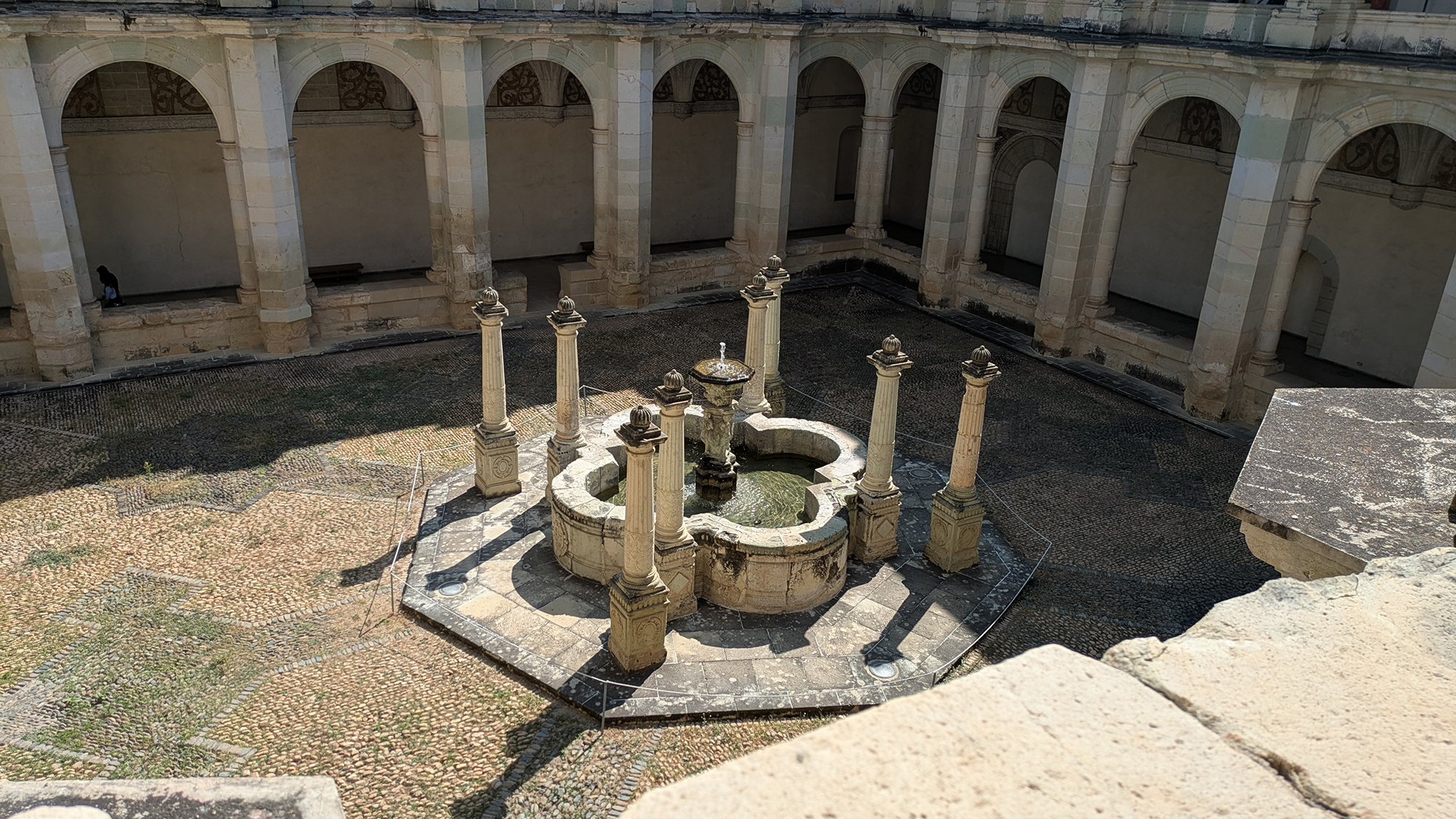
In the central courtyard, the fountain provides a quiet focal point. The open space is a natural pause in the museum’s flow. Visitors often go there to take pictures and sit down for a while before continuing. Throughout my visit, the general staff were attentive and welcoming, contributing to an atmosphere that felt steady and respectful although the guards, which there are many, kind of had the opposite effect despite their being solicitous.
Is the Tomb 7 exhibit worth visiting?
Although I mainly went to see the Tomb 7 exhibit and wasn’t that impressed by it, I certainly was impressed by the museum itself. It wasn’t the first time I was there but it was the first time I explored the whole place and to say it’s impressive is an understatement. I definitely recommend visiting this museum as a whole and I hope you enjoy the photos I took.