

The Great Contributions of Kent Flannery and Joyce Marcus to the Understanding of Monte Albán
The ancient city of Monte Albán, perched atop a leveled mountain in Oaxaca's central valleys, stands as a testament to the ingenuity of the Zapotec civilization. For decades, archaeologists have pieced together its story, but few have contributed as profoundly as Kent Flannery and Joyce Marcus. This husband-and-wife team, both distinguished scholars at the University of Michigan, have dedicated their careers to unraveling the complexities of Mesoamerican societies, with a particular focus on the Oaxaca region.
Their work blends rigorous fieldwork with innovative theoretical models, offering insights into how early villages evolved into urban centers like Monte Albán. Through excavations, publications, and interdisciplinary approaches, Flannery and Marcus have enriched our understanding of social structures, ecological adaptations, and cultural transformations in ancient Oaxaca. Their contributions invite us to appreciate the dynamic human stories behind the stone monuments.
In this article, we explore their key projects, theories, and lasting impact, celebrating the warmth of academic curiosity that drives such discoveries. Their legacy continues to inspire new generations of researchers and visitors to Monte Albán alike.
The Valley of Oaxaca Human Ecology Project
From 1966 to 1980, Kent Flannery directed the Prehistory and Human Ecology of the Valley of Oaxaca Project, with Joyce Marcus as a key collaborator. This ambitious initiative examined the long-term interactions between humans and their environment in the region, spanning from the Archaic period to the Rosario phase, just before Monte Albán's founding around 500 BCE.
The project revealed how early agricultural communities adapted to Oaxaca's diverse landscapes, setting the stage for urban development. By integrating ecology, anthropology, and archaeology, Flannery and Marcus demonstrated that environmental factors played a crucial role in social evolution. Their findings highlighted the transition from dispersed settlements to centralized power, providing a foundational context for understanding Monte Albán's emergence as a political and ceremonial hub.
This holistic approach not only mapped settlement patterns but also illuminated the mechanisms of social inequality and integration, offering a nuanced view of how ancient Oaxacans built complex societies.
Excavations at San José Mogote: Precursor to Monte Albán
One of their most significant fieldwork endeavors was the excavation at San José Mogote, an early village and chiefly center in the Etla branch of the Oaxaca Valley. Conducted over fifteen years, these digs uncovered evidence of household archaeology, craft production, and public architecture from the Formative period.
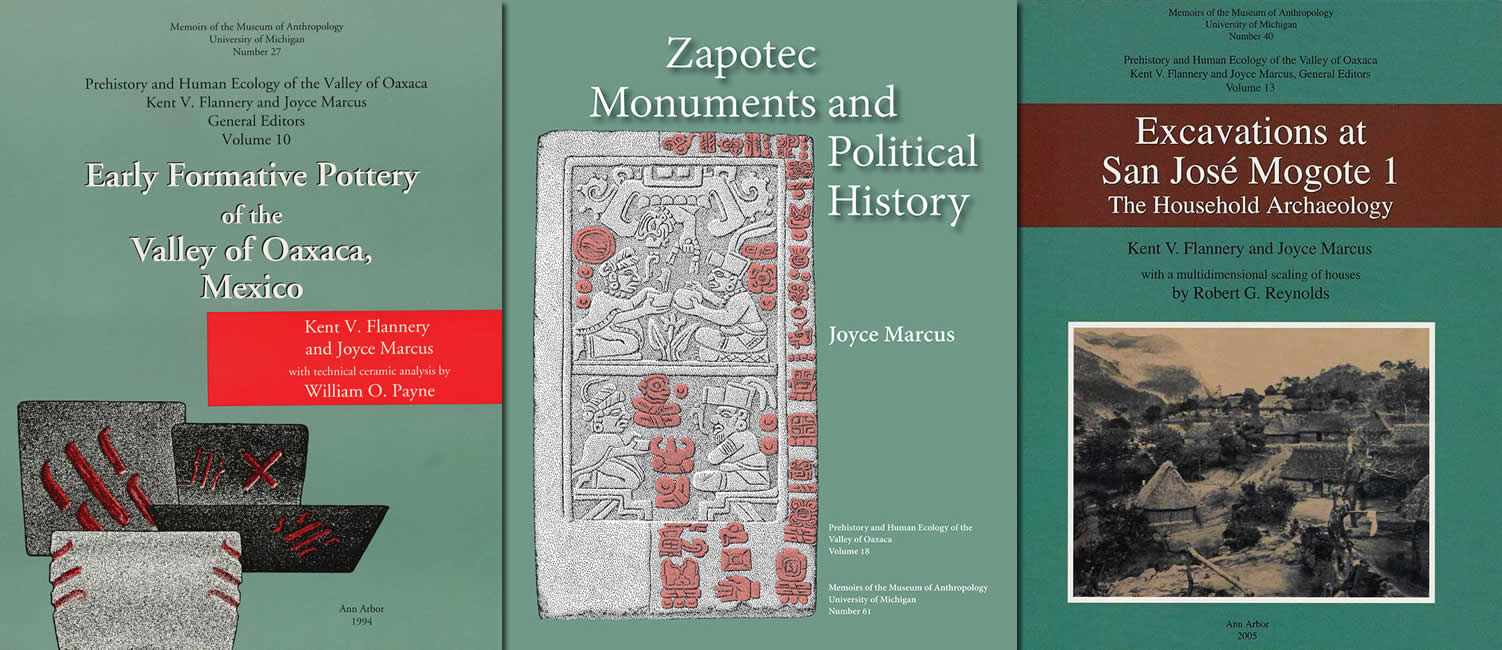
In their two-volume series, "Excavations at San José Mogote," Flannery and Marcus detailed the site's progression from simple households to a more stratified society. The first volume focused on household archaeology, analyzing artifacts, features, and ecofacts to reconstruct daily life. The second explored cognitive aspects, such as ritual and symbolism, linking these to broader cultural changes.
San José Mogote's role as a precursor to Monte Albán is evident in their work, showing how elites from this site likely contributed to the new capital's founding. This connection underscores the continuity and transformation in Zapotec society, enriching our appreciation of Monte Albán's roots.
Theoretical Innovations: The Monte Albán Synoikism and Social Memory
Flannery and Marcus introduced the concept of the "Monte Albán Synoikism," drawing parallels with ancient Greek city-states. This model describes the rapid relocation of populations from surrounding villages to the mountaintop site around 500 BCE, resulting in a sudden urban boom with an estimated 5,200 inhabitants by 300 BCE.
They argued that this process involved local Zapotec initiatives combined with external influences, possibly from the Olmec or Chiapas regions. Additionally, their research on social memory examined how monuments like the Danzantes Wall preserved (and later erased) narratives of the city's founding, reflecting shifts in power and identity.
These theories, outlined in articles like "Social Memory and the Origins of Monte Albán," highlight the sociopolitical transformations that shaped the city. By emphasizing memory and agency, Flannery and Marcus humanize the archaeological record, inviting us to consider the lived experiences of ancient peoples.
Key Publications and the Dynamic Model of Societal Evolution
Their collaborative books have become cornerstones of Mesoamerican studies. "Zapotec Civilization: How Urban Society Evolved in Mexico's Oaxaca Valley" (1996) synthesizes decades of research, tracing the development from villages to states. It details Monte Albán's growth as the Zapotec capital, incorporating ecological and epigraphic evidence.
Another seminal work, "The Cloud People: Divergent Evolution of the Zapotec and Mixtec Civilizations" (1983), explores the branching paths of these cultures post-Monte Albán. Marcus also developed the "Dynamic Model," a four-tiered hierarchy for analyzing societal cycles, which has been applied to understand expansions and collapses at sites like Monte Albán.
These publications blend data with theory, fostering a deeper academic dialogue while making complex ideas accessible. Their Spanish editions, like "La Civilización Zapoteca," extend this knowledge to local communities in Oaxaca.
Legacy and Ongoing Influence
The contributions of Flannery and Marcus extend beyond specific findings; they have shaped the field of processual archaeology, emphasizing systems theory and human ecology. As emeriti at the University of Michigan, they continue to mentor scholars, ensuring their methods endure.
For visitors to Monte Albán, their work adds layers of meaning to the site's plazas and tombs. It reminds us that archaeology is not just about artifacts but about reconstructing human stories with empathy and precision.
In a world where ancient wisdom informs modern challenges, the warm academic spirit of Flannery and Marcus encourages us to explore Oaxaca's heritage with renewed wonder and respect.