

What is the meaning behind the pointed hoods (capriotes) worn in the Procession of Silence in Oaxaca?
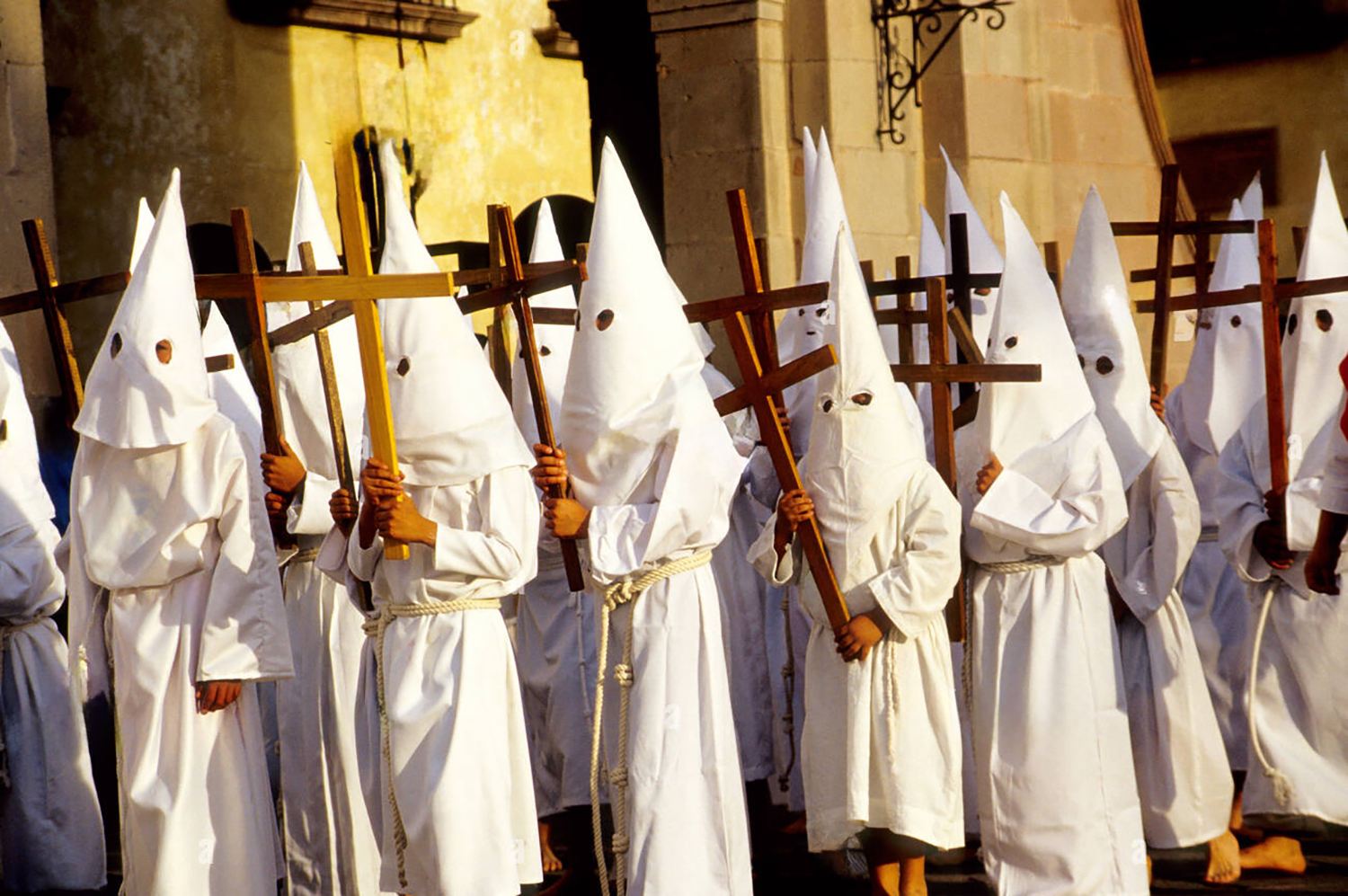
What the pointed hood is
On Good Friday in Oaxaca City, the Procesión del Silencio moves through the historic center in a mood that feels almost suspended in time. Penitents in dark tunics walk slowly, often barefoot, and some carry wooden crosses as a personal act of devotion. Many cover their faces with a tall, pointed hood. In Spanish, that hood is a capirote. In Oaxaca you may also see the spelling “capriote,” but it refers to the same garment.
If you want the cleanest definition, Spain’s Royal Spanish Academy describes a capirote as a conical hood, traditionally cardboard covered with cloth, used by penitents in Holy Week processions. That definition already hints at its purpose. It is meant for penitents, and it belongs to religious procession culture, not to politics.
Why Oaxaca’s Procession of Silence exists
The Procession of Silence is one of the capital’s emblematic Holy Week events, held on Good Friday. The Government of Oaxaca highlights it as part of the state’s larger Semana Santa traditions. The intention is collective mourning and reflection, a public way of accompanying sacred images tied to Christ’s Passion while spectators keep quiet and let the atmosphere speak.
Modern reporting in Oaxaca traces the organized revival of the city’s procession to 1986, connected to the parish of the Templo de la Sangre de Cristo and local organizers who brought back an older Good Friday practice. That origin matters because it explains the tone. It is designed around restraint, silence, and reverence, even with a crowd present.
What the capirote symbolizes
The central meaning is anonymity. A covered face keeps the devotion from becoming social theater. It removes status and recognizability, which helps the penitent focus on prayer and penance rather than attention. The hood is also a kind of equalizer. In the procession, you do not know who is inside the robe, and that is the point.
The second meaning is humility. The capirote signals that the person walking is not there to be admired. They are there to participate in a solemn religious act. Some explanations also connect the pointed shape to an upward orientation, a visual reminder of spiritual aspiration. Whether you read it literally or symbolically, the shape is meant to direct the mind toward the sacred, not toward the individual.
Where the tradition comes from
The capirote is strongly associated with Spanish Holy Week processions, especially the organized confraternities that developed distinctive penitential attire. Several widely cited historical explainers trace a thread back to the era of the Spanish Inquisition, when conical head coverings and penitential garments were used as part of public punishments, often alongside the sambenito. Later, confraternities reinterpreted the look as a voluntary sign of penance and humility within Holy Week processions.
As Spanish religious customs spread through colonial history, many Holy Week forms traveled too. In Mexico, Semana Santa developed regional expressions that blended imported Catholic frameworks with local community life. Oaxaca’s Procession of Silence sits inside that broader story: a Good Friday devotion shaped by long ritual history, maintained by local faith communities, and revived in modern form in the late twentieth century.
No connection to racism or hate groups
Let’s be direct. The capirote in Oaxaca’s Procession of Silence has no relationship to racism. It is not a symbol of white supremacy, and it is not tied to hate groups. It is a Catholic penitential garment with a long history in Spanish Holy Week traditions that predates the Ku Klux Klan by centuries.
The confusion exists because the KKK adopted a pointed hood look for intimidation and propaganda. Modern reporting that tackles the comparison emphasizes the difference in purpose and context: Holy Week hoods are about humility, anonymity, and penance, while hate group costumes are about fear and domination. So if you feel that first visual jolt, pause and let the context do its job. In Oaxaca, the meaning is religious, communal, and rooted in a long tradition of Good Friday devotion.
How to watch respectfully as a visitor
If you attend the procession, treat it like a living religious space. Keep your voice low. Do not block the route. If you take photos, avoid flash and do it sparingly. Many participants are fulfilling a promise or a vow, and the hood is part of that discipline. It is a deliberate refusal of attention.
In the end, the meaning of the capirote is not mysterious at all. It is a simple idea expressed through a powerful image: disappear, so the devotion can be seen. Once you understand that, Oaxaca’s Procession of Silence becomes less about the hood and more about the quiet human reasons behind it.