
'/%3E%3Cpath%20fill='%2330c2dc'%20d='M493%20379c-14-6%2010-16%2014-16-8-1-21%203-27%203l-57-3c-7-1-12-10-10-10-3%203-37-9-27%200l9%2014c15-3%2030%208%2013%2014%203%200%2057-4%2085-2'/%3E%3Cpath%20fill='%23f9aa51'%20d='M475%20366v13q-1%207-7%207h-35q-6-1-7-7v-13q0-6%207-7h35q7%201%207%207'/%3E%3Cpath%20fill='%230c8489'%20d='M388%20335c-11%205-28-12-25-24%203-13%2028-2%2029%2014%207-2%2020%202%2025%207%209-11%2038-3%2041%2010%2011-13%2028-9%2034-3%2013-10%2033-4%2030%207-3%2012-29%2015-37%206-1%201-20%200-22%2016h-11c-3-4-2-14-1-15-11%204-29-3-34-10-7%204-25-1-29-8'/%3E%3Cpath%20fill='%23fcca3d'%20d='m419%20304-3%203c-7-4-11%208-19-2-2-3-3-10%205-16%205-3%2018-5%2019%200%203%206%207%206%204%209l4%203v9zm56%2031c-15%204-16%209-15%2012q-7-6-1-10c-9-8-10%206-8-6%201-8%2024%205%2018-15h9q-1%2015%2017%2019c0%2024%202-3-6%205-2%200-5-6-14-5'/%3E%3Cpath%20fill='%238f4620'%20d='M418%20268c-4-24%2020-46%202-44-16%201-18-2-18-2-6-7%2010-11%209-20q2%2011%205-4c2%206%204%208%205-3%205%207%2017%205%2025%2010q-3-6-10-11c-12-11%2012-9%2012-9%2033-11%2044%2012%2061%2012-17%203%2013-2%2038%2058-18-11%2012-1-7%2067%200%200-45-57-36-39-10-5-20-18-20-18-11%203-2%204-1%2020%200%200%2043%2030%2045%2036%201%206-10%204-25%207-16%202-23-20-22-10s-16%205-16%205-19-29-19-9c-39-3-20-15-20-15s10%202%208-2c-2-3-12-4-16-29m-7-66'/%3E%3Cpath%20fill='%23f9c83a'%20d='M407%20220c10%203%2015-3%2016%204%204%204-22%209-19%2014-7%203-18-10-5-16%201-5%206-3%206-3l6-8q3%207-4%209'/%3E%3Cpath%20fill='%23a8ac71'%20d='M403%20309c-15%201-19%205-23-16-18-16-8-25-7-28%201-8-12-11-15-10-1-8%2022-1%2021%209-1%209-7%2011%206%2024%205%204%203%2014%2011%2011-1%204%203%2010%207%2010m6-18c10-8-24%202-26-24-1-15%2027-22%2023-34l-5-3q1-4%207-3c19%2015-11%2027-14%2038-4%2024%2031-5%2025%2029l-3%205q-7-4-7-8m-11-54c-25%206-23-35-7-35%201%2020-15%2015%205%2015-8%200-13%2011-3%2012q1%206%205%208'/%3E%3C/svg%3E)


The Origins of the Famous and Delicious “Rosca de Reyes”
The Epiphany’s sweet crown and a cultural anchor
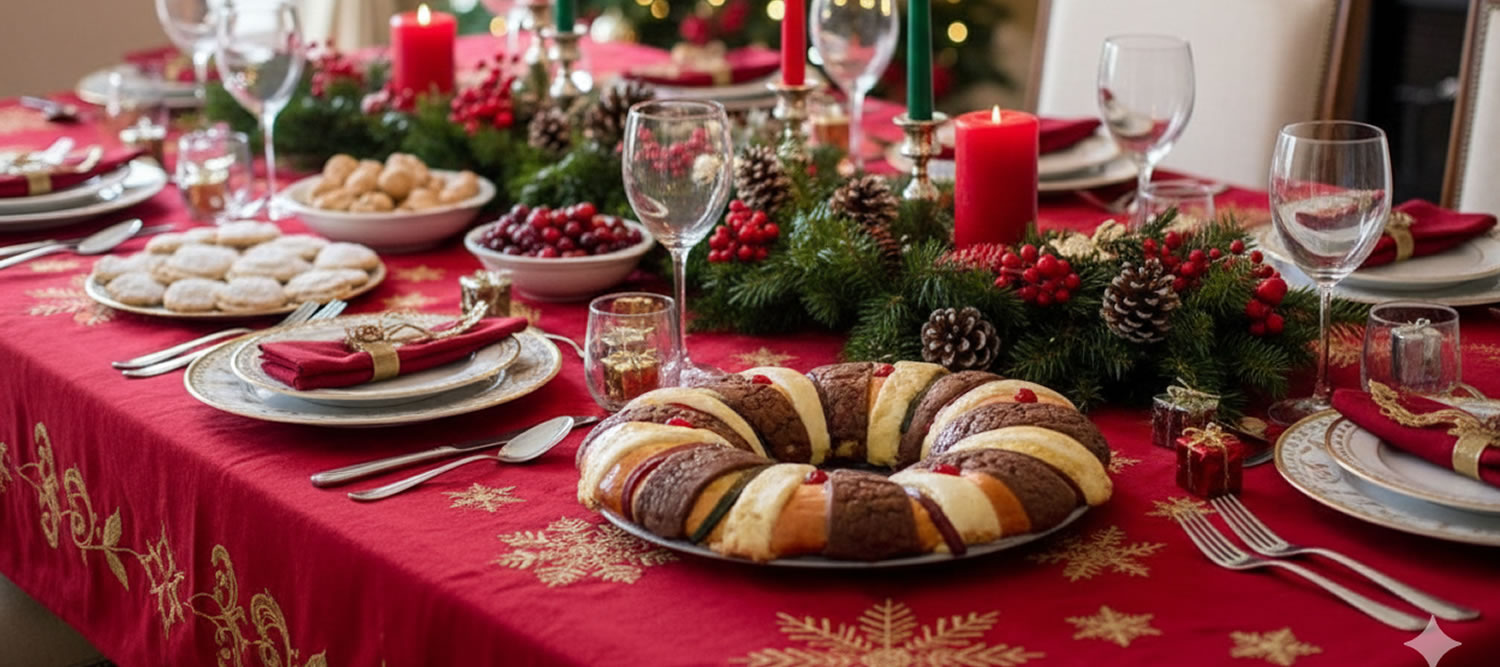
The Rosca de Reyes, or Kings’ Wreath, is much more than simply a sweet bread; it is an enduring cultural centerpiece that anchors the Mexican winter holiday season. Consumed across Latin American countries on January 6th, the Día de Reyes Magos (Three Kings’ Day), this ring-shaped cake serves as an edible manifestation of historical memory, religious narrative, and communal obligation. Its oval form, often likened to a jeweled crown, is deeply intertwined with centuries of ritual practice that stretch far beyond the arrival of Christianity in the Americas.
In regions like Oaxaca, where ancestral heritage remains intensely vibrant, the Rosca integrates seamlessly into a local food culture renowned for its sophistication and deep communal roots. This cultural anchor is particularly strong near ancient Zapotec centers like Monte Albán, where food has always been a key component of social structure and ritual. Understanding the true significance of this festive pastry requires tracing its remarkable journey from ancient European festivals to its role today in preserving indigenous foodways through mandated social gatherings that strengthen community bonds.
A journey from Saturnalia to the Epiphany
The deep history of the Rosca de Reyes begins not in the Middle East or Spain, but in Ancient Rome during the celebrations for Saturnalia, the festival marking the winter solstice. During this time of shared feasting and role reversals, a round cake was prepared that contained a hidden bean, and the individual who found this bean was temporarily designated as the “king” of the festivities. This ancient mechanism, where a concealed object determines the temporary designation of a host or ruler, proved immensely resilient across cultural shifts and borders.
As Roman paganism declined and Christianity spread across Europe, this ritual survived, successfully changing its narrative justification while preserving its core function. By the medieval period, the tradition had become associated with the Christian calendar, specifically Epiphany on January 6th, which commemorates the arrival of the Three Magi to worship the infant Jesus. The circular shape of the cake continued, now symbolizing not only the ancient winter celebrations but also the eternal nature of the Christian faith and the majestic crowns of the Kings themselves.
The physical introduction of the Rosca tradition to Mexico occurred following the Spanish conquest. This required Europeans to bring the complex processes of transforming wheat into leavened bread, with the establishment of the first formal bakery industry dating back to 1524. Prior to this period, Mesoamerican grain structures were dominated entirely by maize, and there were no baked goods in the European sense, making bread a foreign innovation. This imported, wheat-based tradition was later integrated into a culture defined by communal maize consumption, creating a unique culinary hybridization found throughout the country.
The edible narrative: Decoding the Rosca’s symbolism
Every component of the Rosca de Reyes is laden with specific symbolic meaning, transforming the consumption of the bread into a communal act of reenacting the Epiphany narrative. The fundamental shape of the bread, whether circular or oval, signifies royalty and eternity, directly representing the majestic crowns worn by the Magi. The sweet dough itself, often enriched with ingredients like eggs and citrus zest in the Mexican regional variations, represents the joy and hope brought to the Christian community.
The most visually striking elements are the candied and dried fruits that adorn the crown. In Mexico, these often include figs, quinces, and oranges, or local candied citrus peels. These brightly colored strips symbolize the opulent jewels that decorated the Kings’ crowns, as well as the treasures—gold, frankincense, and myrrh—that they carried across the desert to present to the infant Christ. The preparation of the Rosca is a patient process, requiring dough to go through a series of rises, highlighting the dedication required for this key holiday food.
The most critical element is the Niño Jesús, the bite-sized figurine concealed within the bread. The tension created when each person cuts a slice mirrors the biblical narrative of the Flight into Egypt, when Jesus’s family was forced to hide the infant from the tyrannical King Herod, who sought to destroy the new King of the Jews. By engaging in this shared ritual, participants are actively brought into the historical tension of the biblical story, transforming the meal from simple consumption into a high-stakes, shared experience that enforces communal memory and shared obligation.
The Oaxacan anchor: Maize, chocolate, and communal life
To truly understand the cultural weight of the Rosca de Reyes in Southern Mexico, it must be viewed through the lens of Oaxacan heritage, particularly the long-standing traditions established by the Zapotec civilization. The Zapotecs, whose grand city of Monte Albán thrived for centuries, built their civilization on the cultivation of maize, beans, squash, and chili peppers. Communal dining was central to Zapotec social life, with staple foods including tortillas, tamales, and atole, a rich maize-based beverage.
The modern consumption of the Rosca reflects a vital cultural adaptation. In Oaxaca, the wheat-based bread is rarely eaten in isolation; it is customarily paired with rich, thick Oaxacan hot chocolate or champurrado, which is essentially a chocolate atole. This pairing is a profound act of cultural domestication. The imported European bread is instantly rooted in Mesoamerican foodways by requiring a beverage based on the ancestral staples of maize and cacao, which were highly valued in trade by the Zapotec people. This hybridization ensures that while the structure of the feast is foreign, its foundation remains inextricably tied to the region’s indigenous culinary history.
The widespread adoption and regional flavor variation—with local citrus like lime and orange zest often incorporated into the dough, and indigenous candied fruits replacing other ingredients—demonstrate how the tradition has become fundamentally Mexican. This process is actively documented and studied by Mexican cultural institutions, including the Instituto Nacional de Antropología e Historia (INAH), which publishes documentation on the history and evolution of the Rosca de Reyes within the nation.
The social contract: Candelaria and sustainable heritage
The true climax of the Rosca tradition is not the consumption of the bread itself, but the social obligation it imposes upon the participant who discovers the figurine of the Niño Jesús. This person is bestowed the honor of hosting the final major celebration of the holiday season, Día de la Candelaria (Candlemas), held on February 2nd. The social contract requires the designated host to provide tamales for all attendees, thereby institutionalizing generosity and extending the community feasting cycle for nearly a month after the Epiphany.
This specific requirement—that the Rosca ultimately leads to a feast centered on tamales—is a powerful affirmation of Mesoamerican heritage, directly connecting the European custom back to ancient Oaxacan foodways. Tamales are ancient, symbolic, maize-based foods central to Zapotec ritual and communal gathering. The European bread serves as the ritual catalyst, but the ancestral maize dish serves as the mandatory, essential communal food, guaranteeing that the collective rituals surrounding indigenous agriculture are sustained within the imported framework.
This enduring cultural practice must also navigate modern environmental challenges. Traditionally, the Rosca was often decorated with acitrón, a candied sweet made from the pulp of the biznaga, or barrel cactus. However, the biznaga is a protected species because it grows extremely slowly, sometimes taking 14 to 40 years to mature, rendering its commercial exploitation unsustainable. Since 2005, environmental agencies such as SEMARNAT have prohibited the use of acitrón, urging bakeries and consumers to avoid buying roscas that contain the protected ingredient. This regulatory adaptation demonstrates the essential flexibility of cultural heritage; the spirit of the tradition is maintained by substituting the protected ingredient with sustainable alternatives like candied pumpkin, figs, or citrus peels. This responsible evolution ensures the Rosca remains a beloved staple while respecting the crucial need for ecological stewardship in Oaxaca and throughout Mexico.
An enduring tradition
The Rosca de Reyes provides a compelling lesson in the deep history of food and ritual. It carries the weight of Roman antiquity, the faith of the medieval era, and the resilient spirit of Mexican culture, particularly in communities linked to sites like Monte Albán. By blending global history with local flavors, and by anchoring a European custom to the indigenous staples of maize and cacao, the Rosca confirms that cultural tradition is a dynamic, living entity. It continues to inspire generosity, strengthen social bonds, and celebrate a complex, multi-layered heritage every January.