
'/%3E%3Cpath%20fill='%2330c2dc'%20d='M493%20379c-14-6%2010-16%2014-16-8-1-21%203-27%203l-57-3c-7-1-12-10-10-10-3%203-37-9-27%200l9%2014c15-3%2030%208%2013%2014%203%200%2057-4%2085-2'/%3E%3Cpath%20fill='%23f9aa51'%20d='M475%20366v13q-1%207-7%207h-35q-6-1-7-7v-13q0-6%207-7h35q7%201%207%207'/%3E%3Cpath%20fill='%230c8489'%20d='M388%20335c-11%205-28-12-25-24%203-13%2028-2%2029%2014%207-2%2020%202%2025%207%209-11%2038-3%2041%2010%2011-13%2028-9%2034-3%2013-10%2033-4%2030%207-3%2012-29%2015-37%206-1%201-20%200-22%2016h-11c-3-4-2-14-1-15-11%204-29-3-34-10-7%204-25-1-29-8'/%3E%3Cpath%20fill='%23fcca3d'%20d='m419%20304-3%203c-7-4-11%208-19-2-2-3-3-10%205-16%205-3%2018-5%2019%200%203%206%207%206%204%209l4%203v9zm56%2031c-15%204-16%209-15%2012q-7-6-1-10c-9-8-10%206-8-6%201-8%2024%205%2018-15h9q-1%2015%2017%2019c0%2024%202-3-6%205-2%200-5-6-14-5'/%3E%3Cpath%20fill='%238f4620'%20d='M418%20268c-4-24%2020-46%202-44-16%201-18-2-18-2-6-7%2010-11%209-20q2%2011%205-4c2%206%204%208%205-3%205%207%2017%205%2025%2010q-3-6-10-11c-12-11%2012-9%2012-9%2033-11%2044%2012%2061%2012-17%203%2013-2%2038%2058-18-11%2012-1-7%2067%200%200-45-57-36-39-10-5-20-18-20-18-11%203-2%204-1%2020%200%200%2043%2030%2045%2036%201%206-10%204-25%207-16%202-23-20-22-10s-16%205-16%205-19-29-19-9c-39-3-20-15-20-15s10%202%208-2c-2-3-12-4-16-29m-7-66'/%3E%3Cpath%20fill='%23f9c83a'%20d='M407%20220c10%203%2015-3%2016%204%204%204-22%209-19%2014-7%203-18-10-5-16%201-5%206-3%206-3l6-8q3%207-4%209'/%3E%3Cpath%20fill='%23a8ac71'%20d='M403%20309c-15%201-19%205-23-16-18-16-8-25-7-28%201-8-12-11-15-10-1-8%2022-1%2021%209-1%209-7%2011%206%2024%205%204%203%2014%2011%2011-1%204%203%2010%207%2010m6-18c10-8-24%202-26-24-1-15%2027-22%2023-34l-5-3q1-4%207-3c19%2015-11%2027-14%2038-4%2024%2031-5%2025%2029l-3%205q-7-4-7-8m-11-54c-25%206-23-35-7-35%201%2020-15%2015%205%2015-8%200-13%2011-3%2012q1%206%205%208'/%3E%3C/svg%3E)


How far is Hierve el Agua from Oaxaca city?
Distance and Travel Time
Hierve el Agua is approximately 70 to 80 kilometers from Oaxaca City. The drive usually takes between 1 hour 30 minutes and 2 hours, depending on traffic, road conditions, and your exact starting point in the city. Most visitors find the trip takes about 1 hour 45 minutes under normal conditions. The route heads east through the Valley of Oaxaca, passing near Tlacolula and Mitla before climbing into the hills toward San Lorenzo Albarradas, the closest town to the site.
This makes Hierve el Agua an easy day trip from Oaxaca City. Many travelers combine it with stops at Mitla or the Tlacolula market for a full and rewarding day in the valley.
What is Hierve el Agua?
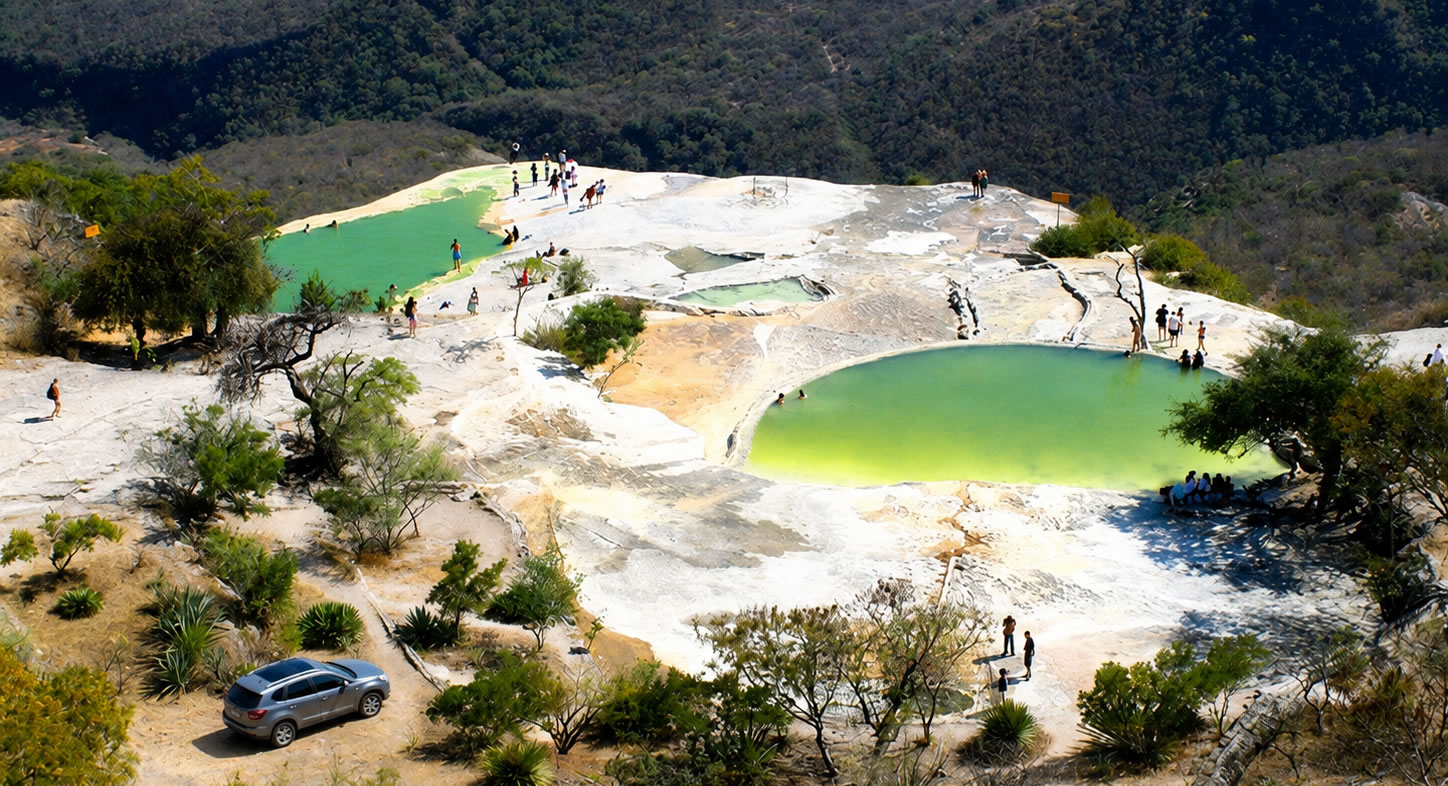
Hierve el Agua is a remarkable natural site known for its petrified waterfalls and mineral-rich pools. The name means "the water boils" in Spanish, though the water itself is cool. Over thousands of years, mineral-laden spring water has flowed down the cliffs and left behind white calcium carbonate deposits that look exactly like cascading waterfalls frozen in time. These formations create dramatic white cliffs that stand out against the green hills of the Oaxaca Valley.
Visitors can swim in several natural pools fed by the same mineral springs. The water has a unique texture and is said to have mild therapeutic qualities because of its high mineral content. Trails wind around the site, offering panoramic views of the surrounding mountains and valleys. It is one of the most photographed places in Oaxaca and a favorite among both locals and travelers seeking something different from the usual archaeological sites.
The area is still actively forming, so the landscape continues to change slowly over time. It sits at a higher elevation than Oaxaca City, which often means cooler temperatures and clearer air. The combination of natural beauty, swimming, and light hiking makes it a perfect contrast to the ruins and markets of the valley floor.
How to Get There from Oaxaca City
There are several ways to reach Hierve el Agua. The most comfortable option is a private driver or organized tour. This allows you to stop at other points of interest along the way and avoid the stress of navigating rural roads. Private drivers usually charge between 2,500 and 3,500 MXN for a round trip that includes waiting time at the site.
If you prefer public transportation, take a bus or colectivo from Oaxaca City toward Tlacolula or Mitla. From either of those towns you can continue by local taxi or colectivo to San Lorenzo Albarradas and then to the site. The last stretch is a dirt road that can be rough, so a private vehicle or sturdy taxi is recommended for comfort. Rental cars are another good choice if you are comfortable driving in Mexico. The roads are generally in good condition until the final approach.
Many visitors start their day with a stop at Monte Albán or Mitla and then continue to Hierve el Agua in the afternoon. The drive from Mitla takes about 45 minutes. Planning the route this way gives you a balanced mix of archaeology and nature in a single day.
What to Bring and Essential Tips
Preparation makes a big difference in how much you enjoy the visit. Bring a swimsuit and a towel if you plan to enter the pools. The water is cool and refreshing, especially on warm days. Sturdy walking shoes or hiking sandals are important because the paths can be uneven and sometimes slippery near the water. A hat, sunscreen, and sunglasses are essential because there is limited shade on the upper trails.
Carry enough drinking water for the entire visit. Small shops near the entrance sell snacks and drinks, but prices are higher than in the city. Cash is necessary for the entrance fee, which is usually around 50 to 80 MXN per person, and for any purchases or tips. A light jacket or long-sleeve shirt is useful for the return drive if temperatures drop in the late afternoon.
Arrive early in the morning if possible. The site is less crowded, the light is better for photographs, and the temperature is more comfortable for walking. Weekdays are quieter than weekends. Always stay on marked paths and respect any barriers around the formations. The cliffs are steep in places, so take care near the edges. If you are traveling with children, keep them close on the trails.
What to Expect During Your Visit
The main attraction is the series of natural pools and the white mineral cliffs that look like frozen waterfalls. You can walk along the upper rim for wide views or descend carefully to the lower areas for closer looks at the formations. Swimming is allowed in designated pools. The water is clear and mineral-rich, leaving a slight film on the skin that many people find pleasant.
There are short hiking trails that lead to different viewpoints. One popular path offers a dramatic perspective of the largest petrified cascade. The surrounding landscape of dry hills and distant mountains provides a striking backdrop. On clear days the visibility is excellent, and the colors of the mineral deposits stand out against the blue sky.
Basic facilities such as restrooms and small food stalls are available near the entrance. The site is not heavily developed, which helps preserve its natural character. Expect to spend two to three hours exploring at a relaxed pace. Photographers often spend longer capturing the changing light on the white cliffs.
Combining Hierve el Agua with Other Attractions
Hierve el Agua pairs perfectly with other stops in the eastern part of the Valley of Oaxaca. Many travelers visit Mitla first, then continue to Hierve el Agua. The ruins at Mitla feature some of the finest stone mosaics in Mesoamerica and provide a strong cultural contrast to the natural site. Adding the Tlacolula market on a Sunday creates a full day of markets, archaeology, and nature.
If you have more time, consider starting the day at Monte Albán in the morning and then heading east. The combination of the hilltop ruins and the mineral formations gives a complete picture of Oaxaca’s diverse landscapes. Private drivers are especially useful for this kind of multi-stop itinerary because they can adjust the schedule to your interests.
Best Time to Visit and Final Advice
The dry season from November to April offers the most reliable weather and clear views. Mornings are generally cooler and less crowded. During the rainy season the landscape becomes greener, but paths can be muddy and some roads more challenging. Always check local conditions if traveling after heavy rain.
Hierve el Agua is one of those places that stays with you long after the visit. The unusual white cliffs, the chance to swim in natural pools, and the wide views of the Oaxaca countryside create a memorable experience. With a travel time of roughly one and a half to two hours from the city, it is well within reach for a day trip. Pack the essentials, start early, and enjoy one of Oaxaca’s most distinctive natural wonders.