

How to Participate in a Traditional Posada or Calenda in Oaxaca During Christmas
Visitors can participate in traditional Christmas posadas and calendas in Oaxaca, and you usually do not need a tour or a ticket. The easiest way is to find a public neighborhood procession, ask whether visitors are welcome, and join the singing or walking respectfully. Posadas traditionally take place from December 16 to 24, while calendas are festive street processions that can occur throughout the Christmas season. Neighborhoods such as Jalatlaco and Xochimilco, along with churches in Oaxaca's Historic Center, are useful places to begin looking. Just remember that a public procession is not necessarily an invitation into someone's private home.
What is a posada, and how is it different from a calenda?
Although both traditions bring people together in Oaxaca's streets, they have different purposes. A posada is a Christmas religious and community gathering. A calenda is a festive procession with music, dancing, and colorful decorations, often organized for a religious feast, wedding, or other community celebration.
Remember the difference: A posada tells the story of Mary and Joseph searching for shelter. A calenda announces or celebrates an occasion through a lively procession. Sometimes they are connected, but they are not the same tradition.
Understanding this difference helps visitors recognize whether they are attending a devotional Christmas gathering or a larger public street celebration.
The posada: Nine nights of hospitality and tradition
Las Posadas are celebrated across Mexico for nine evenings, beginning December 16 and ending on Christmas Eve. Their roots reach back to colonial-era Catholic observances, which eventually developed into gatherings organized by families, churches, and neighborhoods.
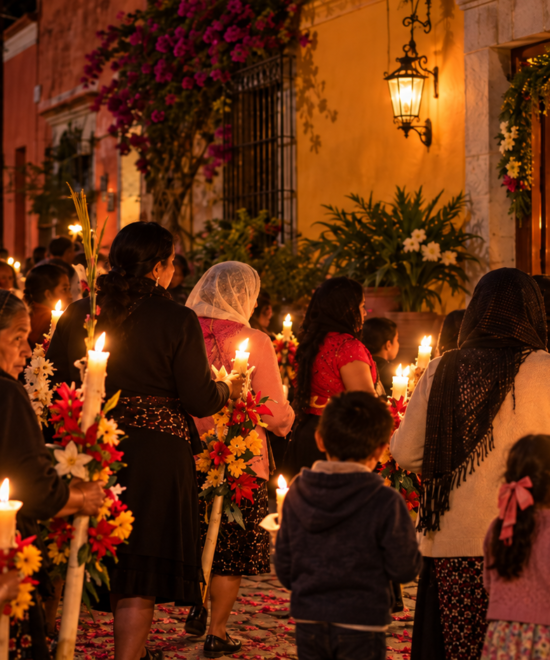
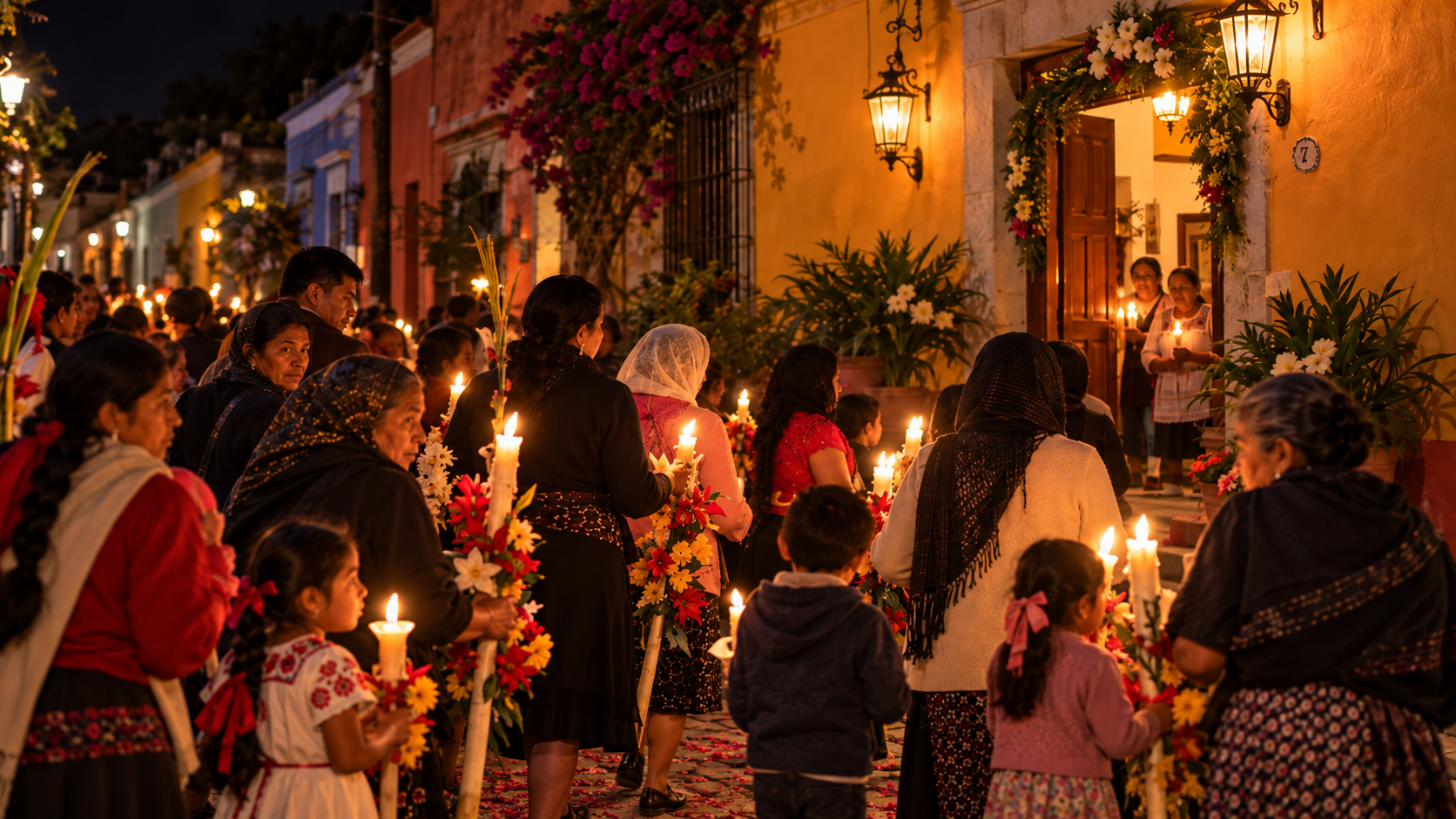
The central tradition recreates Mary and Joseph's search for lodging in Bethlehem. Participants walk together, sometimes carrying candles, lanterns, or figures of the Holy Family. At a designated house, they sing a traditional exchange called pedir posada, or asking for shelter.
The group outside requests admission through song. People inside initially refuse, following the traditional verses, before finally opening the door and welcoming the pilgrims. The moment represents hospitality, compassion, and the importance of offering shelter.
What happens after everyone is welcomed?
Depending on the family or neighborhood, the gathering may continue with prayers, Christmas songs, a piñata, and traditional foods. Typical treats include:
- Ponche navideño: A warm fruit drink prepared with seasonal ingredients and spices.
- Tamales: A Christmas favorite that may feature Oaxacan preparations.
- Buñuelos: Crisp fried pastries traditionally enjoyed during the holiday season.
- Aguinaldos: Small gifts or bags containing sweets, fruit, or other treats.
- Piñatas: Often star-shaped, traditionally associated with the religious symbolism of overcoming temptation.
Not every posada includes every element. Some are primarily religious, others are neighborhood celebrations, and some are private family gatherings. To explore their history and symbolism in greater detail, read our complete guide to Las Posadas in Oaxaca.
The calenda: Oaxaca's musical celebration in the streets
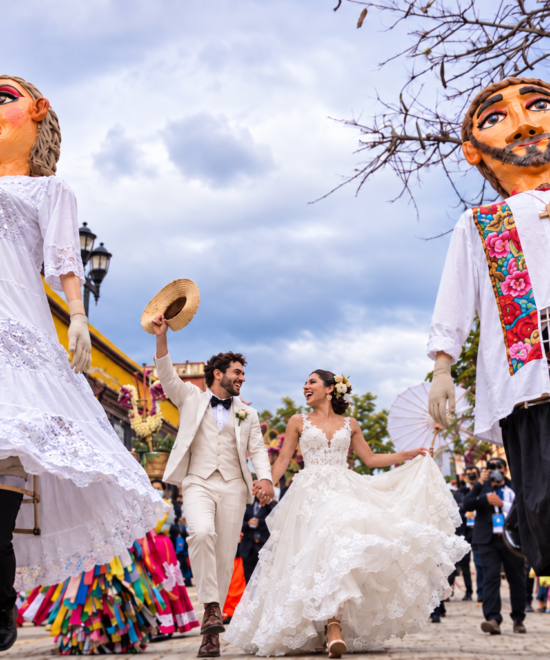
A traditional Oaxacan calenda is generally louder, more energetic, and more mobile than a posada. These processions often feature brass bands, dancers, decorated lanterns, large spherical ornaments called marmotas, and towering papier-mâché figures known as monos de calenda.
Calendas are not exclusively Christmas celebrations. They form part of Oaxaca's wider festive culture and can accompany patron-saint celebrations, weddings, and community events throughout the year.
During December, some calendas are associated with religious festivities. Celebrations surrounding the Virgen de la Soledad on December 17 and 18 are particularly important in Oaxaca City. On Christmas Eve, processions associated with the Niño Dios are another distinctive tradition.
What makes a Christmas calenda special?
You may see families accompanying religious images, bands playing traditional music, and participants carrying illuminated decorations through the streets. Some processions combine a devotional purpose with the festive elements commonly associated with Oaxacan calendas.
These events are often organized by churches, neighborhoods, or community groups. Their routes, schedules, and rules for participation vary. Learn more about their cultural background in our article The Origins of Calendas in Oaxaca.
Where can visitors find a traditional posada or Christmas calenda?
For travelers staying in Oaxaca City, the following areas provide useful starting points. These are traditional locations to investigate, not guarantees that a public procession will take place on any particular night.
- Jalatlaco: The neighborhood around the Church of San Matías is a good starting point for asking about local posadas and evening religious activities.
- Xochimilco: This historic neighborhood has a strong community identity and is another place to inquire about Christmas gatherings.
- Oaxaca's Historic Center: Churches and nearby plazas may host or become gathering points for seasonal processions.
- Basílica de Nuestra Señora de la Soledad: Particularly relevant around December 17 and 18, during celebrations honoring Oaxaca's patron saint.
- Local parish churches: Many organize their own Christmas activities or can explain which neighborhood gatherings are open to visitors.
Church notices, neighborhood announcements, and local organizers are generally better sources for exact starting times than assuming a procession follows the same schedule every year.
How to actually join a posada or calenda
You do not have to speak fluent Spanish to participate. A few polite questions and an understanding of the event's purpose will help considerably.
- Find a confirmed gathering. Ask at a neighborhood church, check local announcements, or consult current event information before heading out.
- Arrive before the procession begins. This gives you time to understand where people are gathering and identify the organizers.
- Ask whether visitors can participate. A useful phrase is: "¿Podemos acompañar la procesión?" This means, "May we accompany the procession?"
- Follow the group's lead. During a posada, join the singing if invited, or listen respectfully. During a public calenda, walking with the group may be appropriate when organizers welcome it.
- Respect the end of the public celebration. If a procession enters a private home or enclosed gathering space, do not follow unless you are specifically invited.
For a posada, you can also ask, "¿La posada está abierta al público?" or "Is the posada open to the public?" This simple question avoids an awkward misunderstanding while showing consideration for the hosts.
Participation etiquette: What visitors should and should not do
Oaxaca's celebrations are living traditions, not performances staged solely for tourists. Being welcomed into one is an opportunity to share in community life while respecting its purpose.
- Ask before photographing people closely, particularly children, religious ceremonies, or gatherings inside homes.
- Do not interrupt prayers or traditional songs for photographs or conversation.
- Keep a respectful distance from fireworks, which may be used during calendas and neighborhood festivities.
- Do not touch puppets, decorations, religious images, or musical equipment unless invited.
- Accept hospitality graciously, but do not assume that food, drinks, or gifts are available to every spectator.
- Respect the organizers' instructions, especially when large crowds or children are involved.
If you receive an invitation to a family gathering, a sincere thank-you is appropriate. You can also ask whether bringing something to share would be welcome. A gift is not a requirement for attending a public procession.
What should you wear or bring?
Oaxaca evenings in December can be cool, especially after sunset. Wear comfortable walking shoes and bring a light jacket or sweater. Historic streets may have uneven paving, and a procession can involve considerably more walking than expected.
You do not need traditional clothing or a costume. Everyday respectful clothing is entirely appropriate, particularly when the procession has a religious purpose.
Carry some cash for food vendors and your return transportation, keep your belongings secure in crowded areas, and make a plan for returning to your accommodation after an evening event.
Which dates are best during Christmas?
December 16 to 24 is the traditional period for Las Posadas. Visitors interested in a neighborhood gathering should begin with these dates, while remembering that individual communities may follow different schedules.
December 17 and 18 are particularly significant around the Basílica de la Soledad. These festivities have a different religious focus from the Christmas posadas but may include processions and calenda traditions.
December 24, Christmas Eve, is worth considering for the Calendas del Niño Dios. In recent seasonal programming, processions have begun in the evening, sometimes around 8:00 p.m., but visitors should confirm the actual church, starting point, route, and time for the year of their visit.
For updated seasonal information, see the MAHC Oaxaca Christmas Events and Activities Calendar 2026.
How to find current celebrations while you are in Oaxaca
One of the challenges of attending neighborhood celebrations is that not every activity appears on a large public calendar. Some are arranged locally, announced shortly beforehand, or communicated through parish and neighborhood groups.
Before heading out, consult Oaxaca Today by MAHC for current and upcoming activities and relevant local updates. You should still verify the details of smaller neighborhood gatherings directly with their organizers.
Our recommendation: Participate rather than simply watch
If your visit falls between December 16 and 24, we recommend looking for a neighborhood posada rather than concentrating exclusively on the larger celebrations in the Historic Center. A smaller public gathering can help you understand the meaning behind the singing, the request for shelter, and the community hospitality that follows.
For visitors who prefer music, dancing, and the energy of a larger procession, a public Christmas calenda may be the better choice. Both experiences reveal different aspects of Oaxaca's traditions.
The most important thing is not to arrive expecting a tourist attraction. Come prepared to listen, observe, participate when welcomed, and respect the people keeping these traditions alive. That is what makes sharing Christmas in Oaxaca meaningful.