


Can You Bring a Service Dog to Monte Albán? INAH Contacts and Access Guidance
Contact INAH before your visit
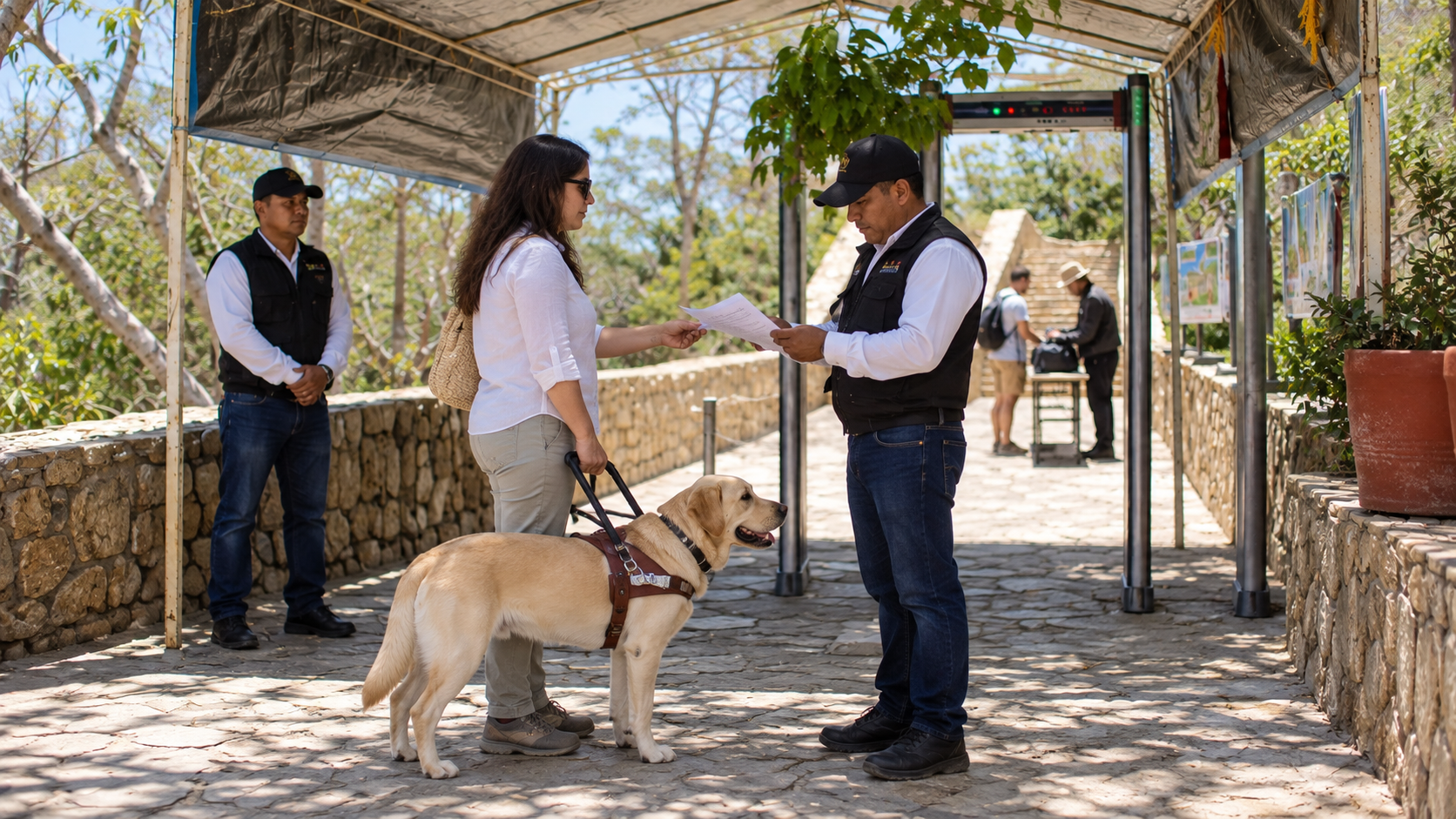
If you plan to visit Monte Albán with a trained service animal, contact INAH before you travel and ask for written confirmation of access. Ask whether your animal may enter the archaeological zone and, if you plan to visit it, the Site Museum. Request an answer that identifies the areas covered and any documents or advance arrangements required.
Monte Albán Archaeological Zone
Email: montealban@spersaoaxaca.com.mx
Telephone: +52 (951) 515-0400
Additional telephone: +52 (951) 515-0002
Director of the Archaeological Zone
Name: David Andrade Olvera
Email: david_andrade@inah.gob.mx
Monte Albán Site Museum
Email: montealban.museo@hotmail.com
Telephone: +52 (951) 516-7077
Send your request to the archaeological zone's general email address and consider copying its director. Contact the museum separately if you intend to enter it. Check INAH's current listings shortly before traveling, since contact details can change.
Why the published pet rule does not settle the question
INAH's public visitor listings say that pets are prohibited at both the archaeological zone and the Site Museum. They do not explain whether or how a trained service animal may enter. A service animal is not simply a pet, but the general pet notice does not provide a complete answer to an individual access request.
The Monte Albán Heritage Center, or MAHC, is an independent visitor information resource. We are not affiliated with, operated by, or part of INAH. We cannot authorize your animal's entry or guarantee admission. INAH is responsible for the archaeological zone and must provide the answer about access.
What to include in your request
Write as far ahead of your visit as possible. Keep the message direct and give INAH enough information to address your circumstances. You can explain the animal's trained role without including your complete medical history in an initial email.
- Your planned visit date: Say when you expect to arrive and whether you intend to visit the archaeological zone, the museum, or both.
- The animal's role: Explain that the animal is trained to assist with a medical or disability-related need and is not a pet.
- The assistance provided: Briefly describe what the animal is trained to do, to the extent you are comfortable sharing.
- Your access question: Ask specifically whether the animal may accompany you inside each area you plan to visit.
- Documents and procedures: Ask whether INAH requires service animal documentation, health or vaccination records, or advance arrangements.
- Written confirmation: Ask for a response explaining the decision and any conditions or arrival instructions.
If the response only repeats the general pet rule, ask for clarification about your trained service animal. If it addresses the archaeological zone but not the museum, follow up about the museum. The answer should cover the visit you are actually planning.
Why you should request a written response
A phone call can help you reach the right office, but a written reply gives you a record of what INAH said about your visit. Questions outside the circumstances clearly described in public visitor rules may need to be checked by site personnel. Having INAH's response with you can make it easier to address those questions at the entrance.
Save the response on your phone and bring a printed copy. Carry any documents INAH specifically asks you to present. Written confirmation is a practical precaution; MAHC has not established that INAH requires a formal written permit for every trained service animal. If the instructions are unclear, follow up before you travel.
If you do not receive a clear answer
Follow up by telephone, refer to your original email, and ask which office can answer a service animal access request. Include your travel date so staff understand when you need a response. Do not assume that a service animal certificate alone will resolve the matter at the entrance.
The goal is to settle the access question before you reach Monte Albán. Explain your circumstances, obtain an answer for each area you plan to enter, and take that correspondence with you. Advance communication gives you and site personnel a clearer basis for your visit.


