

What Are the Origins of the Giant Paper Mâché Puppets (Monos) Seen in Oaxaca's Christmas Parades?
Where do Oaxaca's Christmas parade puppets come from?
Oaxaca's giant parade puppets come from colonial religious processions and European giant figures, transformed by local makers into symbols of community celebration. Known locally as monos de calenda, they accompany a calenda, a traditional Oaxacan street parade. They were not invented specifically for Christmas. Their history includes Catholic pageantry, local craftsmanship, humor, and the pleasure of bringing a neighborhood together.
At Christmas, these giants join a much wider festive tradition. You can also encounter them at patron saint celebrations, weddings, graduations, and Guelaguetza festivities. Their makers are local artisans, often working with relatives in home workshops. Buying a handmade giant and hiring one for a parade are different purchases, with different costs.
The colonial and European connection
The clearest historical connection leads to the gigantones of European Catholic processions, particularly Corpus Christi. These towering figures represented peoples of the world within a religious spectacle. In colonial Mexico, giants became part of public Catholic celebrations.
The Fundación Alfredo Harp Helú Oaxaca connects today's monos with this tradition and points to giants depicted in Manuel de Arellano's 1709 painting of the transfer of the Virgin of Guadalupe to her sanctuary. That painting documents their presence in New Spain, rather than establishing the first appearance of monos in Oaxaca.
The same cultural institution describes how restrictions on public religious celebrations helped festive elements acquire secular uses. Giants and marmotas survived beyond their original church setting, eventually accompanying occasions such as weddings and graduations.
The local account that names 1741
Another account gives Oaxaca a more specific starting point. In his chronicle of calendas, Oaxaca chronicler Jorge Bueno recounts an introduction in 1741 associated with Tomás Montaño y Aarón. Enormous figures covered with paper or cloth opened a procession, animated by people standing inside.
In that account, the figures represented different peoples under Christ's authority, and other processions adopted them. It is a local historical account worth knowing, but the date should not be presented as the invention of procession giants themselves. The broader tradition was already present in New Spain.
Were the monos created to make fun of powerful people?
Satire is another important part of their story. Oaxaca maker Juan Alejandro, of Vida, Color y Tradición, describes the mono as a character used for parody. His account includes early representations of different social groups and later figures inspired by popular cinema, including Cantinflas and Tin Tan.
A separate account from San Pablo Huitzo describes the figures becoming a means of satirizing Catholic authorities. These explanations emphasize humor and changing social meaning rather than providing a single, securely documented invention story.
The useful distinction is that religious origins and later satire can belong to the same tradition. A puppet that once carried a religious message can later become a comic character, a bridegroom, or a recognizable public figure. Its meaning depends on its character and occasion.
Why are they used at Christmas?
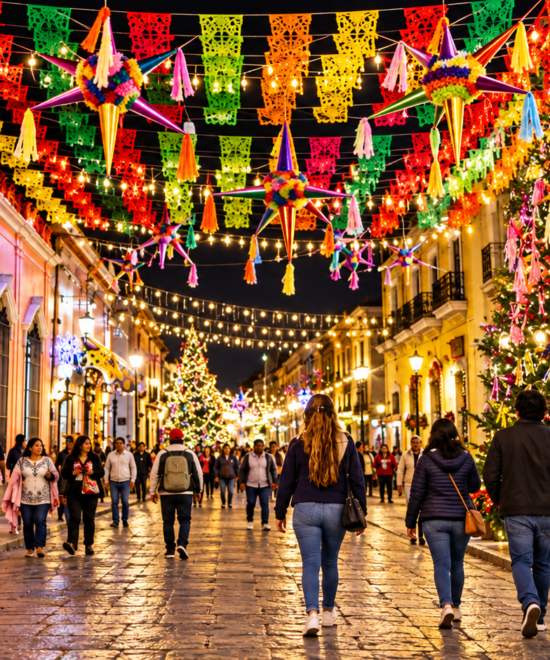
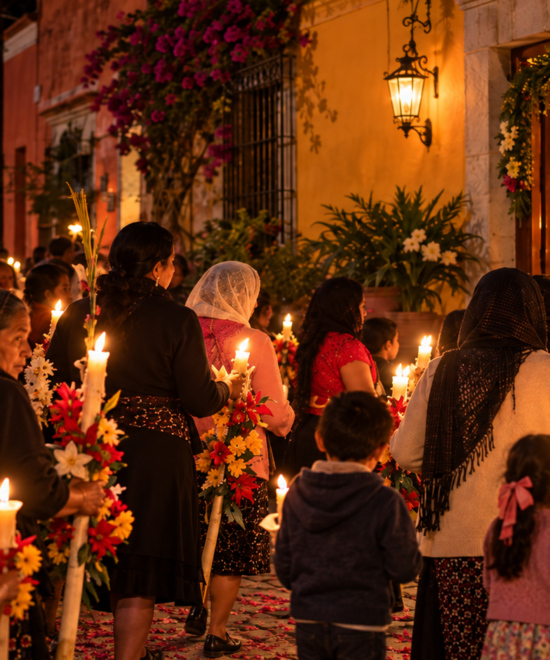
The giants help announce a celebration and animate the procession. Oaxaca's December posadas traditionally take place from December 16 through 24, reenacting Mary and Joseph's search for lodging. Some incorporate the music, dancing, flower baskets, and monos associated with calendas.
Not every posada includes giants, and not every giant represents a biblical character. Their presence connects the religious gathering with Oaxaca's broader street celebration. Makers' repertoires can include the Three Kings alongside brides, grooms, and other characters.
There is also a community meaning beyond any individual costume. Puppeteer and scholar María Griselda Coss Soto describes monos as active participants in a shared festive space, where local identity, devotion, play, and performance come together.
Who makes them, and how do they move?
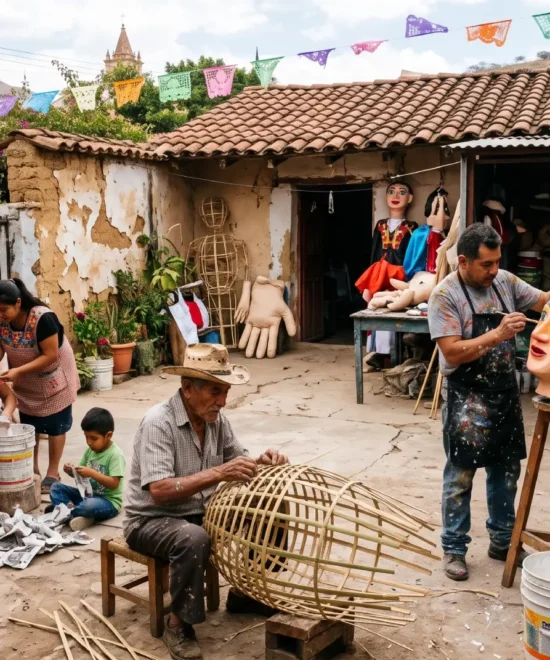
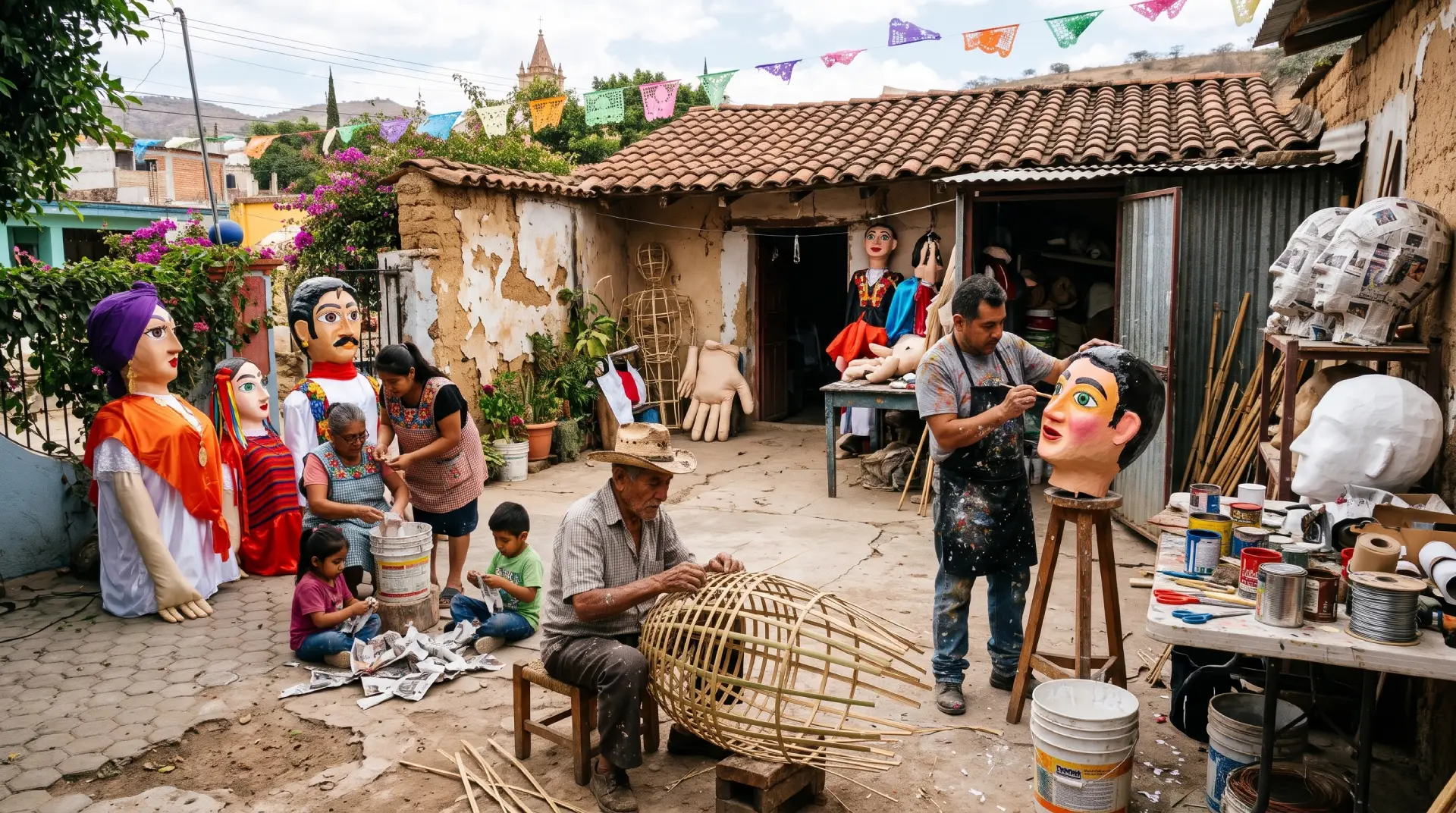
The artisans who build them are often called moneros. Miguel Ángel López Martínez, in San Pablo Huitzo in the Etla Valley, is one documented maker. Another is Juan José Antonio, from San Sebastián Tutla, who learned reed working through his grandmother.
Juan Alejandro's workshop brings together his brother, wife, and other relatives. His commissions have included bridal figures, politicians, historical characters, and even a parrot for a music video. Construction can take a week to a month, depending on the commission.
Calling the entire puppet paper mâché leaves out much of the work. A typical giant combines a lightweight carrizo framework, a modeled paper head, and sewn clothing. A performer carries and balances the structure from inside, making it dance. Coss Soto also documents people performing for devotion or enjoyment, alongside paid performers.
How much does a mono de calenda cost?
There is no single verified standard price for 2026. A useful documented benchmark comes from Juan José Antonio: in July 2022, he charged MXN $4,000 to $5,000 for one mono, with about a month of work involved. Those are historical workshop prices, not a current quotation.
Today, Tradicionales Calendas de Oaxaca in San Pablo Huitzo advertises custom handmade monos and requests individual inquiries. For a purchase, ask about dimensions, clothing, personalization, delivery, and completion time.
For an event, request a separate rental quotation. Chepanes offers wedding calendas combining monos, marmotas, and a band. A price for that service cannot be treated as the purchase price of a puppet. We recommend asking explicitly whether performers, transport, and any required event arrangements are included.
Where are they most commonly encountered?
For travelers, Oaxaca City's historic center and the Central Valleys are useful places to encounter the tradition. You will often see them as decoration in front of restaurants, hotels, and artisan markets. San Pablo Huitzo, San Sebastián Tutla, and Zaachila also offer documented connections to its makers. In Zaachila, reporting on the Benítez family describes a workshop producing reed baskets, monos, and Christmas lanterns.
Christmas is one opportunity to see them, but their use extends through the year. In a neighborhood celebration, a wedding procession, or a patron saint's calenda, the giant belongs to the people making it dance. We recommend giving the performer room and following the organizers' lead when joining a celebration.