The Complete 2026 Guide to the Carnaval Celebrations in Oaxaca
Carnaval in Oaxaca is not one festival
That is the first thing to understand. Oaxaca does not celebrate Carnaval with one enormous centralized parade comparable to Rio, Veracruz or Mazatlán. Instead, the state has a constellation of community Carnavales, each with its own characters, music, jokes, costumes, rituals and local history.
For a traveler based in Oaxaca City, this creates both an opportunity and a planning problem. On the same weekend you may have the state Carnaval showcase in the Historic Center, Diablos Aceitados running through San Martín Tilcajete, Tiliches filling the streets of Putla and the Carnaval de los Diablos underway in Zaachila.
The strongest experiences happen when you choose the community whose tradition actually interests you instead of trying to collect every Carnaval in one day.
Catholic Lent provides the calendar framework. Local communities provide almost everything else. Satire, masks, altered identities, mock authority, music, bodily transformation and public mischief coexist with the knowledge that Ash Wednesday is coming immediately afterward.
Table of contents
Confirmed Carnaval calendar for 2026
In 2026, Ash Wednesday fell on February 18, making Tuesday, February 17 the traditional Martes de Carnaval immediately before Lent.
| Date | Place | What happened |
|---|---|---|
| February 6 | Oaxaca City | Promotional Muestra del Carnaval Putleco from Santo Domingo toward the Zócalo. |
| February 13 | Oaxaca City | Opening activities for the 12th Muestra de Carnavales, including events at MUPO. |
| February 14 | Oaxaca City | 12th Muestra de Carnavales del Estado de Oaxaca at 5:00 PM, from Jardín Carbajal through Macedonio Alcalá and Morelos to Plaza de la Danza. |
| February 14–17 | Putla Villa de Guerrero | Core Carnaval Putleco celebrations, within a broader February 8–17 program. |
| February 15–18 | Villa de Zaachila | Carnaval de los Diablos, community events, gastronomy and associated fairs. |
| February 17 | San Martín Tilcajete | Final and most important Carnaval day, with Diablos Aceitados and the satirical wedding. |
| February 18 | Zaachila / statewide | Ash Wednesday. Zaachila continued cultural programming while the wider Carnaval cycle gave way to Lent. |
Which Oaxaca Carnaval should you visit?
| Place | Best for | From Oaxaca City | My advice |
|---|---|---|---|
| Oaxaca City Muestra | Seeing many traditions in one easy evening | You are already there | Best choice if you cannot travel to the villages. |
| San Martín Tilcajete | Diablos Aceitados, masks, street interaction and photography | Easy day trip south | Best first Carnaval for many visitors. |
| Villa de Zaachila | Diablos, Zancudos, cascarones, food and community festivities | Close and easy to reach | Excellent for families and travelers who want several traditions together. |
| Putla Villa de Guerrero | Tiliches and one of Oaxaca's deepest multi-day Carnaval experiences | Several hours away | Stay overnight. Do not treat Putla as a quick day trip. |
Oaxaca City: the 12th Muestra de Carnavales
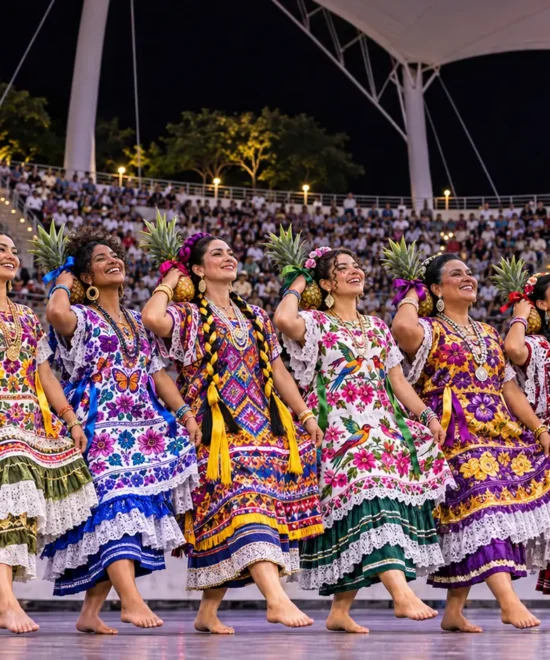
For travelers who wanted to see a cross-section of Oaxaca's Carnaval traditions without leaving the capital, the most useful event in 2026 was the 12th Muestra de Carnavales del Estado de Oaxaca.
The main procession began on Saturday, February 14 at 5:00 PM at Jardín Carbajal, continued along Macedonio Alcalá and Morelos, and ended at Plaza de la Danza.
Eleven communities and groups were announced, including San Martín Tilcajete, Villa de Zaachila, San Juan Bautista La Raya, Santa María Coyotepec, Ánimas Trujano, San Raymundo Jalpan, Huajuapan de León, San Juan Juquila Mixes, San Pablo Huitzo, Teotitlán del Valle and El Carrizal de Santa María Peñoles.
This was a showcase rather than a substitute for visiting the communities themselves. You could see costumes and characters from several traditions in one evening, but the meaning changes when the same characters are moving through their own streets among neighbors who know the ritual.
San Martín Tilcajete: Diablos Aceitados and sanctioned chaos
San Martín Tilcajete is one of the most accessible and visually powerful Carnaval experiences from Oaxaca City. The community is famous throughout the year for its carved and painted copal figures, but during Carnaval the streets fill with masked participants whose bodies may be covered with dark oil or brightly colored pigments.
In 2026, local coverage confirmed that the Carnaval built through the preceding Sundays and culminated on Tuesday, February 17, immediately before Ash Wednesday.
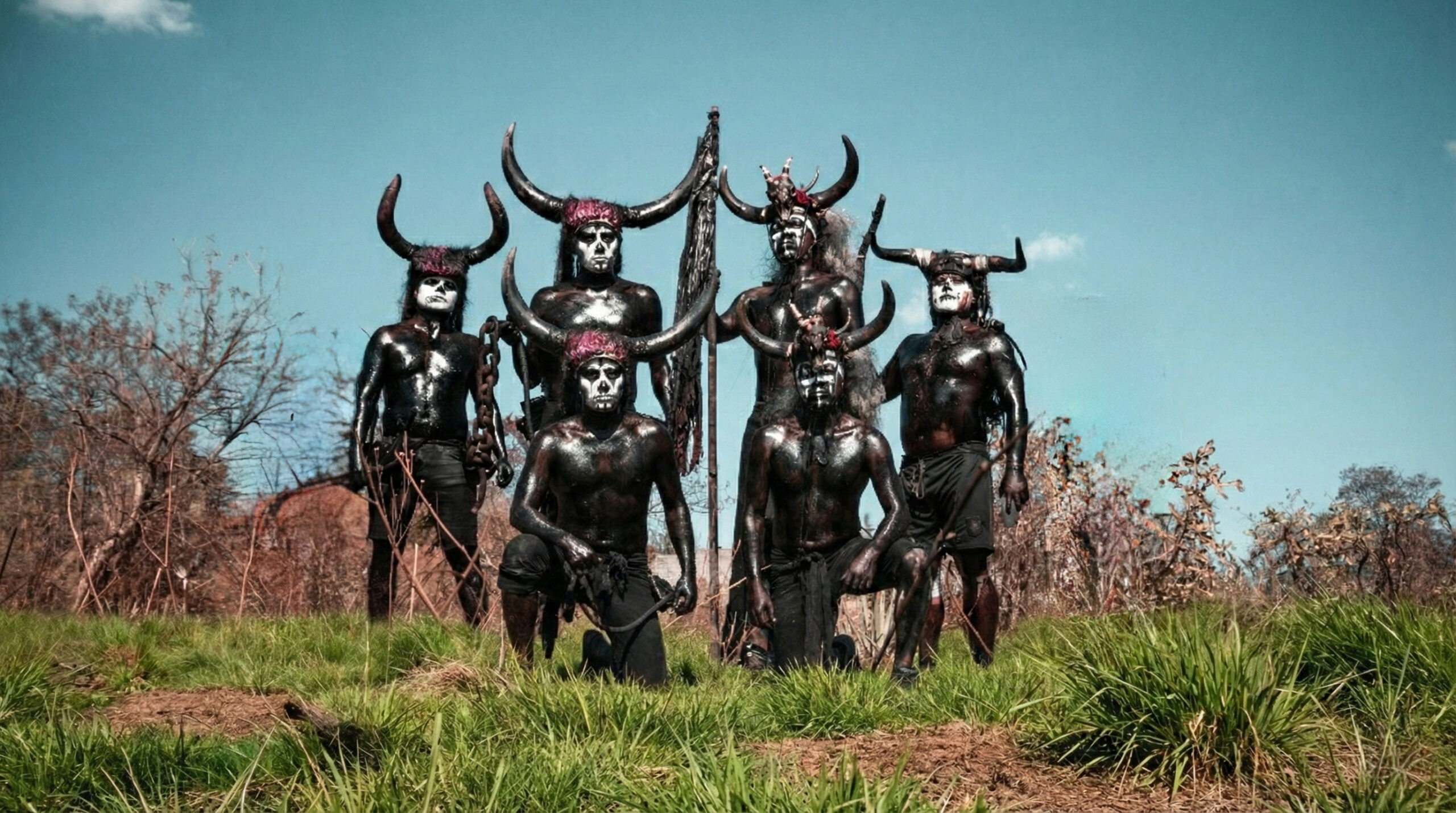
The most recognizable participants are the Diablos Aceitados. Local residents, especially younger participants, paint or coat their bodies, wear carved masks and fasten large cencerros around their waists. They run, dance, shout and deliberately disrupt normal street behavior for the day.
Older descriptions often focus on used motor oil. Contemporary participants may use motor oil, vegetable oil or colored body paint. The materials are not completely standardized from one participant to another.
It is tempting to assign one universal symbolic meaning to every mask, bell and color. Avoid that. Interpretations differ among participants and families, and the Carnaval itself has changed over time. What is consistent is the deliberate transformation of identity and behavior before the restraint associated with Lent.
The satirical wedding in Tilcajete
The final Tuesday includes one of the most memorable elements of the Tilcajete Carnaval: a satirical wedding involving Carnaval characters.
The 2026 celebration included the bride and groom, padrinos, La Viuda, La Llorona, La Muerte and other comic or supernatural figures. The group moves through the town with music before the parody of civil and religious marriage reaches its climax.
The humor is intentionally irreverent. Marriage, authority, religion and ordinary social behavior are temporarily opened to parody immediately before the community enters the solemn Christian season of Lent.
Do not expect a theater performance with a clean stage and assigned seats. The street is the stage, the community surrounds the action, and the boundary between participant and observer can become very loose.
Putla Villa de Guerrero: Tiliches and a Carnaval worth traveling for
If Tilcajete works as a day trip, Putla does not. Putla Villa de Guerrero is far enough from Oaxaca City that its Carnaval deserves an overnight stay or, ideally, several days.
The state government announced a broader February 8–17 Carnaval program for 2026, while the principal public Carnaval period ran February 14–17.
Three traditional groups form the heart of the celebration:
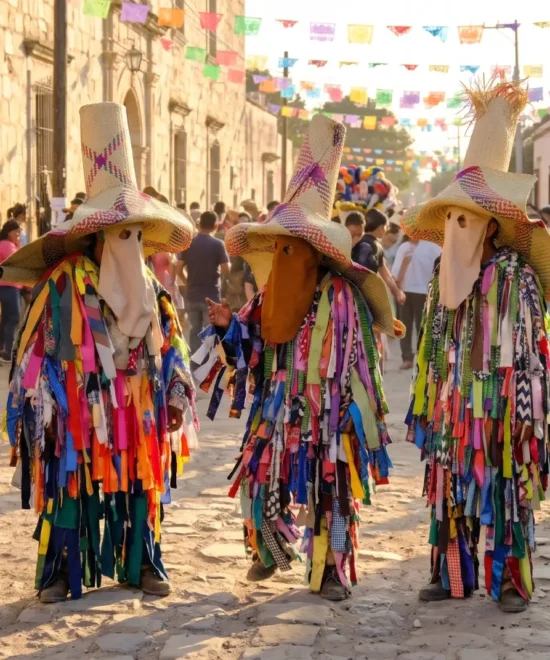
- Los Viejos or Tiliches: dancers covered in layers of brightly colored strips of fabric.
- Los Copalas: a comparsa with its own music, clothing and ceremonial identity.
- La Danza del Macho or Mascaritas: a theatrical comparsa involving characters and social satire.
The origin of the Tiliche costume is better treated as community oral history than as one proven historical event. Local accounts include stories about workers returning in torn clothing after searching for a lost bull and explanations involving the creative reuse of fabric scraps. What is certain is that the modern Tiliche has become the unmistakable visual emblem of Putla's Carnaval.
The suits can be extremely heavy, with layers of cloth moving outward as dancers jump and turn. The anonymity created by masks and costumes is part of the transformation.
Key Putla events in 2026
- February 13: children's Carnaval parade and ceremonial activities connected with the Comparsa Copala.
- February 15: costume activities and the major Carnaval parade at 4:00 PM.
- February 16: Comparsa de los Viejos costume contest and a 4:00 PM route featuring the Viejos, Copalas and Danza del Macho.
- February 17: search for the lost bull at 3:00 PM, the traditional robo del tenate at 5:00 PM and the closing dance at 9:00 PM.
If Putla is your priority, book accommodation early. This is not a place where I would arrive late in the afternoon assuming I could improvise the return to Oaxaca City.
Villa de Zaachila: Carnaval de los Diablos, Zancudos and cascarones
The original version of this guide described Zaachila mainly through the Zancudos. That was incomplete. In 2026, the official celebration was the Fiesta del Carnaval de los Diablos, held from February 15 through 18.
The Diablos are central characters, moving through the community in horned masks and costumes while engaging in the mischief associated with the Carnaval season. The traditional Danza de los Zancudos also participates, but it is one element of a wider celebration rather than the entire Carnaval.
Zaachila was particularly valuable for visitors in 2026 because the Carnaval was surrounded by other public activities:
- Feria del Tamal y Bebidas Prehispánicas: February 15–16, from 9:00 AM to 8:00 PM on the municipal esplanade.
- Octava Feria del Cascarón: February 15–18, from 9:00 AM to 8:00 PM.
- February 18: programming included the Danza de la Pluma, Zancudos, Jarabe Zaachileño and Comparsa Muchachitas.
Cascarones — hollow eggshells filled with confetti — are part of the playful atmosphere. Expect color, close interaction and streets that look very different by the end of the day than they did in the morning.
What to eat and drink during Carnaval
The old version made Carnaval food sound too standardized across Oaxaca. It is better to eat according to the community you are visiting.
In Putla, local festive food includes barbacoa, masita de chivo, regional tamales, pozole, tepache and fruit-based drinks. Masita de chivo is especially associated with Putla's fiestas, Carnavales and mayordomías.
In Zaachila, the 2026 Feria del Tamal y Bebidas Prehispánicas gave visitors a direct way to try local food as part of the official Carnaval calendar.
In the Central Valleys, you will also encounter the everyday food that keeps large celebrations moving: tlayudas, memelas, tacos, barbacoa, fruit, aguas frescas and whatever the local vendors are cooking that day.
And the mezcal?
You may be offered mezcal during community celebrations. You are not required to drink it. If you do not want alcohol, a friendly "No, gracias" is completely sufficient. There is no need to accept a drink and pretend to consume it in order to be respectful.
If you do drink, remember that Carnaval often means hours in the sun, crowds, dancing and walking. Water matters more than bravado.
Getting there from Oaxaca City
San Martín Tilcajete
Tilcajete lies south of Oaxaca City toward Ocotlán. Buses traveling the Ocotlán corridor and colectivos are the common budget options. Depending on the service, you may need to get off near the turnoff and continue into town by moto-taxi or on foot. A private driver is much easier on the main Carnaval day because you control your return time.
Villa de Zaachila
Zaachila is much closer to Oaxaca City and is served by frequent shared transportation from the southern side of the city. This is one of the easiest community Carnavales to visit without a car.
Putla Villa de Guerrero
Putla is a long trip through mountainous terrain. Bus and van services exist, but travel time is measured in hours, not minutes. Plan to sleep there rather than trying to return to Oaxaca after the evening celebrations.
How to attend without becoming the annoying tourist
- Ask before close-up portraits. A public street celebration does not mean every individual wants a camera six inches from their face.
- Expect interaction. In Tilcajete, staying completely clean may be unrealistic if you stand near the Diablos.
- Protect electronics. Oil, pigment, flour, confetti and dense crowds are not friendly to uncovered cameras and phones.
- Carry cash. Food stalls, transport and small vendors may not accept cards.
- Leave your passport at the hotel. Carry only what you need in large crowds.
- Do not lecture participants about what their tradition "really means." Many Carnaval interpretations come from local oral tradition and can vary even within the same town.
- Buy something locally. Food, crafts, transport and local services are the most direct way your visit contributes to the community hosting you.
My recommendation for choosing your 2026 Carnaval experience
If you were staying in Oaxaca City and had only one Carnaval day, I would choose San Martín Tilcajete if you wanted the most intense street experience, or Zaachila if you wanted a broader family-friendly day combining Carnaval characters, food and several cultural activities.
If you could not leave Oaxaca City, the February 14 Muestra was the obvious choice because it brought multiple communities into one route through the Historic Center.
If Carnaval itself was one of the main reasons for your trip to Oaxaca, Putla was the destination worth building several days around.
The important thing is not to treat all these celebrations as interchangeable performances. The costumes may travel to demonstrations and showcases, but the Carnaval becomes much more understandable when you see it in the community that owns the tradition.