


The Aftermath of the Day of the Dead: What Happens in Oaxaca on November 3rd and 4th?
The Soft Landing After the Peak
The cemetery vigils wind down, the biggest comparsas fade, and the throngs of visitors begin to thin. November 3 and 4 in Oaxaca feel like a deep, grateful exhale. The magic does not vanish overnight. It simply changes register. The city becomes more spacious, more contemplative, and, for many travelers, even more enjoyable.
This is the moment when local families perform the levantamiento de la ofrenda, the respectful dismantling of home altars. It is also when the streets open up again, the cafes have tables available, the galleries feel intimate, and the famously mild autumn weather invites long, unhurried walks through the Centro Histórico.
November 3: The Levantamiento de la Ofrenda
According to long-standing tradition across much of Oaxaca, the ofrendas that welcomed the souls are taken down on November 3. Some families begin at dawn. Others wait until the afternoon, often after 3:00 p.m., believing this is when the visiting spirits finally depart for the other world.
The food that remained on the altar is shared among the living. The belief is that the souls have already taken the essential aroma and essence of the dishes. What is left is offered back to family, neighbors, and friends with gratitude. Flowers may be carried to the cemetery one last time, photographs carefully stored, and candles extinguished with quiet words of farewell.
In some communities the process stretches a little longer, and a few public or institutional displays remain visible into the 3rd or even the 4th. But the private, intimate act of packing away the ofrenda marks the official close of the most intense days of reunion.
What the City Feels Like
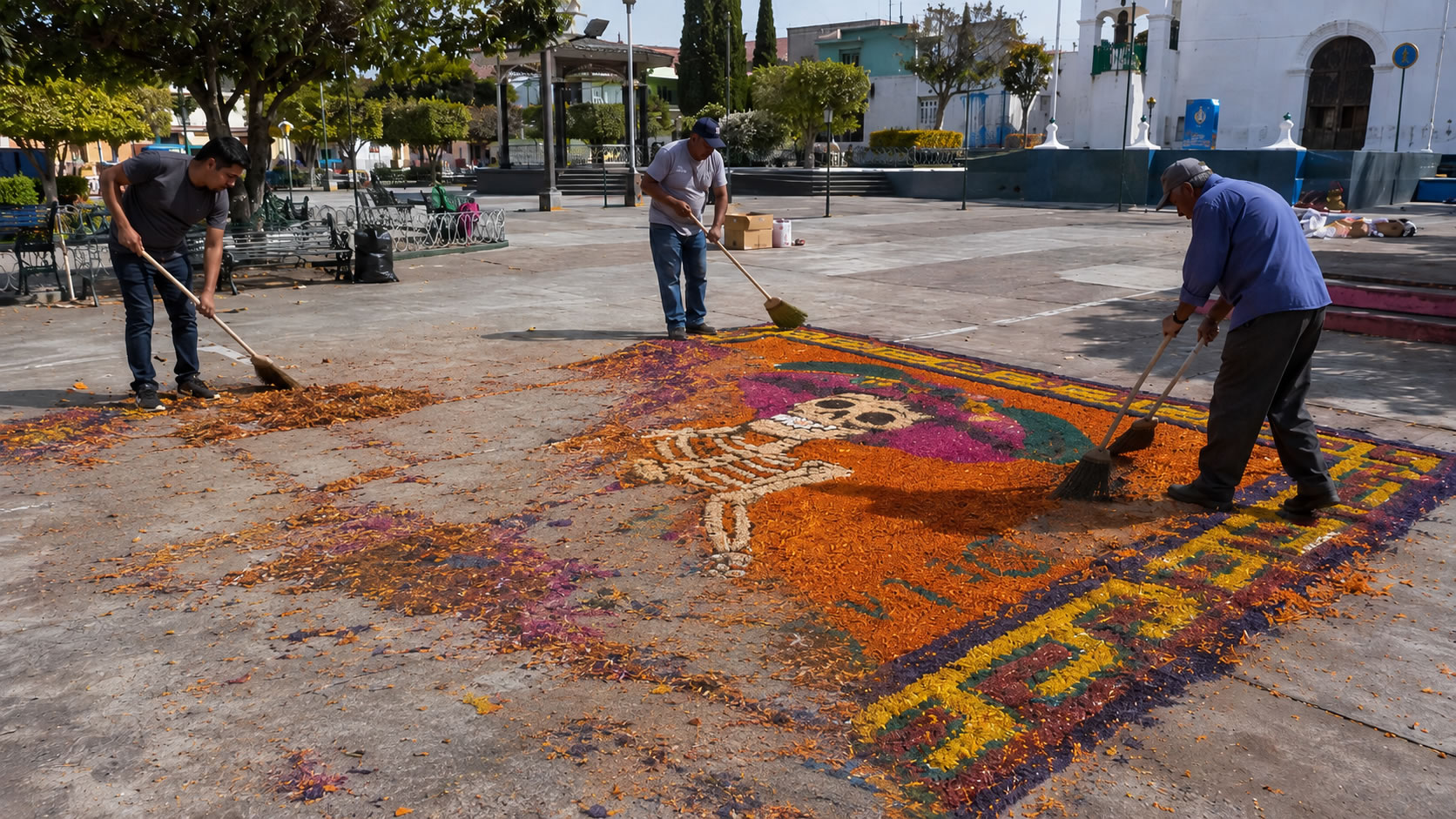
By the morning of November 3 the dramatic crowds have largely disappeared. The Zócalo and Calle Macedonio Alcalá still show traces of the celebration: scattered marigold petals, the last sand tapestries being swept or photographed, a few remaining public altars. Yet the energy is softer. You can walk without constant jostling. You can sit in a cafe and actually hear the conversation at the next table. You can enter museums and galleries without waiting in long lines.
This is Oaxaca at one of its most appealing moments. The city has just poured its heart into welcoming the dead. Now it rests, reflects, and slowly turns toward the next season. The feeling of Día de Muertos does not end when the last candle is blown out. It lingers in the air, in the conversations, and in the continued presence of seasonal foods and decorations, carrying a gentle current of remembrance all the way toward Christmas.
The Beautifully Cool Weather
Early November in the capital is one of the most pleasant times of the year. Daytime highs typically sit in the low to mid-20s Celsius (around 73–79°F). Nights cool into the low teens (around 53–57°F). The rainy season has ended. Skies are often clear or lightly clouded, and the light has that soft, golden quality that photographers love.
A light sweater or jacket is perfect for the evenings. Outdoor tables at cafes and restaurants become especially inviting. You can walk for hours without the heat of the hotter months or the denser crowds of the peak festival days. It is ideal weather for lingering over coffee, exploring side streets, or sitting in a plaza simply watching daily life resume.
Art, Cafes, and the Slower Pleasures
Many cultural institutions keep related exhibitions open through November 3 or 4. Museums such as the Museo de los Pintores Oaxaqueños, the Museo de Arte Contemporáneo, and other spaces often still display ofrendas, photography, or works inspired by the season. With fewer visitors you can actually spend time with the pieces.
The cafe culture of Oaxaca shines during these days. Specialty coffee shops, traditional chocolate houses, and courtyard restaurants that were packed on November 1 and 2 suddenly have space. This is the moment to claim a good table, order a proper breakfast of pan de muerto and hot chocolate, or enjoy a long lunch of mole without feeling rushed. The same holds for mezcalerías and small galleries. Conversations with owners and artists become easier and more personal.
- Wander the quieter stretches of Jalatlaco or Xochimilco and notice how the street art and remaining decorations still speak of the recent days.
- Visit markets that still carry seasonal items: the last of the cempasúchil, pan de muerto, and specialty sweets.
- Take advantage of available appointments or walk-ins at workshops and studios that were fully booked the previous week.
A Bridge Toward Christmas
In Oaxaca the spirit of Día de Muertos does not switch off like a light. The act of remembering, of setting a place for those who have gone, feeds into the broader holiday season that leads toward Nochebuena and Christmas. You may still catch the scent of copal in certain neighborhoods. You may see families carefully storing altar pieces for next year. The reflective mood of early November gradually blends into the lights, posadas, and gatherings of December.
For travelers who stay through the 3rd and 4th, this continuity is part of the gift. You witness both the intense communal welcome of the souls and the quieter, dignified farewell. You experience the city as locals reclaim their streets and rhythms. And you do so in weather that invites presence rather than endurance.
Why These Days Are Worth Savoring
If the peak of Día de Muertos is a full-throttle immersion, November 3 and 4 offer the afterglow. The magic is still present, but the pressure has lifted. You can move at human speed. You can notice details that were lost in the crowd. You can sit with a coffee and feel the soft November light on the colonial facades while the last marigold petals drift along the sidewalks.
For many who know Oaxaca well, these quieter days after the festival are among the most memorable. They reveal the city’s deeper character: generous, artistic, rooted in memory, and deeply welcoming even when the big stage has emptied. Stay if you can. The aftermath has its own quiet beauty, and it carries the feeling of Día de Muertos forward in the most graceful way.


