


Why San Agustín Etla Oaxaca is the Epicenter of the Muerteada Tradition
What is a Muerteada?
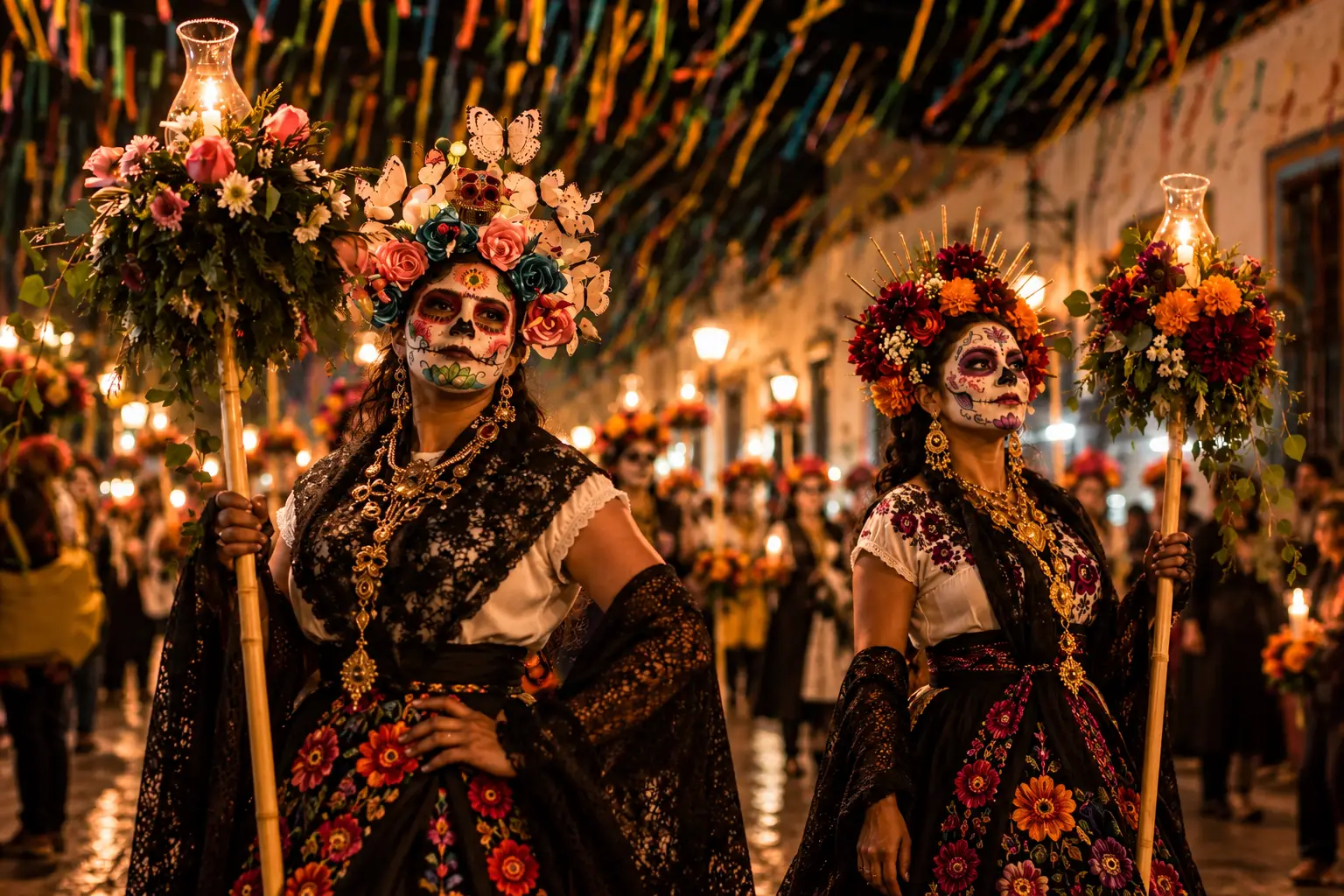
If you are visiting Oaxaca for Día de Muertos and hear people talking about the Muerteada in San Agustín Etla, prepare for something very different from a cemetery vigil. A Muerteada is a moving night of popular theater, music, costumes, satire, food, and neighborhood tradition. The celebration begins on the night of November 1 and can continue well into the morning of November 2.
At the center of the night is a playful confrontation with death. A dead man lies on a petate while a priest and doctor try, unsuccessfully, to revive him. An espiritista finally brings him back to life, the devil tries to claim him, the widow cries over him, and comic verses comment on everything that has happened during the year. Around this traveling performance, brass bands play and costumed participants move from house to house until dawn.
Why San Agustín Etla is so important
San Agustín Etla, about 15 to 20 kilometers north of Oaxaca City, is often called the madre de las Muerteadas. The tradition belongs to the wider Valle Eteco, and towns including Villa de Etla, Soledad, Nazareno, San Pablo, and San Sebastián maintain their own versions. Some neighborhoods in Villa de Etla, particularly San José, also claim an important place in the tradition's origins. Even so, San Agustín remains the community most visitors associate with the Muerteada.
Families in San Agustín speak of at least eighty years of continuous comparsas. Elders remember the tradition taking place in the 1940s, while recalling that their own grandparents had known earlier versions with simpler costumes, fewer mirrors, and fewer bells. Oral tradition often points to the Barrio del Panteón as an early center of the comparsa before the custom spread through San Agustín, San José, Vista Hermosa, and other communities of the valley.
The deeper history is layered. San Agustín Etla is a Zapotec-origin community, and ideas surrounding the return of the dead existed long before the modern form of the celebration. Later Catholic traditions, neighborhood organization, and changes brought by the textile mills of the early twentieth century also became part of the social world in which the Muerteada developed. In September 2024, the Muerteadas were officially recognized as intangible cultural heritage of the state of Oaxaca.
What the night is really about
Día de Muertos is often associated with the quiet intimacy of the family ofrenda, where food and drink are placed for returning loved ones. The Muerteada takes that relationship with death into the street. Instead of silence, there are brass instruments, fireworks, laughter, shouted verses, and the constant sound of cascabeles sewn onto the costumes of the diablos.
Even the costumes carry meaning. The heavy bells worn by the diablos announce their movement through the streets, while the mirrors covering an espiritista's cape are understood locally as more than decoration, with associations to windows or passages toward the world of the dead. Food, mezcal, broth, and bread are shared along the route, helping participants continue through a celebration that can last the entire night.
Meet the characters of La Relación
The theatrical heart of the Muerteada is known as La Relación. The exact cast can change from one barrio to another, but first-time visitors will quickly begin to recognize several recurring characters:
- El Muerto: the dead man placed on a petate, whose refusal to remain dead drives the story.
- La Muerte: Death, usually standing near the body with a scythe and disputing it with the devil.
- Los diablos: among the most visually striking participants, wearing suits covered in bells that can weigh 30 to 40 kilos, sometimes more.
- La Viuda: the grieving widow who cries for her husband and confronts those trying to take him.
- El Viejo: often presented as a stingy father or hacendado who is expected to pay for the cure.
- El cura: the priest who attempts a blessing but cannot revive the dead man.
- El doctor: accompanied in some versions by a helper called Salta pa'trás, but medicine also fails.
- El espiritista: the character who finally succeeds in restoring life.
- El mayordomo, el caporal, and el chivero: figures representing the ranch and community hierarchy of the valley.
Around them you may see calaveras on stilts, Catrinas, witches, saints, and masks decorated with beads. Traditionally the main Muerteada was male, although women's comparsas now take place on their own dates, often later in November, with characters such as diablas, ministras, a doctora, and a viudo.
What you can expect during the night
Long before November 1 arrives, neighborhoods are already preparing costumes, arranging bands, writing the verses of La Relación, and coordinating with the caseros who will open their homes and patios along the route. On the day itself, participants gather privately so that the identities behind the masks remain hidden until the comparsa begins.
- Late afternoon and evening: participants gather, the band begins to play, and a blessing may take place at the parish.
- About 8:00 to 10:00 p.m.: the comparsa usually begins moving through the streets, although exact starting times vary by year and barrio.
- At the houses: the muerto is brought to the doorway, diablos dance around the petate, parts of La Relación are performed, and hosts offer food or drink.
- Through the night: the procession continues through steep streets and patios with music, fireworks, bells, bread, broth, mezcal, and large crowds.
- From dawn into late morning: routes may converge near the municipal cemetery or continue through town, sometimes lasting toward noon.
One of the most useful things for a visitor to understand is that the main experience is not necessarily inside the cemetery. The Muerteada belongs to the streets, homes, and neighborhoods where the dead once lived. That is where the community walks with them again.
Practical advice for your first Muerteada
Arriving with a little preparation will make the night much easier to enjoy. San Agustín Etla can become extremely busy, routes change, and the celebration continues much later than many first-time visitors expect.
- When to go: the principal celebration takes place from the night of November 1 into the morning of November 2. Other Etla communities hold related celebrations on nearby dates.
- Where to go: head to San Agustín Etla and ask locally which barrio is leading the main route that year. Barrio del Panteón is traditionally associated with the early history of the comparsa.
- Transportation: colectivos and taxis connect Oaxaca City with the Etla area, with a typical trip taking about 20 to 30 minutes depending on traffic. Transportation becomes harder to find later at night, especially after about 2:00 a.m., so arranging your return in advance is sensible.
- What to wear: choose closed shoes for steep streets, bring a warm layer for the cooler nighttime temperatures, and carry cash.
- Stay aware: expect dense crowds, fireworks, mezcal, and performers moving in very heavy costumes. Agree on a meeting point if you are visiting with other people.
How to be a respectful visitor
The most important thing to remember is that the Muerteada is a community tradition, not a performance created for tourists. Visitors are welcome to watch and participate in the atmosphere, but give the comparsa room to move. Stay along the edges during La Relación, avoid blocking the petate or performers, and ask before taking close photographs of people's faces.
If a household offers you something to eat or drink, receive the gesture with appreciation and remember that the family is often serving many people throughout the night. Watching respectfully allows you to experience the celebration as it is meant to unfold, within the streets and relationships of the community itself.
For a first-time visitor, the Muerteada can be loud, crowded, funny, theatrical, and unexpectedly moving all at once. At its heart is a simple idea expressed in a distinctly Etla way: the dead have returned home, and for one night the living are willing to walk beside them. In San Agustín Etla, that walk continues until the bells finally fall quiet.


