


The Meaning Behind the Ofrenda: Understanding Oaxaca’s Day of the Dead Altars
More Than Decoration
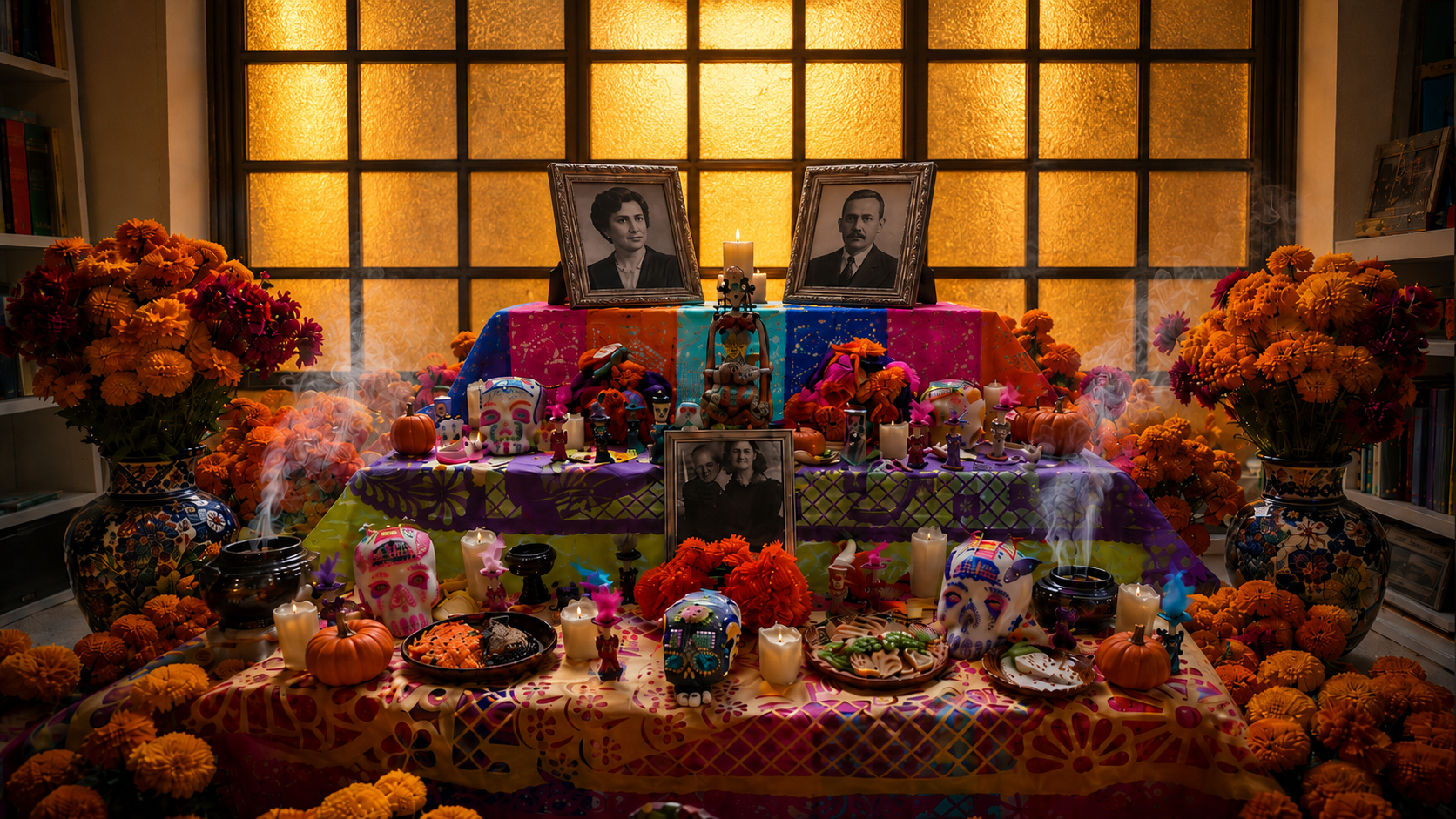
In Oaxaca the ofrenda is the emotional and spiritual center of Día de Muertos. It is not simply a decorative display. It is a temporary home prepared with care so that the souls of the dead can find their way back, rest, eat, drink, and feel remembered. Every object placed on the altar carries meaning. Understanding those meanings turns a beautiful arrangement of flowers and candles into a profound act of continuity between generations.
Roots That Reach Far Back
The practice of offering food, flowers, and light to the dead has deep pre-Hispanic roots in the cultures of Oaxaca and broader Mesoamerica. Zapotec, Mixtec, and other Indigenous peoples already maintained rituals of ancestor veneration long before the Spanish arrived. Offerings helped the deceased on their journey and kept the relationship between the living and the dead alive.
After the conquest these practices blended with the Catholic observances of All Saints’ Day (November 1) and All Souls’ Day (November 2). The result was not a replacement of the old ways but a layered tradition that remains distinctively Oaxacan. Indigenous communities across the state continue to shape the ofrenda according to their own languages, foods, and cosmologies while incorporating Christian images such as the cross or the Virgin of Guadalupe.
The Architecture of the Altar
Most traditional Oaxacan ofrendas are built in levels or steps. The number varies by family and community:
- Two levels often represent heaven and earth.
- Three levels commonly stand for heaven, earth, and the underworld, or for birth, life, and death.
- Seven levels appear in more elaborate versions and can symbolize the stages the soul travels to reach rest.
The structure itself is a map of existence and a pathway. The highest level frequently holds photographs of the deceased and religious images. Middle levels receive the food and personal objects. The ground level may include a petate (woven mat) so the souls can rest, along with water, salt, and candles.
The Essential Elements and What They Mean
Every item on a traditional ofrenda has a purpose. Here are the core elements most commonly found in Oaxacan homes and public displays:
Cempasúchil (Marigolds)
The bright orange and yellow flowers are the most visible symbol of the season. Their strong scent and vivid color are believed to guide the souls from the cemetery or the other world back to the family home. Petals are often scattered to form a path leading to the ofrenda.
Candles and Light
Candles illuminate the way for the returning souls and represent faith and hope. In many homes a candle is lit for each deceased person being honored. The flickering light is both practical and symbolic.
Water
A glass or jug of water is placed so the souls can quench their thirst after the long journey. It is one of the most universal and necessary offerings.
Salt
Salt serves as a purifying element and helps season the food the souls will symbolically enjoy. It is often placed in a small dish near the water.
Food and Drink
This is where the ofrenda becomes deeply personal. Families prepare the favorite dishes of their loved ones: mole negro or colorado, tamales, chocolate, fruits, pan de muerto, mezcal, or beer. The belief is that the souls consume the aroma and essence of the food. After the days of visitation the living share what remains.
Photographs and Personal Objects
Photos of the deceased make the altar specific and intimate. Personal belongings such as a favorite hat, tool, piece of jewelry, or cigarette pack help the soul recognize its place and feel at home.
Copal Incense
The aromatic resin of the copal tree is burned to purify the space and carry prayers upward. Its smoke is one of the classic scents of Día de Muertos in Oaxaca.
Sugar Skulls, Papel Picado, and Religious Images
Calaveras de azúcar add a playful yet respectful note. Colorful papel picado creates movement and represents the wind and the fragility of life. Crosses, images of saints, or the Virgin of Guadalupe reflect the Catholic layer of the tradition.
Past and Present in Oaxaca
In earlier times the ofrenda was almost exclusively a private, household or community practice. Families built altars in their homes or gathered at the graves. Public monumental ofrendas in the Zócalo and along pedestrian streets are a more recent development that has grown with tourism and civic celebration, yet they still draw on the same symbolic language.
Today you will see both extremes. In a traditional Zapotec or Mixtec home the ofrenda may be modest but deeply personal, built with what the family can offer. In the city center, museums, and cultural institutions the altars can be large, artistic, and collaborative, sometimes involving entire communities or schools. Both forms remain valid. The essential act is the same: preparing a place of welcome.
The Timing of the Ofrenda
Many families begin assembling the altar in late October. On November 1 the focus is often on the angelitos, the souls of children. On November 2 the adult souls are fully welcomed. By November 3 most households perform the levantamiento de la ofrenda, carefully taking the altar down, sharing the remaining food, and storing photographs and durable items for the following year. This closing act is as important as the construction. It marks a respectful farewell until the next cycle.
Why the Ofrenda Still Matters
In a rapidly changing world the ofrenda keeps a living relationship with the past. It teaches children the names and stories of grandparents and great-grandparents. It gives adults a concrete way to express love that death has not ended. It reminds the community that memory is an active responsibility.
For visitors, learning the meaning behind each element transforms the experience of Día de Muertos. What first appears as a colorful spectacle reveals itself as a carefully considered act of hospitality toward those who can no longer sit at the table in body but are still welcomed in spirit. That understanding is the real gift of standing before an Oaxacan ofrenda.


