


Pan de Muerto in Oaxaca: History, Tradition and Where to Find the Best Loaves (and What the Faces Mean)
The Short Answer
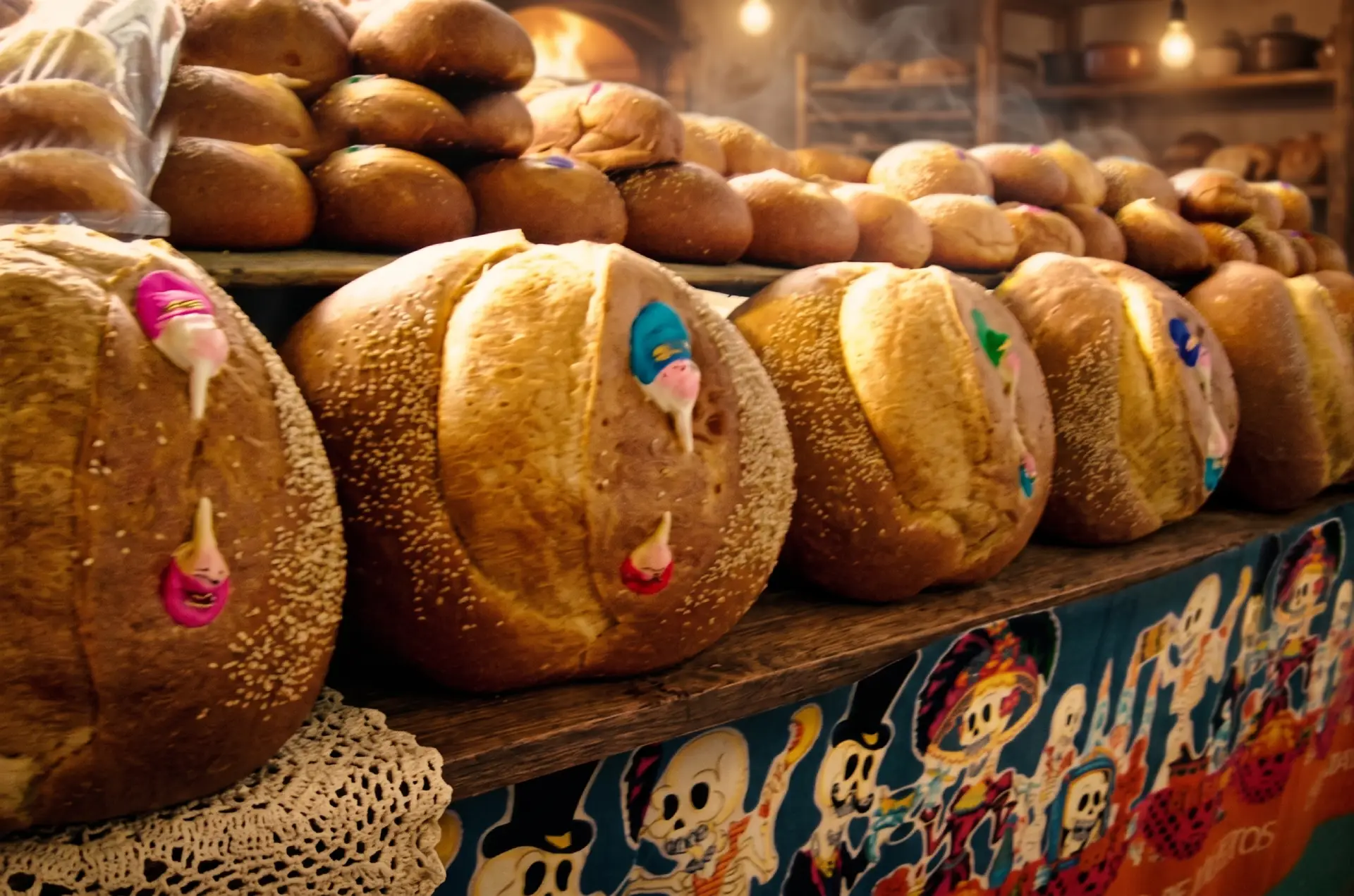
If you ask me where to start with pan de muerto in Oaxaca, I will send you to Tlacolula. I live here, and this town has been a bread town for as long as anyone I know can remember. Our loaf is not the sugared bone bread of Mexico City. What we bake is pan de yema: a rich egg-yolk round, often showered with sesame, scented with anise or cinnamon, and finished with a tiny painted face called a carita. That face is the soul you are feeding. The bread is the body. Families set it on the ofrenda so the visiting dead can eat, and later we tear what is left and dip it in chocolate. When the season turns, I walk to Panadería Tere at Melchor Ocampo 9-10, Tercera Sección, 70400 Tlacolula de Matamoros. If you only have time for one bakery, go there.
Where the Bread Comes From
I like telling visitors that the loaf in their hands is older than wheat. Before the Spanish arrived, people here already offered ritual “breads.” Fray Bernardino de Sahagún wrote about figures of amaranth and honey, called tzoalli, shaped as gods and even as bones. There were maize cakes too, such as papalotlaxcalli, the butterfly bread stamped and painted for ceremonies tied to the dead. Amaranth was so sacred that colonial authorities later restricted its ritual use. The idea never left us: food shaped like a body, set out so the other world can eat.
Wheat, eggs, sugar, and European ovens came with the colony. So did the Spanish habit of pan de ánimas, blessed bread offered on All Saints’ and All Souls’ Days in places like Castile and Aragón. In New Spain those two streams braided together. Scholars at UNAM and the Instituto Nacional de los Pueblos Indígenas describe modern pan de muerto as syncretic: an Indigenous offering given a wheat body. That is why, here in the valley, a carita can look a little like a saint and still mean your grandmother. Both readings sit on the same loaf, and nobody in Tlacolula finds that strange.
What We Use the Loaves For
On an ofrenda the bread is food for the traveler. We keep it company with water, salt, copal, cempasúchil, mole, fruit, and a photograph. People in my town will tell you the visiting soul takes the essence, the aroma and the comfort, and leaves the loaf looking almost the same. After the nights of October 31 through November 2, we eat what remains. We tear it by hand. We dip it in chocolate de agua, that cinnamon-spiced hot chocolate that belongs to this season as much as the bread does.
Buy two sizes if you can. The small rolls are for the angelitos, the children who are welcomed first, often on October 31. The larger rounds are for the adults. In some towns a family picks a loaf to match the person it honors. Bakeries sell plain pan de yema all year, and I eat it then too. When the little faces appear in the window, you know the calendar has turned toward homecoming.
What the Faces Mean
This is the part that stops people in the doorway. The carita is a small molded or painted face set on top of the bread. In the Central Valleys it is the soul of the person you are feeding. The loaf is the body. Together they make a guest you can hold.
Older bakers still remember when the faces were almost always Christ, so the bread also suggested the tomb from which he rose. The molds multiplied over time: the Virgin, angels, skulls, and designs that nod to older symbols. Food historian Susana Trilling has said many caritas have that pale, porcelain look and read as saints as much as ancestors. I think she is right, and I also think both meanings can be true at once. In Mitla you will see sugar paste sketch a face, a cross, or the grecas of the ruins. In some Mixtec towns, white sugar marks a child’s loaf and pink sugar an adult’s.
If you grew up with the Mexico City style, you will look for crossed strips of dough as bones and a knob in the center as a skull. That language is beautiful. It is just not our main language. Here the face looks back at you. Once you have seen a Tlacolula window full of those little expressions, the other loaf can feel a bit abstract.
How the Bread Is Made
Pan de yema starts with a rich dough: wheat flour, egg yolks, sugar, yeast, salt, water or a little milk, and fat, usually manteca with butter. Anise and cinnamon are the seasonal perfume. Some village bakers still talk about an older ferment of pulque and flour. Most shops now use commercial yeast, though the long rise and a wood-fired oven still decide whether the crumb is worth walking across town for.
The dough is kneaded until it feels like satin, left to rest, then shaped into rounds. Sesame seeds, ajonjolí, get pressed onto many loaves and catch the heat. The caritas are a craft of their own. Families in towns such as Miahuatlán press dough into clay molds months ahead of November, then color the faces with vegetable-based paints. A baker here in Tlacolula may buy those faces by the box and set one on each loaf just before the oven. Brick, adobe, and river-stone ovens give the crust I wait for. When the door opens, the whole block smells of yolk, anise, and oak.
Oaxaca never settled on one shape, and I love that. Across the eight regions you will meet pan bordado with floral dough embroidery, Isthmus regañadas of flaky pastry that stand for human and animal souls, Mixtec panes de ánima shaped like people or rabbits, Sierra Norte yet xtill, mermaid loaves from the Papaloapan for those who worked the water, and the painted Mitla loaves that look like edible archaeology. Local writers often count nine named styles. The valley loaf with a face is still the one I carry home.
Where I Send You
You can find pan de muerto in Oaxaca City from late September onward, in Mercado 20 de Noviembre and in neighborhood shops. That is fine for a first taste. If you want a loaf that still feels tied to a town, come out to the valley. Mitla is wonderful if you love painted decoration. Zaachila’s Thursday market is a quieter hunt. Our Sunday market in Tlacolula is the gathering I never get tired of: chocolate, tejate, cheese, flowers, and bread stacked in pale gold hills. Tlacolula is known for bread in Oaxaca. That is not a slogan I invented. It is why I trust the pan de muerto here more than anywhere else.
So here is my suggestion, friend to friend. Go to Panadería Tere. The address is Melchor Ocampo 9-10, Tercera Sección, 70400 Tlacolula de Matamoros, Oaxaca. You can call them at 951 562 0147. They open early, usually around seven, and stay open into the evening. It is a working bakery. Warm air, trays coming out of the back, neighbors who already know which loaf they want. I like it that way.
Come on a Sunday if you can and make a morning of it. Take a colectivo from the city toward Tlacolula, walk the market first, then step into Tere while the yema is still fragrant. Ask for a loaf with a carita once the season has begun. Buy a second plain yema for breakfast. If you are building an ofrenda, take one small loaf for an angelito and one larger round for an adult. Pick up a tablet of stone-ground chocolate in the same market. That pairing is how we sit with the dead and the living at the same table.
I will not pretend Tere is the only honest oven in town. Dulces Regionales Tlacolula on Mártires de Tacubaya is another place I respect. Mitla bakeries deserve their own trip if you want the most elaborate painted faces. City shops still turn out good yema. I begin at Tere because this is my town, because Tlacolula already feeds half the valley on Sunday, and because the bread there is made for people who will put it on a real altar that night. That is the loaf I want you to carry home.
How I Like to Eat It
Tear the bread. I would not slice it as if it were sandwich loaf. Dip it in chocolate de agua. If the carita is painted masa, you can lift it off and keep it. Place a piece on the ofrenda with water beside it. Say the name of the person you miss. In the morning, share what is left.
Pan de muerto is sweet, but it is not dessert first. It is a seat at the table for someone who cannot sit down. When you bite into a Tlacolula yema and the sesame crackles, you are tasting wheat that arrived by ship, eggs from a valley hen, anise from a baker’s habit, and a face someone painted so a soul would know which loaf was theirs. That is a lot of history for one warm round. In my kitchen it still disappears quickly with chocolate.


