

The Safety and Logistics of Getting Back to Oaxaca City After a Muerteada
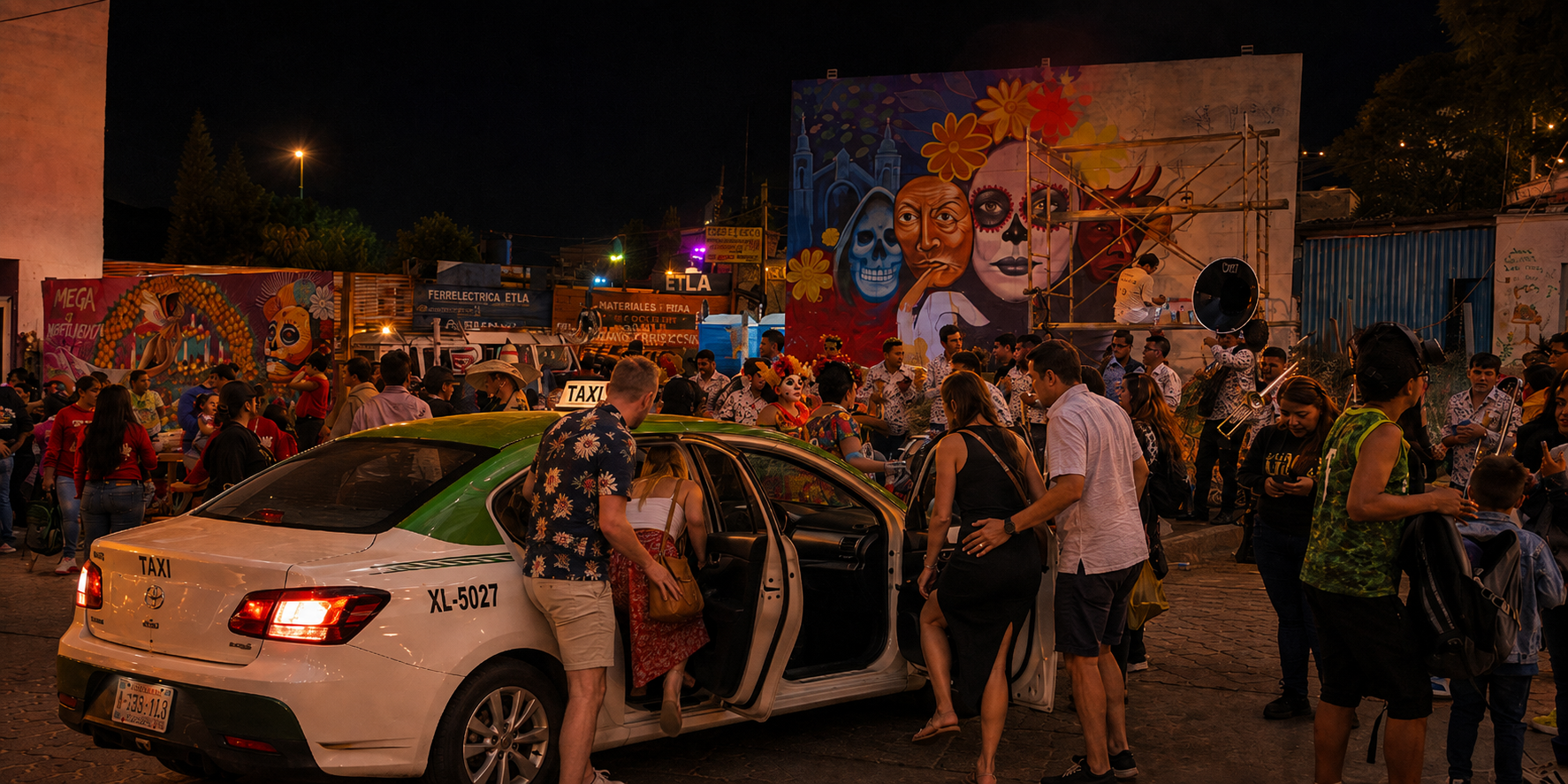
The Short Answer: Plan Ahead and You Will Be Fine
The safest and best way to get back to Oaxaca City, your hotel, or Airbnb after a Muerteada is to arrange private, licensed transportation in advance. Ideally, book a round-trip taxi, a hotel-arranged driver, or a trusted private transfer that picks you up at a pre-agreed spot and time. Oaxaca's official TaxSí taxi app is also an important option and should be downloaded before you leave the city, although late-night driver availability in individual Etla Valley villages cannot be guaranteed. Public colectivos stop running in the evening, cell signal can be uneven in the villages, and the celebrations often continue until dawn or later. With a bit of preparation, the short 20 to 30 minute ride from the Etla Valley is straightforward and low-risk for tourists.
A Brief History of the Muerteada
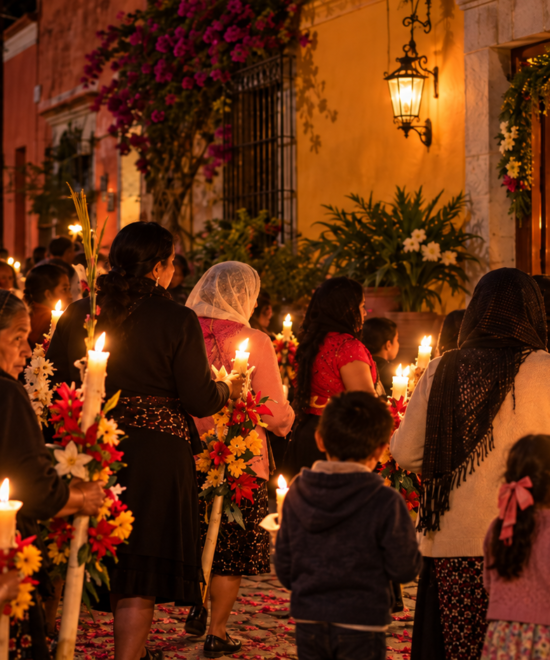
The Muerteada is one of Oaxaca’s most distinctive expressions of Día de los Muertos. It is a lively, all-night theatrical procession and dance that takes place mainly in the Etla Valley (Valle Eteco). Participants known as “muerteros” reenact a satirical play called “La Relación,” in which a deceased person is symbolically brought back to life with the help of a priest, a doctor, and a spiritist. The characters include the devil, Death, widows, elders, and elaborately costumed figures wearing heavy suits covered in cascabeles (metal bells) and mirrors.
The tradition has roots more than 80 years deep and blends pre-Hispanic Zapotec ideas about death and the underworld with colonial-era carnival practices brought by Spanish textile-hacienda owners in the 19th century. Brass bands play continuously, people dance through the streets and into private courtyards, mezcal is shared freely, and the whole community participates. In recent years women’s groups have also organized their own “Muerteadas Femeniles,” expanding the tradition while keeping its communal spirit. Official sources such as the Secretaría de Cultura de Oaxaca and local chroniclers recognize the Muerteadas as intangible cultural heritage of the state.
Where the Muerteadas Take Place
The heart of the Muerteada tradition lies in the Etla Valley, only 15 to 20 kilometers north of Oaxaca City (about a 20 to 30 minute drive). The best-known celebrations occur in:
• San Agustín Etla (often called the “mother of the Muerteadas”)
• Villa de Etla, especially the Barrio de San José (widely regarded as the cradle of the tradition)
• Soledad Etla (including communities such as Matadamas and Barrio de Abajo)
• San Pablo Etla, Nazareno Etla, Guadalupe Etla, and neighboring agencies
These towns sit in the Valles Centrales and are easily reachable from the capital. Some communities also hold later “octava” or mid-November events, including all-women versions. Always confirm exact locations and access rules closer to the date, as popular sites like San Agustín Etla have introduced crowd-control measures in recent years (early road closures, limits on outside vehicles, and fees for costumed visitors or professional photography).
When Do the Muerteadas Usually Finish?
Most Muerteadas begin in the late afternoon or evening of November 1 (typically between 6:00 p.m. and 9:00 p.m. or later) and continue without pause until the early morning or midday of November 2. Many last 12 to 20 hours or more. The brass bands keep playing, the dancing continues through the streets and patios, and the final gatherings often take place near the municipal cemetery at dawn. By the time the energy winds down, it is common to see first light or full morning sun. This is why return logistics matter so much: public transport has long stopped, and many visitors are tired and may have enjoyed mezcal.
How People Usually Get Home
Locals often walk short distances within their own barrio or catch a ride with neighbors. Visitors from Oaxaca City typically rely on private vehicles, pre-arranged taxis, TaxSí, or shared rides with friends. Colectivos (shared vans) that normally serve the Etla route run frequently during daylight hours from points near the Periférico or Abastos market area, but they stop by late afternoon or early evening. After midnight, spontaneous options become scarce. Many tourists therefore either leave early or have already booked a return ride.
Safest and Best Ways to Return to Your Hotel or Airbnb
Here are the practical options ranked from safest and most reliable to less ideal:
1. Pre-arranged private taxi or hotel/Airbnb driver (recommended)
Book a round-trip with a licensed driver or ask your hotel or Airbnb host to arrange a trusted taxi the day before. Agree on a pickup time and exact meeting point (for example, the main church plaza or a well-lit corner). Pay half in advance if requested and confirm the driver’s WhatsApp number. Cost for a private taxi one-way is typically 300 to 500 MXN depending on the exact village and time of night. This remains the most reliable option because your driver is already expecting you at a specific place and time.
2. TaxSí — Oaxaca's official taxi app
TaxSí is Oaxaca's official app-based taxi service and connects passengers with registered taxis through a system that provides an estimated fare, driver and vehicle information, GPS tracking, and other safety features. The service operates 24 hours a day and the app also offers the ability to schedule rides in advance. This makes it an excellent second option for returning from the Etla Valley.
There is one important limitation during a Muerteada: having the app does not guarantee that a participating driver will be available in every Etla Valley village at 2:00, 4:00, or 6:00 in the morning, particularly when thousands of people are leaving celebrations at roughly the same time. Cell service may also be weaker on smaller streets. Download TaxSí before leaving Oaxaca City, enter your exact pickup location while you still have a reliable connection, and schedule the return in advance if the app accepts the trip. If you have not received a confirmed ride, do not make TaxSí your only way home.
For more information about how the service works, see our guide to Oaxaca's official TaxSí taxi app.
3. Group shared private transfer
If you are traveling with friends or meet other visitors, split a private taxi or small van. Many tour operators that offer Muerteada visits also include return transport. Confirm the return time and meeting point in writing.
4. Official taxi from a sitio (stand)
If you can reach a main road or the entrance of the town where authorized taxis are waiting, confirm the fare clearly before entering the vehicle. During major celebrations, availability can fall sharply once large numbers of visitors begin leaving at the same time. Use clearly identified authorized taxis and avoid unmarked cars or anyone who approaches you aggressively offering a ride.
5. Stay overnight if possible
A growing number of visitors book a simple room in San Agustín Etla or Villa de Etla for the night and return the next morning by colectivo or taxi when normal services resume. This removes the pressure of finding transportation in the middle of the night and lets you enjoy the full celebration.
Do not plan to walk long distances, hitchhike, or assume that an app-based ride will automatically be available after the celebration. The road is short but poorly lit in places, and fatigue plus alcohol make these choices unwise.
Essential Safety Information
Oaxaca City and the central Etla Valley are among the safer tourist areas in Mexico. Violent crime against visitors is rare when normal precautions are followed. Still, keep these points in mind:
• Travel with a group whenever possible and set a meeting point in case you get separated.
• Keep valuables (phone, wallet, passport) secured and out of sight; use a cross-body bag or money belt.
• Limit mezcal intake so you remain alert for the journey home.
• Share your live location with someone back at the hotel or a trusted contact.
• Save emergency numbers: 911 (general emergency), 078 (Ángeles Verdes roadside assistance), and the Centro de Protección al Turista at 951 502 1200 ext. 1204.
• Use licensed taxis, TaxSí, or pre-vetted drivers. Confirm the price or estimated fare before you get in.
• If you are driving yourself, do not drink and drive. The roads are narrow and winding in places.
For a practical interactive tourist safety map focused on visitor areas in Oaxaca, check the Oaxaca Tourist Safety Map and Index here: https://montealbanoaxaca.com/oaxaca-tourist-safety-map-and-index/. Oaxaca City and the Etla Valley are shown as relaxed areas for travelers.
Final Practical Checklist
• Book your return ride the day before or earlier.
• Download and set up TaxSí before leaving Oaxaca City so you are not trying to register or configure the app late at night in the Etla Valley.
• If you plan to use TaxSí for the return, check whether your exact pickup location is accepted and schedule the trip in advance when possible.
• Arrive in the Etla Valley early (before any possible road closures around 7:00 p.m.).
• Carry cash in small bills for taxis and any entrance fees.
• Wear comfortable shoes. You will be standing and walking for many hours.
• Respect local customs: ask permission before photographing people, and support the community by buying food or crafts from local families.
• Enjoy the music, the satire, and the extraordinary sense of community. The Muerteada is joyful, loud, and deeply local. With solid logistics planned, the only thing left to worry about is how many songs the brass band will play before dawn.