

The Magna Comparsa: Route, Timing, and What to Expect in Oaxaca’s Centro
Important 2026 update
The date has finally been announced for Oaxaca’s Magna Comparsa.
Saturday, October 31, 2026 at 6:00 PM
The official city comparsa is now confirmed for Saturday, October 31 at 18:00. The currently confirmed corridor begins at Calzada Porfirio Díaz and heads toward García Vigil in Oaxaca City.
The full street-by-street route and traffic operation are still pending, but if this is one of your must-see events, you can now confidently keep the evening of October 31 open and plan to arrive early for a good viewing spot.
What the Magna Comparsa Really Is
The event commonly called the Magna Comparsa or Gran Comparsa is real and worth seeing, yet it is important to understand its nature. It is not one continuous, ancient Oaxacan tradition that has always existed under that name. It is a large, organized gathering of many individual comparsas assembled into one major city procession for Día de Muertos.
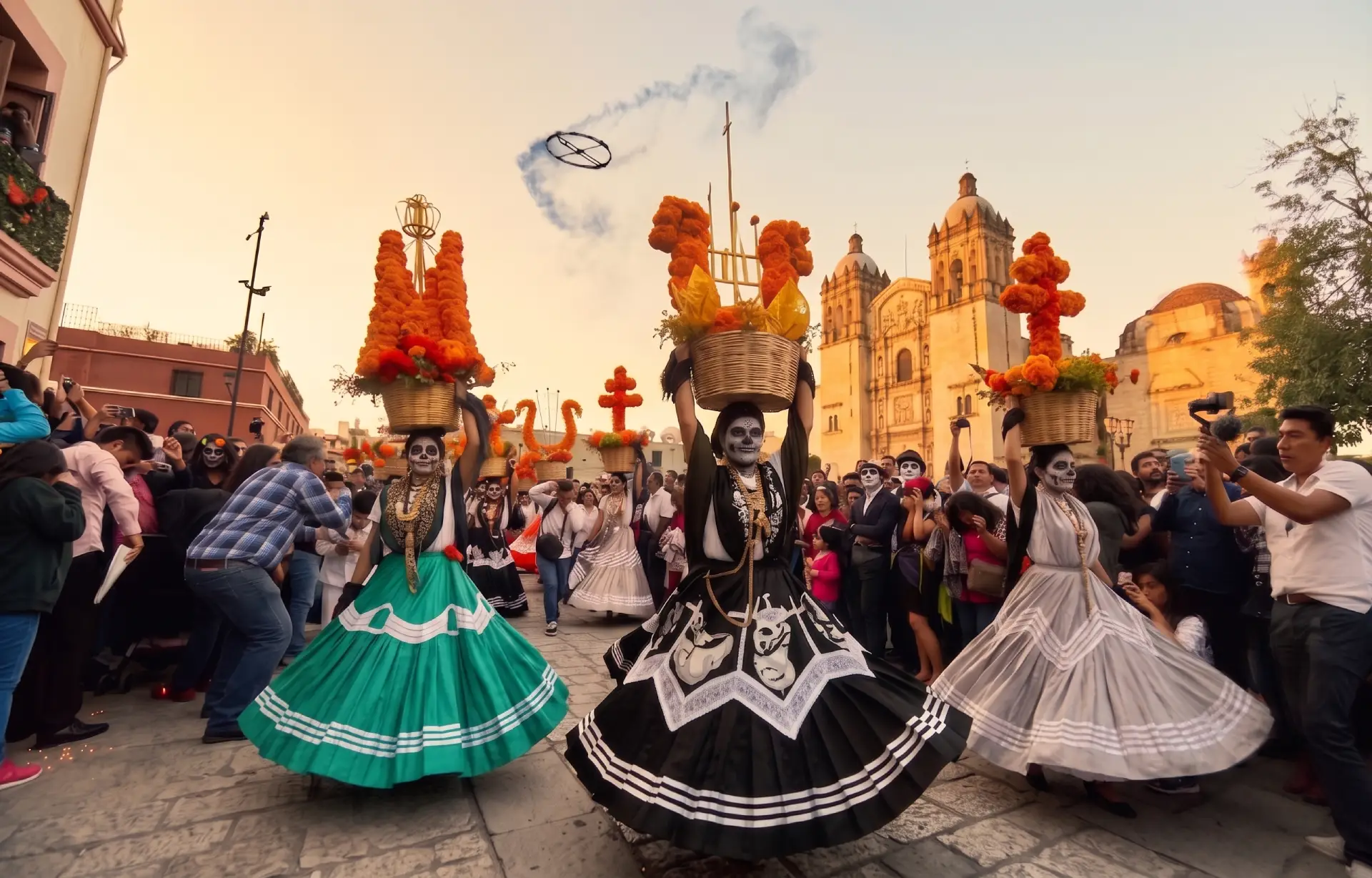
In Oaxaca City the municipal or state government brings together neighborhood groups, community contingents, brass bands, diablos, calaveras, catrinas, marmotas, dancers, and sometimes decorated floats. The result is a big public showcase that moves through the historic center. In 2023, for example, more than 40 comparsas from traditional barrios and surrounding municipalities participated. In 2025 the event, announced as the Gran Comparsa del Día de Muertos, involved more than 1,100 participants and drew an estimated 20,000 spectators.
This distinguishes it from the older, community-level traditions. A classic neighborhood comparsa or a muerteada belongs to a specific barrio or town. It has its own participants, characters, band, route, and internal customs. The muerteadas of the Valle de Etla are the strongest example of that deeper, locally rooted form. The Magna or Gran Comparsa is the civic and tourism-oriented version that gathers many of those energies into one large, centrally organized parade.
A Note on the Name and History
The title “Magna Comparsa” has been used in different years and by different organizers. The state government described its 2023 edition as being held “for the first time in the capital,” yet records show events already called Magna Comparsa in Oaxaca City in 2017 and 2018. The 2018 procession reportedly included more than 2,000 participants and around 500 musicians. The name has therefore been reused and the event reorganized or rebranded over time rather than representing one unbroken traditional lineage.
By 2025 the preferred official wording had shifted to “Gran Comparsa del Día de Muertos.” Whatever the exact title in any given year, the character of the event remains the same: a large multi-group procession designed for the historic center.
Timing
The official 2026 date is now confirmed: Saturday, October 31, 2026 at 18:00. This fits the general pattern of recent editions, which have usually started in the late afternoon or early evening and have taken place near the end of October or the beginning of November.
For 2026, the currently confirmed starting corridor is Calzada Porfirio Díaz heading toward García Vigil. The full route and traffic-control details may still be refined closer to the event, so it is wise to check again shortly before the procession. In practical terms, if you want a good view, plan to arrive well before the stated start time, because space along the main streets fills quickly.
Typical Route Through the Centro
Routes change from year to year, yet certain patterns repeat. A frequent starting point is the Fuente de las Ocho Regiones. From there the procession has commonly moved along major avenues such as Calzada Porfirio Díaz, Avenida Juárez, Morelos, García Vigil, and Independencia, often finishing near the Alameda de León, the area of the Iglesia de la Merced, or another central plaza. In other editions the parade has begun closer to the Zócalo or Parque El Llano and threaded through the pedestrian core.
For 2026, the official information currently confirms a start on Calzada Porfirio Díaz and movement toward García Vigil. The final street-by-street route has not yet been fully detailed, so the practical method is simple: check the current announcement again closer to the date, note the starting point and main corridor, and choose a viewing spot along that stretch.
What to Expect
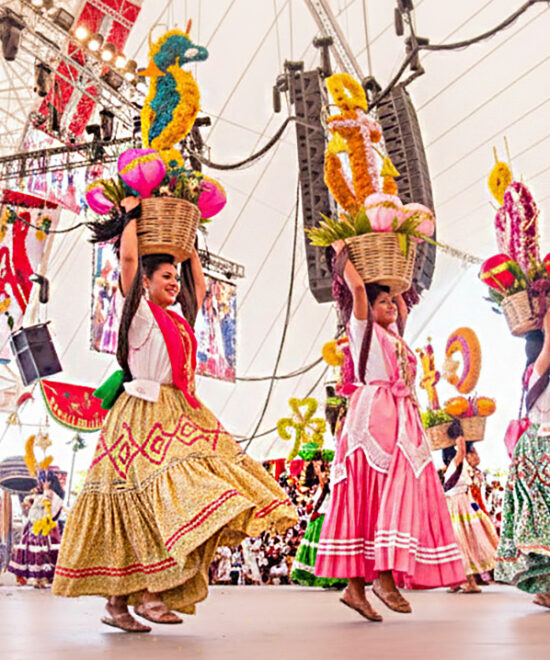
The experience is that of a long, colorful civic parade rather than a single neighborhood ritual. You will see successive contingents rather than one continuous group. Typical elements include elaborately dressed catrinas and skeletal figures, tall mojigangas, spinning marmotas, decorated floats, regional costumes, satirical or contemporary characters, and multiple brass bands that keep the entire procession moving. The atmosphere is festive, noisy, and photogenic. It is designed to be watched and enjoyed by large numbers of people in the heart of the city.
This is different in feel from the longer, more intense, and more locally controlled muerteadas of Etla, where the same group of participants may walk and dance for many hours through their own streets and houses. The Gran or Magna Comparsa is the public, concentrated version of that energy brought into the Centro for a wider audience.
Practical Advice
The event is free. No tickets are required. Wear comfortable shoes and expect to stand for an extended period. Crowds are dense near the starting point and along the most central stretches, so keep belongings secure. Side streets that intersect the main route sometimes offer better views with slightly less pressure.
If you plan to continue later to a cemetery vigil, remember the distinction in tone. Face paint and full costume that feel natural at a large public comparsa are often better removed before entering a family graveside gathering. The parade itself is a street celebration; the cemeteries remain places of more intimate remembrance.
How It Fits into the Larger Picture
Oaxaca’s Día de Muertos has many layers. The quiet ofrendas and cemetery vigils form the spiritual core. The traditional neighborhood comparsas and the muerteadas of the Valle de Etla carry the older community practices. The Gran or Magna Comparsa sits on top of those layers as the large, organized, city-center expression of the same season. It is worth attending for its scale, its music, and its concentration of visual energy. Just understand what you are watching: a carefully assembled gathering of many groups rather than one single ancient comparsa that has always marched under that name.
For 2026, the big unknown is no longer the date. The procession is now confirmed for Saturday, October 31 at 18:00, with the currently announced corridor beginning on Calzada Porfirio Díaz and moving toward García Vigil. The exact route details may still be refined, but you can already treat the Magna Comparsa as one of the major fixed points of Oaxaca’s 2026 Día de Muertos calendar. Arrive early, claim a good viewing spot, listen for the first brass band, and enjoy one of the biggest public processions the city puts on for the season.