


The origins of Caldo de Piedra and how to make it
What Is Caldo de Piedra?
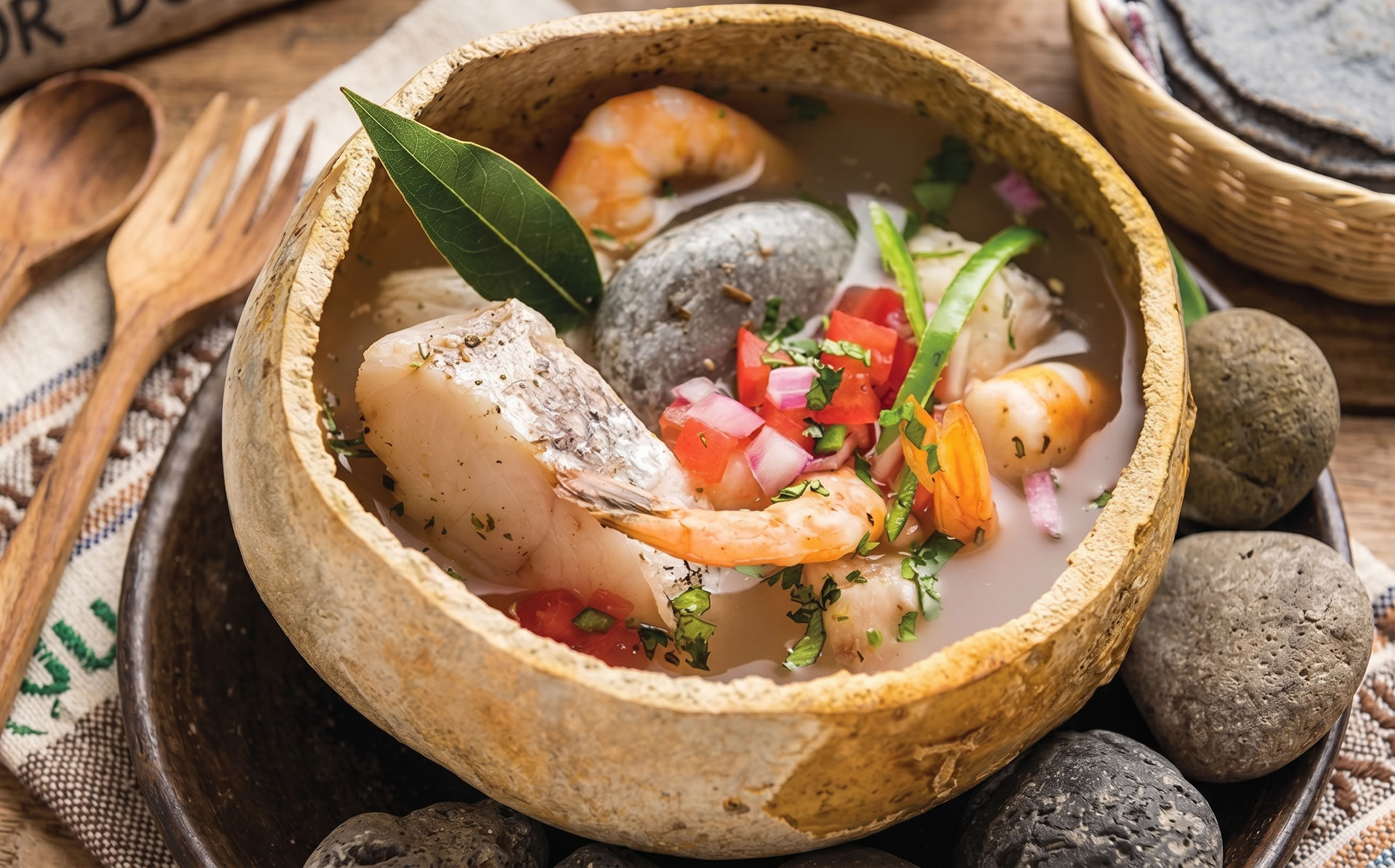
Caldo de Piedra, which means “stone soup,” is a traditional dish from the Chinantec (Chinanteco) people of northern Oaxaca. It is prepared by placing raw fish, shrimp, vegetables, and herbs into a bowl or natural gourd, then carefully dropping in river stones that have been heated until they glow red. The intense heat of the stones causes the liquid to boil almost instantly and cooks the ingredients in just a few minutes.
The result is a clear, aromatic broth with a subtle mineral note from the stones, combined with the fresh flavors of river fish, shrimp, tomato, onion, chile, cilantro, and epazote. It is both a culinary technique and a cultural ritual that has survived for centuries.
Origins and History
Caldo de Piedra originates in the Chinantec community of San Felipe Usila, in the Papaloapan region near Tuxtepec in northern Oaxaca. Historical accounts and oral tradition describe it as a pre-Hispanic dish that predates the arrival of the Spanish. It was traditionally prepared on the banks of the river after fishing.
According to Chinantec tradition, the preparation was a collective and gendered activity. Men typically fished, selected the proper stones from the river, gathered firewood, and cooked the soup. The dish was offered as a gesture of respect and gratitude toward the women of the community. Families and neighbors would gather to share the meal, making it a social and ceremonial event as much as a practical way of cooking.
In earlier times, large hollows were sometimes carved into river rocks to serve as communal cooking vessels. Later, the preferred containers became jícaras, the dried and hollowed gourds of the calabash tree. The stones themselves had to be carefully chosen. Only certain smooth river stones could withstand extreme heat without cracking or exploding when they met the cooler liquid.
In 2021 the Congress of Oaxaca formally recognized Caldo de Piedra as Intangible Cultural Heritage of the state. This designation aims to protect the knowledge, techniques, and communal practices associated with the dish and to support its continued transmission among Chinantec communities.
Cultural Meaning
Beyond its distinctive cooking method, Caldo de Piedra carries strong cultural weight. It symbolizes cooperation, respect for nature, and the relationship between people and the river that sustains them. The selection of stones, the timing of the fire, and the shared labor of preparation all reflect values of patience and community.
The dish is especially associated with family gatherings and important periods such as Lent and Holy Week in some accounts, though it can be prepared whenever the community decides to come together. Being invited to share Caldo de Piedra is often described as a sign of welcome and trust.
Traditional Ingredients
The classic version relies on what the river and surrounding gardens provided:
- Fresh river fish such as mojarra (or other white fish)
- Freshwater shrimp or prawns
- Tomato
- Onion
- Green chile (serrano or similar)
- Cilantro
- Epazote
- Sometimes garlic, hierba santa, or parsley
- Salt
- Clean water
- Proper river stones that can withstand high heat
In the most traditional settings the fish and shrimp were caught the same day. Modern versions sometimes use purchased fish when local river supplies have declined.
How It Is Traditionally Made
The authentic process follows a clear sequence:
- Suitable smooth river stones are selected and thoroughly cleaned.
- A fire is built and the stones are heated for one to three hours until they become red-hot or glowing.
- Meanwhile, the raw fish, shrimp, chopped vegetables, herbs, and salt are placed in a jícara or heat-resistant clay vessel.
- Cold or room-temperature water is added to cover the ingredients.
- Using long tongs or wooden tools, the glowing stones are carefully lowered into the vessel one at a time.
- The liquid boils vigorously within seconds. The soup is left to cook for several minutes until the seafood is done.
- The stones are removed and the caldo is served immediately, often with lime and fresh tortillas.
The dramatic moment when the hot stone hits the water produces steam and rapid boiling. This is both practical cooking and a striking visual ritual.
A Home-Adapted Approach
Recreating the full traditional method at home is difficult and carries safety risks. Not all stones are suitable. Some types can explode when subjected to sudden temperature change. For this reason, most home cooks and restaurants outside the Chinantec communities adapt the technique.
A simplified understanding of the process for educational or careful home use includes these points:
- Only use stones known to be safe for high heat (experienced practitioners select specific river stones). Never experiment with random rocks.
- Heat stones thoroughly on a strong outdoor fire or in a very hot oven for an extended period.
- Use a heat-resistant vessel such as a thick clay pot. Ordinary glass or thin ceramic can break.
- Keep ingredients cold or at room temperature so the thermal contrast is strong.
- Handle hot stones only with proper long tongs and protective gear. Stand back when the stone enters the liquid because the steam is intense.
- Alternatively, many modern recipes simply simmer the same ingredients in a regular pot to approximate the flavor while avoiding the stone technique entirely.
The safest and most respectful way to experience authentic Caldo de Piedra is to taste it prepared by Chinantec cooks in the traditional region or at restaurants that have received permission and training from the community, such as establishments near Oaxaca City that specialize in the dish.
Where to Experience It
In San Felipe Usila and surrounding Chinantec communities, the dish is still prepared in its original context. Closer to Oaxaca City, a well-known restaurant called Caldo de Piedra in Tlalixtac de Cabrera offers a version of the experience, often with the hot-stone presentation done tableside. Several other restaurants in the capital and surrounding areas also serve adaptations.
If you plan to seek out the dish while visiting Oaxaca, ask locally for current recommendations and confirm that the preparation respects the traditional method. Combining a taste of Caldo de Piedra with visits to Monte Albán or other valley sites gives a fuller sense of the region’s living indigenous heritage.
Final Thoughts
Caldo de Piedra is more than an unusual cooking technique. It is a living expression of Chinantec ingenuity, community cooperation, and relationship with the natural world. The glowing stones, the sudden boil, and the shared meal by the river connect present-day cooks to practices that existed long before metal pots and modern kitchens.
Understanding its origins and the care required to prepare it properly allows visitors and home cooks to appreciate the dish with greater respect. Whether you taste it in its traditional setting or learn about the method from a distance, Caldo de Piedra remains one of Oaxaca’s most distinctive and meaningful culinary traditions.


