


Why Día de Muertos is Not the “Mexican Halloween”
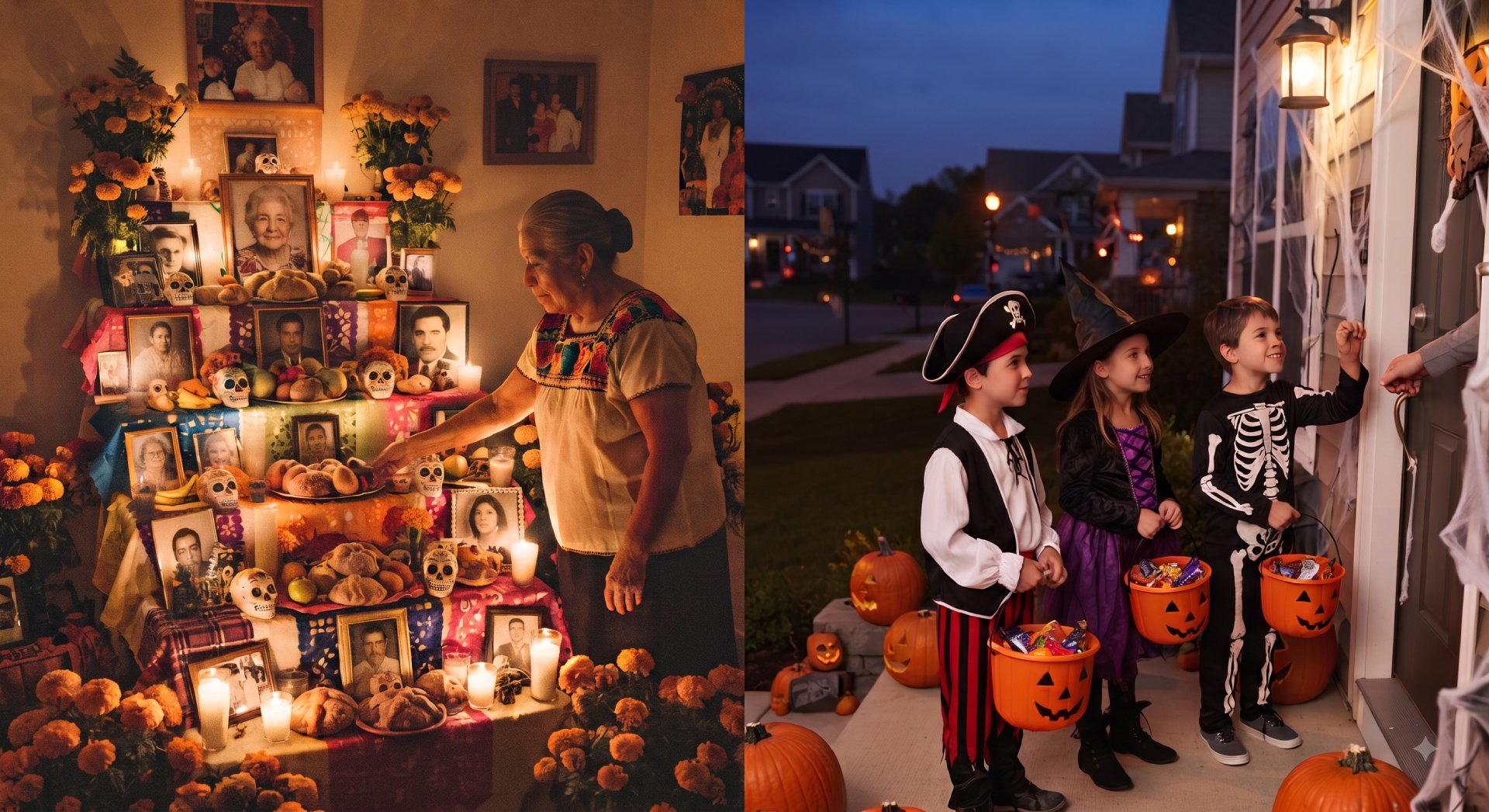
They Are Not the Same Holiday
Calling Día de Muertos “the Mexican Halloween” is one of the most common and persistent misunderstandings about Mexican culture. The two celebrations fall near each other on the calendar and both involve images of skulls and the dead, yet their histories, purposes, emotional tones, and practices are profoundly different. One is a family-centered act of remembrance and reunion. The other is largely a secular night of costumes, fright, and play. Understanding the distinction matters, especially in a place like Oaxaca where Día de Muertos remains a living, multi-layered tradition.
Different Origins and History
Día de Muertos has deep roots in the indigenous cultures of Mesoamerica. For the Aztecs, Zapotecs, Mixtecs, and other peoples, death was not an ending but part of a larger cycle. Rituals of offering food, flowers, and objects to the dead existed for centuries before the Spanish arrived. When Catholicism was introduced, these practices intertwined with the European observances of All Saints’ Day (November 1) and All Souls’ Day (November 2). The result was a syncretic tradition that kept indigenous ways of relating to ancestors while adopting the Christian calendar.
Halloween traces a separate path. It grew out of the ancient Celtic festival of Samhain, which marked the end of the harvest and the beginning of the darker half of the year. People believed the boundary between the living and the spirit world thinned, and they lit fires and wore disguises to ward off or confuse potentially harmful spirits. The Christian church later placed All Hallows’ Eve on October 31. In modern times, especially in the United States, Halloween evolved into a largely commercial and secular event focused on costumes, candy, and playful horror.
The two holidays therefore come from different cultural worlds and were shaped by different historical forces. Their proximity in the calendar is largely coincidental and the product of colonial calendar adjustments rather than shared meaning.
Fundamentally Different Meanings
At its core, Día de Muertos is about welcoming the dead. Families believe that the souls of loved ones return for a brief visit. The living prepare ofrendas so the souls can rest, eat their favorite foods, and feel remembered. The emphasis is on continuity, affection, and the ongoing relationship between the living and the dead. Death is acknowledged as natural and is approached with respect mixed with warmth and even humor.
Halloween, by contrast, treats death and the supernatural as sources of fear or entertainment. The classic themes are ghosts, monsters, witches, and the macabre. The goal is often to startle, to play with danger in a safe way, or simply to have fun with costume and performance. While some older folk traditions involved remembering the dead, the dominant modern version is not primarily about personal ancestors or family reunion.
Customs Compared
The practical differences are just as clear.
Día de Muertos practices
- Building ofrendas with photographs, favorite foods and drinks, candles, water, salt, copal incense, and cempasúchil marigolds
- Cleaning and decorating family graves
- Spending time in the cemetery, sometimes through the night, in a vigil of companionship
- Preparing and sharing pan de muerto and traditional dishes
- In Oaxaca, comparsas and public celebrations exist alongside the more intimate family rituals
Halloween practices
- Wearing costumes, often of monsters, superheroes, or horror figures
- Trick-or-treating for candy
- Carving jack-o’-lanterns from pumpkins
- Haunted houses, horror movies, and parties centered on fright and play
- Decorations that emphasize darkness, cobwebs, and the scary
In Oaxaca the ofrenda and the cemetery vigil remain the heart of the observance for most families. Public street events and face painting have grown, especially in the city, but they do not replace the private acts of remembrance.
Atmosphere and Emotional Tone
Walk through an Oaxacan cemetery on the night of November 1 or 2 and the atmosphere is warm, luminous, and communal. Candles cover the graves. The air carries the scent of marigolds and copal. Families talk, eat, and sit with their dead. There is sadness, but it is mixed with affection and a sense of reunion. The overall feeling is one of presence rather than absence.
Halloween night is built around a different emotional register. It leans into the thrill of being scared, the fun of disguise, and the temporary upending of ordinary rules. The mood is playful or eerie, not primarily about personal grief or ongoing relationship with specific ancestors.
Symbols and Imagery
Skulls and skeletons appear in both traditions, yet they carry different messages. In Día de Muertos the calavera and the figure of La Catrina often express the idea that death comes to everyone and that the dead remain part of the community. The tone can be satirical or affectionate. Marigolds, water, food, and photographs dominate the visual language of the ofrenda.
Halloween skulls and skeletons more often signal danger, the uncanny, or comic horror. Pumpkins, black cats, witches, and bats complete a vocabulary oriented toward the spooky rather than the commemorative.
Why the Confusion Persists
The calendar overlap, the shared use of skeletal imagery, and the global spread of both holidays through media and tourism create the surface impression that they are versions of the same thing. In recent decades Halloween elements have appeared in some Mexican urban celebrations, and Día de Muertos imagery has been widely adopted in the United States, sometimes stripped of its original context. The result is frequent mixing and occasional cultural flattening.
Many Mexicans and Mexican-Americans have responded with the clear statement that Día de Muertos is not Mexican Halloween. The phrase is a defense of a distinct cultural and spiritual practice against being reduced to a costume party or a spooky theme.
Why the Distinction Matters in Oaxaca
In Oaxaca the difference is especially visible. The state’s strong indigenous continuity, the centrality of the ofrenda, and the overnight cemetery vigils keep the holiday grounded in family and memory. Visitors who arrive expecting a Mexican version of Halloween risk misunderstanding the quiet dignity of the cemeteries and the personal nature of the altars. Those who approach with the knowledge that they are witnessing a tradition of welcome and remembrance experience something deeper and more accurate.
Día de Muertos and Halloween can coexist in the same season. They simply do not mean the same thing. One invites the dead home. The other plays with the idea of the dead as something to fear or to dress up as. Recognizing that difference is the first step toward genuine respect.


