


Michoacán or Oaxaca? Deciding Between Mexico’s Two Best Día de Muertos Destinations
Start Here
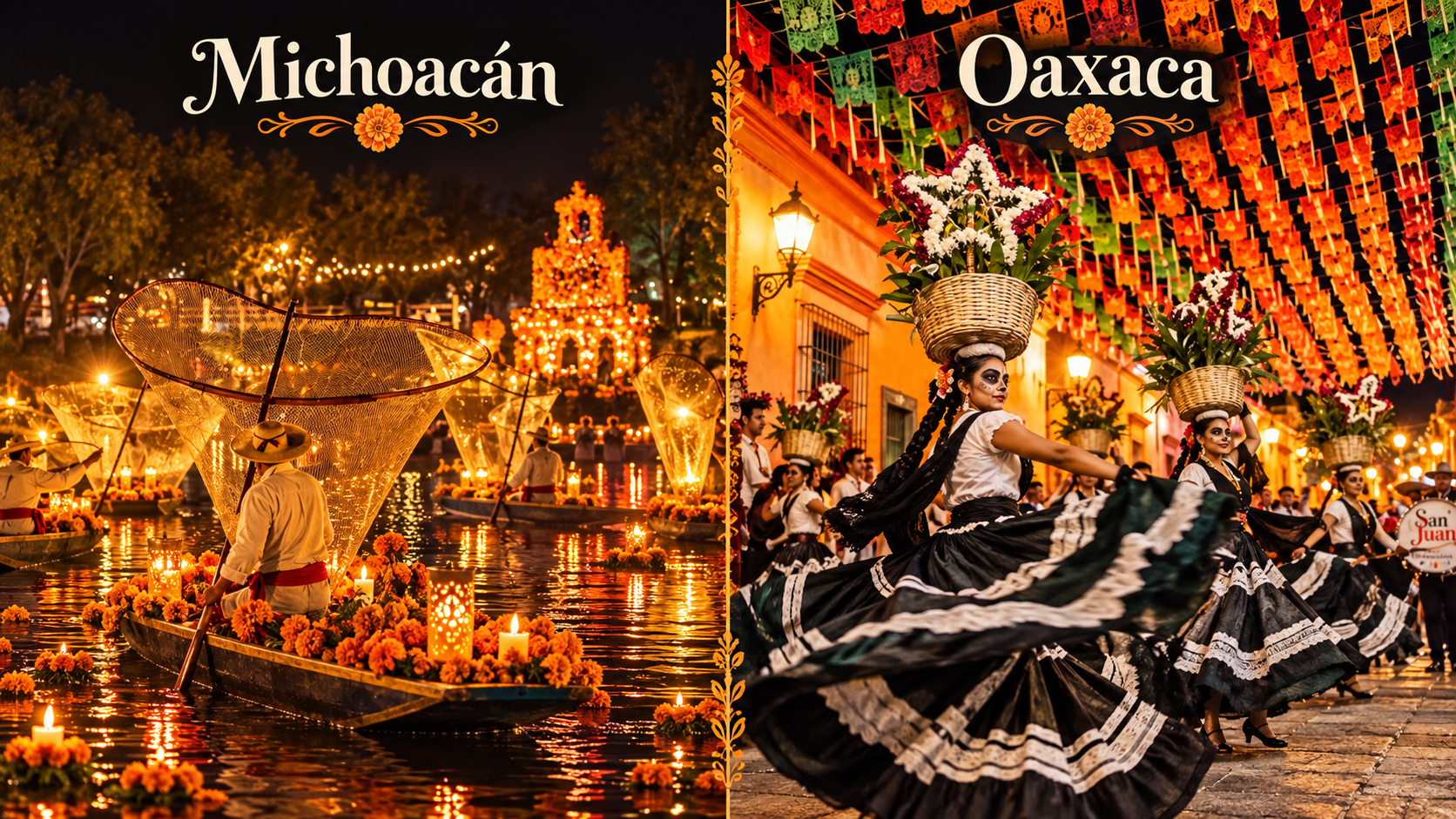
Oaxaca and Michoacán are the two places most people mean when they say they want the “real” Día de Muertos. The holiday is the same on paper: souls of children around October 31, adults on November 1 and 2, ofrendas, cempasúchil, copal, bread, a night at the grave. The difference is what each region built around that core.
Michoacán’s lake towns treat the water as part of the rite. Oaxaca treats the house altar, the street, and several different pueblos as part of the same week. Below is the practical version of that split: who does what, where you stand, what you pay, and what to eat.
Quick Facts
| Oaxaca | Michoacán | |
|---|---|---|
| Culture | Zapotec and Mixtec valleys | Purépecha lake region |
| Base | Oaxaca City (Centro or Jalatlaco) | Pátzcuaro. Morelia for the airport. |
| Peak night | Oct 31 at Xoxo. Nov 1 comparsas and Etla. | Nov 1 into Nov 2 on the lake |
| Airport | OAX, 20 to 30 minutes to Centro | MLM Morelia, then about 1 hour to Pátzcuaro |
| Nights to book | Oct 29 to Nov 3 if you can | Oct 31 to Nov 3 if the lake is the goal |
Michoacán: The Tradition on the Ground
The Purépecha name for this time is closer to a Noche de Ánimas, a night of souls. Families clean the tomb in the morning. They build a wooden or carrizo arch and cover it with cempasúchil. The arch marks the place the dead person is expected to enter. On the grave they set fruit, bread shaped like a body or a flower, copal, a photo, and the food that person liked: fried charales, white fish from the lake, corundas, churipo, atole negro.
At dusk they sit. They stay. The point is company, not a parade. In Tzintzuntzan, the old Purépecha capital, families walk down Avenida Lázaro Cárdenas in the afternoon carrying those arches toward the panteón. The Franciscan atrium and the olive trees sit a few minutes from two cemeteries. The yácatas, the round temple platforms on the hill, are the pre Hispanic layer under the Catholic night.
Janitzio is the island everyone has seen. Boats leave from Muelle de San Pedrito, about ten minutes from Pátzcuaro’s center. The crossing is 20 to 30 minutes. A round trip ticket is usually 70 to 100 pesos per person. On November 1 the line splits in two: one for tickets, one to board. The cemetery climbs the hillside. Above it is the Morelos monument. Entry to climb is about 55 pesos.
If Janitzio is full, Pacanda holds an alumbrada later in the night. Yunuén is smaller. On land, the panteones in Pátzcuaro and Tzintzuntzan do the same vigil without the boat. Santa Clara del Cobre, a short drive away, is the copper town. Workshops there sell vessels and funeral crowns of ribbon that families put on ofrendas. Prices for those crowns can run into the hundreds of pesos.
You may see the Danza de los Viejitos in town plazas: wooden masks, hunched steps, violin. It is Purépecha, not a Muertos invention, and it often appears during these days because the towns are already gathered.
Michoacán: Where to Sleep, Eat, and Stand
Sleep in Pátzcuaro if you want to walk to plazas and catch a taxi to the dock. Best Western Plus Posada de Don Vasco on Avenida Lázaro Cárdenas 450 is the large, reliable option outside the very center, with a view used as a lookout on November 1. Rooms in a normal month can sit near 1,500 to 1,800 pesos. For Muertos, expect more, and book months ahead. Smaller inns around Portal Arteaga put you on the plaza. If Pátzcuaro is sold out, sleep in Morelia and drive in for the night. That costs you an hour each way and some of the evening.
Eat at Mercado de Don Vasco and the stalls on the main plaza. Plates run about 40 to 150 pesos. Order corundas, churipo, or fried lake fish. That is the same food that goes on the graves. Sit down restaurants in the portals cost more. Save a nicer dinner for Morelia if you are passing through: the Centro there has more tables and a wider range.
Hacks
- For Janitzio on November 1, be at San Pedrito by late afternoon. After 8:00 p.m. the wait gets ugly.
- If fog sits on the lake, boats stop. Have Tzintzuntzan as the backup, not a second Janitzio plan.
- Wear layers. The lake takes the heat out of the night.
- Cerro Estribo Grande looks over the water if you want the lights without boarding.
- Do not block a family arch for a photo. Those arches are the entrance for someone specific.
Oaxaca: The Tradition on the Ground
The first work here is inside the house. An ofrenda is built with levels, a photo, water, salt, copal, cempasúchil petals on the floor as a path, and the food the dead person ate. Chocolate de agua, mole negro, and pan de yema or pan de muerto with sesame are common. The belief is simple: the soul follows the scent and the petals home, stays, and leaves after November 2.
The street layer is Oaxaca’s extra. Tapetes de arena and sawdust carpets are laid in churches, plazas, and sometimes in front of schools. They last a day or two and then they are gone. Comparsas are neighborhood processions with brass, face paint, satire, and giant figures. Jalatlaco runs one of the best known on the night of November 1, often picking up again near midnight. Barrio de Cinco Señores claims one of the oldest. The city also puts a large comparsa on Macedonio Alcalá and around the Zócalo.
Santa Cruz Xoxocotlán is the main cemetery visit for people staying in the city. There are two grounds a few blocks apart: the old panteón with the ruined chapel, and the larger newer one (San Isidro / Del Panteón). October 31 is the crowded night. Food stalls sit outside the wall. Allow 90 minutes to two hours if you walk both.
The Muerteada in the Etla Valley, especially San Agustín Etla, is a different rite again: costumed muerteros, heavy bells, a comic play called La Relación, house to house music, and a dawn farewell at the panteón. It is not a lake vigil and it is not a Centro comparsa. Budget that as its own night, about 40 minutes north of the city.
Atzompa, San Antonino, and Tlacolula each keep their own cemetery customs if you want a quieter grave than Xoxo. Tlacolula is also where a lot of the best pan de muerto in the valley is baked.
Oaxaca: Where to Sleep, Eat, and Ride
Sleep in the Centro if you want to walk to comparsas. Sleep in Jalatlaco if you want a quieter street and a 15 minute walk to Santo Domingo. Rooms that cost 1,400 to 2,500 pesos in a normal month often double for Muertos. Book by early summer if you can. Reforma is the overflow neighborhood, a short taxi from the center.
Eat in layers. For cheap and fast: Mercado 20 de Noviembre for tasajo and tlayudas, and Mercado de Abastos for mole and tamales in the 80 to 150 peso range. For a proper sit down meal: Las Quince Letras on Constitución for moles, about 250 to 450 pesos a person before drinks. Los Danzantes next to Santo Domingo if you want a courtyard and a reservation. Street tlayudas at Libres after a comparsa. Buy pan de muerto in the morning from a bakery, not from a hotel gift stand.
Getting to Xoxo: the usual move is an hourly sitio taxi at about 400 pesos per hour for the whole car. The driver waits and takes you home. A one way drop from the Centro is about 100 to 120 pesos. TaxSí, the official state taxi app, can do the same one way trip cheaper than a waiting car, but the driver will not sit at the gate. City buses toward Xoxo, Aeropuerto, or Zimatlán from Abastos cost about 8 pesos on BinniBus or 10 pesos on other camiones. Do not count on the bus at 1:00 a.m.
Hacks
- Do Xoxo on October 31, a city comparsa on November 1, Etla on its own night. Do not stack Etla and Xoxo in one evening.
- Book the hourly taxi in the afternoon, not at dusk on the 31st.
- In Jalatlaco, stand on a side street. The cobbles on the main lane jam.
- If Xoxo feels like a crush, go to Atzompa instead. Same night, fewer vans.
- Ask before you photograph a face. Flash off. The stall food outside Xoxo is fine. You do not need a restaurant reservation that night.
What the Money Looks Like
| Item | Oaxaca | Michoacán |
|---|---|---|
| Airport to base | Official taxi about 200 to 280 pesos private | Morelia airport to Pátzcuaro by taxi or bus, plan 400 pesos and up for a private car |
| Night transport | 400 pesos an hour with wait, or 100 to 120 one way | Boat 70 to 100 pesos per person round trip |
| Market meal | 80 to 150 pesos | 40 to 150 pesos |
| Sit down dinner | 250 to 700 pesos a person in the Centro | Fewer options. Plaza meals stay lower. Morelia costs more. |
| Room in season | Often 2,500 pesos and up in the Centro | Pátzcuaro fills early. Midrange inns jump hard in the last weeks. |
A Three Night Sketch for Each
Pátzcuaro: Day one, plaza, Mercado de Don Vasco, Santa Clara del Cobre if you care about copper. Day two, Tzintzuntzan atrium, yácatas, then the panteón at night. Day three, Janitzio in daylight if you still want the island, or Janitzio at night if you accept the line. Leave November 3.
Oaxaca: Day one, Abastos or 20 de Noviembre, tapetes in the Centro, early night in Jalatlaco. October 31, Xoxo with a waiting taxi. November 1, city comparsa, dinner at Quince Letras or a tlayuda after. If you have a fourth night, give it to Etla. That is a full trip without leaving the valley.
If You Can Only Pick One
Michoacán gives you the lake crossing, the arches in Tzintzuntzan, and a vigil that is mostly sitting. That is specific and it is enough if that is what you came for.
Oaxaca gives you the house altar, two cemeteries in Xoxo, neighborhood comparsas, tapetes, Etla, and a city that still feeds you well at 11:00 p.m. The logistics stay inside one base. That is why this site tells people to come here if they have to choose.
Book the room first. Then book the hourly taxi for Xoxo. Walk the market before the 31st so you know what the ofrenda ingredients look like when they are still for sale. For a plain map of the city and nearby slopes, see the Oaxaca tourist safety map.


