


Arriving Early: Is it Worth Visiting Oaxaca the Week Before Day of the Dead?
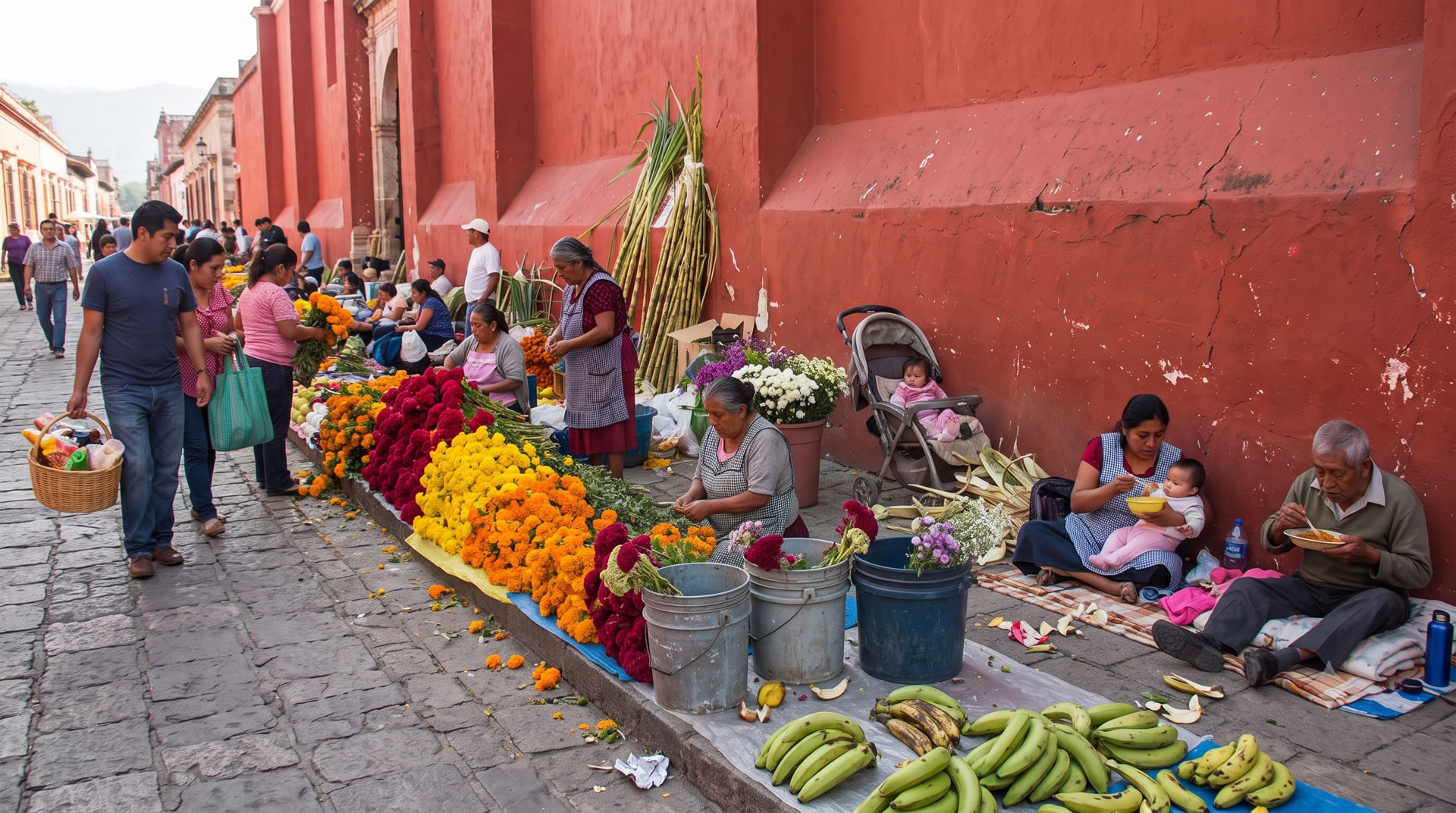
YES. Arriving in Oaxaca during the week before Day of the Dead is one of the best travel decisions you can make. You will watch the city gradually transform as markets fill with cempasúchil, candles, copal, fruit, chocolate, pan de yema, papel picado, and the ingredients families need for their ofrendas.
You will also have enough time to visit Monte Albán, museums, art institutions, restaurants, artisan villages, regional markets, and historic neighborhoods before the largest crowds arrive. Instead of sacrificing October 31, November 1, and November 2 to ordinary sightseeing, you can reserve those important days for comparsas, family traditions, public altars, panteones, and community events.
Important 2026 calendar note: As of August 6, 2026, Oaxaca had not published its complete official Día de Muertos program for the final week of October. The itinerary below uses confirmed year-round opening information, official 2026 admission prices, established market days, and activities that do not depend on an unconfirmed festival schedule.
Why the week before is part of the celebration
Día de Muertos does not suddenly appear on October 31. Families, bakers, cooks, flower growers, candle makers, musicians, artists, vendors, and neighborhood committees prepare for days or weeks. Arriving early gives you the chance to see this work unfold without expecting every moment to function as a tourist attraction.
- Markets are easier to explore. You can compare bread, chocolate, candles, flowers, pottery, and crafts before the busiest shopping days.
- Restaurants are easier to reserve. You can enjoy an unhurried meal at one of Oaxaca’s leading restaurants before holiday demand peaks.
- Museums are more manageable. You can visit major collections before street closures and public events begin controlling your schedule.
- You can learn the city on foot. Knowing the routes between the Zócalo, Santo Domingo, Jalatlaco, Xochimilco, and your hotel becomes extremely useful during crowded nights.
- You have time for the valleys. Tlacolula, Yagul, Teotitlán del Valle, Monte Albán, Atzompa, Zaachila, and Cuilápam deserve more than rushed stops.
- You can verify the final calendar locally. Official tourism modules, municipal announcements, and neighborhood posters are more useful than old festival schedules copied across travel websites.
A full week before Día de Muertos
The ideal early-arrival window is Saturday, October 24 through Friday, October 30, 2026. This plan combines archaeology, food, contemporary art, historic neighborhoods, regional markets, artisan communities, and practical preparation for the main celebration.
| Date | Main plan |
|---|---|
| Saturday, October 24 | IAGO, Santo Domingo, Los Danzantes, contemporary photography, and Jalatlaco at sunset. |
| Sunday, October 25 | Tlacolula’s tianguis, Yagul, and a weaving workshop in Teotitlán del Valle. |
| Monday, October 26 | Monte Albán, the Atzompa archaeological zone, and green-glazed pottery workshops. |
| Tuesday, October 27 | Museo de las Culturas, Jardín Etnobotánico, Museo Textil, and an evening in the Centro Histórico. |
| Wednesday, October 28 | Breakfast at Mercado Sánchez Pascuas, the Xochimilco aqueduct, neighborhood streets, and Jalatlaco after dark. |
| Thursday, October 29 | Zaachila’s market, archaeological zone, local food, and Cuilápam de Guerrero. |
| Friday, October 30 | Seasonal shopping, public decorations, Mercado 20 de Noviembre, and final preparation for the main nights. |
Saturday, October 24: Art, architecture, and an unforgettable lunch
Begin at Santo Domingo and the IAGO
Start your first morning around the Templo de Santo Domingo. Walk through the plaza before the day becomes busy, step inside the church when access is permitted, and then cross toward the Instituto de Artes Gráficas de Oaxaca, commonly known as the IAGO.
Founded by the artist Francisco Toledo in 1988, the IAGO combines exhibition rooms, patios, a specialized art library, editorial projects, and one of Latin America’s important graphic-art collections. Its original building stands on Macedonio Alcalá, almost directly opposite Santo Domingo, making it one of the easiest cultural stops to include in a central-city itinerary.
- Current hours: Daily from 10:00 to 20:00.
- Allow: One to two hours.
- Also look for: Temporary exhibitions, posters, books, printmaking projects, and the Taller El Alacrán.
Tip: Do not rush through the patios. The IAGO is as much a place to slow down, read, and observe as it is a conventional gallery.
Have lunch at Los Danzantes
Make your first major meal in Oaxaca count. Los Danzantes is hidden inside a courtyard on Macedonio Alcalá, a short walk south of Santo Domingo. Its menu interprets Oaxacan ingredients through contemporary dishes while maintaining strong links with regional moles, chiles, corn, mezcal, herbs, and produce from its own farm in San Agustín Etla.
- Location: Enter from Macedonio Alcalá at number 403 and follow the passage into the interior courtyard.
- Current hours: Daily from 13:00 to 22:30.
- Current tasting menu: 1,250 MXN per person before optional drinks.
- Reservations: Strongly recommended for late October.
- What to consider: The house selection of Oaxacan moles, seasonal vegetables, a tasting menu, or a mezcal ritual.
Tip: Reserve an early lunch around 13:00 or 13:30. You will have a calmer meal and still keep the entire afternoon open.
Continue to the Centro Fotográfico Manuel Álvarez Bravo
After lunch, walk north toward the Centro Fotográfico Manuel Álvarez Bravo. Francisco Toledo founded this institution in 1996 to promote photography through exhibitions, workshops, archives, publications, and public programs. Its collection and temporary exhibitions connect Oaxaca with major Mexican and international photographers.
- Location: A few blocks northwest of Santo Domingo on Manuel Bravo.
- Current hours: Daily from 10:00 to 20:00.
- Allow: Approximately one hour, depending on the exhibitions.
Finish in Jalatlaco at sunset
Walk east into Jalatlaco during the late afternoon. Follow its cobblestone streets toward the Templo de San Matías, look for murals and early seasonal decorations, and stop for coffee or a light drink. The neighborhood becomes especially photogenic as the light softens and residents begin decorating doorways and public spaces.
Tip: Explore Jalatlaco now, before the main festival nights make its narrow streets difficult to navigate.
Sunday, October 25: Tlacolula, Yagul, and Teotitlán del Valle
Eat your way through the Tlacolula tianguis
Leave Oaxaca City early and travel east to Tlacolula de Matamoros. The Sunday tianguis spreads around the municipal market and through the central streets near the church. Vendors from surrounding communities arrive with produce, flowers, meat, textiles, baskets, pottery, bread, chocolate, copal, mezcal, tools, and household supplies.
Begin with breakfast rather than immediately buying souvenirs. Look for barbacoa, memelas, tamales, tejate, chocolate, pan de cazuela, and the famous Pasillo de Humo, where meats are selected and grilled over open fires.
- Best arrival: Between 8:00 and 9:00.
- Allow: Three to four hours.
- Seasonal items: Pan de yema, cempasúchil, candles, copal, fruit, chocolate, and altar supplies.
- Suggested spending: Around 300 to 700 MXN per person for breakfast, drinks, snacks, and modest purchases.
Tip: Eat first, carry small bills, and bring a reusable shopping bag. Ask before photographing individual vendors.
Climb to the Yagul archaeological zone
After the market, follow Highway 190 east and take the signed turnoff shortly beyond Tlacolula for Yagul. The site occupies a rocky elevation above the valley and includes plazas, residential areas, tombs, a ball court, defensive features, and broad views over the surrounding landscape.
- Official hours: Daily from 8:00 to 17:00.
- Last access: 16:00.
- 2026 admission: 105 MXN for Mexican visitors and 210 MXN for foreign visitors.
- Allow: Approximately two hours.
Tip: Wear shoes with grip. The upper viewpoints and uneven stone surfaces are more demanding than a conventional museum visit.
Stop in Teotitlán del Valle on the way back
On your return toward Oaxaca City, turn into Teotitlán del Valle. The community is famous for wool rugs woven on pedal looms and dyed with natural materials such as cochineal, indigo, walnut, and local plants. Visit a family workshop, ask for a demonstration, and allow the makers to explain how the wool is prepared, dyed, and woven.
Tip: Workshop visits and demonstrations vary by family. Ask whether there is a demonstration charge before beginning, and purchase only when a piece genuinely interests you.
Monday, October 26: Monte Albán and the pottery of Atzompa
Reach Monte Albán when the gates open
Monte Albán provides essential historical context before Día de Muertos. The ancient Zapotec capital helps visitors understand that Oaxaca’s relationship with ancestry, ritual, political memory, writing, burial, and sacred landscapes extends far beyond the modern festival.
- Official hours: Daily from 8:00 to 16:30.
- Last access: 16:00.
- 2026 admission: 105 MXN for Mexican visitors and 210 MXN for foreign visitors.
- Included: Access to the Museo de Sitio.
- Allow: Three to four hours.
Begin in the museum or visit it before leaving, then explore the Main Plaza, the Danzantes stones, Building J, the ball court, and the elevated platforms. Carry water, a hat, and sun protection because shade is limited.
Tip: Monday is a particularly good choice for international visitors. Sunday admission is free for Mexican citizens, which can make the site significantly busier.
Continue to the Atzompa archaeological zone
After Monte Albán, continue toward Santa María Atzompa and follow the signs up to its archaeological zone. Atzompa formed part of the wider Monte Albán settlement and offers elevated views, residential structures, courtyards, tombs, and ball courts without the same volume of visitors.
- Official hours: Daily from 8:00 to 16:00.
- Last access: 15:00.
- Current admission: No charge.
- Allow: One to two hours.
Visit a green-glazed pottery workshop
Finish the afternoon in Santa María Atzompa, a community known for green-glazed pottery and contemporary variations on traditional clay work. Head toward the central market and municipal area, where workshops and family-run stores display cooking vessels, decorative pieces, figures, and unglazed pottery.
Tip: Ask whether a piece is intended for cooking, serving, or decoration. Not every glazed vessel is designed for food use.
Tuesday, October 27: Oaxaca’s essential museums and gardens
Explore the Museo de las Culturas de Oaxaca
Return to Santo Domingo for the Museo de las Culturas de Oaxaca, housed in the former Dominican convent. Its galleries cover archaeology, writing, religion, colonial history, regional cultures, political change, and artistic traditions. The objects from Tomb 7 at Monte Albán provide an especially powerful continuation of Monday’s visit.
- Official hours: Tuesday through Saturday from 10:00 to 16:00.
- 2026 admission: 105 MXN for Mexican visitors and 210 MXN for foreign visitors.
- Allow: Two to three hours.
Tip: Visit the Tomb 7 rooms while your attention is fresh. The museum is extensive and deserves more than a rushed final hour.
Walk through the Jardín Etnobotánico
The Jardín Etnobotánico shares the Santo Domingo complex and presents plant life from Oaxaca’s varied environments. Its collections include agaves, cacti, food crops, medicinal plants, copal, maize, beans, chepil, amaranth, and other species connected with regional life and cuisine.
- Current hours: Tuesday through Sunday from 10:00 to 18:00.
- Access: Entry is organized through guided visits.
- Cost: Confirm the current tour price and language schedule before visiting.
Tip: Check garden-tour availability before entering the museum. The two attractions operate separately, and a museum ticket does not reserve a garden visit.
Finish at the Museo Textil de Oaxaca
Walk south through the historic center to the Museo Textil de Oaxaca. Its exhibitions connect traditional techniques, natural dyes, historical garments, contemporary design, weaving, embroidery, and the cultural knowledge carried through cloth.
- Location: On Hidalgo, a few blocks southeast of the Zócalo.
- Current hours: Daily from 10:00 to 20:00.
- Admission: No charge.
- Allow: One to two hours.
Wednesday, October 28: Xochimilco, the aqueduct, and neighborhood life
Eat breakfast at Mercado Sánchez Pascuas
Begin northwest of Santo Domingo at Mercado Sánchez Pascuas. This neighborhood market is smaller and easier to navigate than the central tourist markets. Look for memelas, tamales, fresh juice, bread, hot chocolate, fruit, flowers, and simple breakfast counters used by local residents.
Directions: Walk northwest from Santo Domingo toward the area around Porfirio Díaz and Tinoco y Palacios. The market sits close to the beginning of the Xochimilco neighborhood.
Tip: Order one or two small dishes first. Market breakfasts are best enjoyed by tasting several things rather than committing immediately to the largest plate.
Follow the arches of the Xochimilco aqueduct
Continue north into Barrio de Xochimilco and follow the surviving stone arches of the historic aqueduct. The structure once helped carry water toward the city and now creates one of Oaxaca’s most recognizable neighborhood corridors.
Walk toward the Templo de Santo Tomás Xochimilco, explore the cobbled side streets, and look for workshops, murals, textiles, and the first signs of seasonal decoration. Xochimilco feels residential and lived-in, so move more quietly than you would around the Zócalo.
Visit the neighborhood panteón during daylight
A daytime visit to the Xochimilco panteón can help you understand its scale and layout before the main observances. Families may already be cleaning graves, trimming plants, painting tombs, or bringing early decorations.
Tip: Stay on the paths, avoid photographing individual graves without permission, and remember that preparation work is private family activity, not a public performance.
Return through Jalatlaco after dark
After resting at your hotel, return to Jalatlaco in the evening. By October 28, more papel picado, painted facades, flowers, and neighborhood installations may be visible. Have a light dinner or coffee and enjoy the streets before the heaviest festival crowds arrive.
Thursday, October 29: Zaachila and Cuilápam de Guerrero
Start with Zaachila’s Thursday market
Zaachila’s market operates throughout the week, but Thursday is its traditional and busiest market day. Producers and vendors fill the streets around Mercado Alarii with prepared food, fruit, vegetables, bread, mezcal, clothing, tools, crafts, household goods, livestock supplies, charcoal, and firewood.
Directions: From Zaachila’s main plaza, follow the flow of vendors and shoppers toward Mercado Alarii. The Thursday tianguis spreads through the surrounding streets, so there is no need to search for one exact entrance.
Look for tamales, barbacoa, tejate, nicuatole, pan de yema, chocolate, flowers, and seasonal altar supplies. Continue to the local gastronomic market if you want a more structured meal.
Visit the Zaachila archaeological zone
The archaeological zone stands close to the market area and preserves important structures and tombs associated with the Mixtec-Zapotec city that remained occupied when the Spanish arrived.
- Official hours: Thursday through Sunday from 10:00 to 16:00.
- 2026 admission: 80 MXN for Mexican visitors and 145 MXN for foreign visitors.
- Allow: Approximately one hour.
Stop in Cuilápam on the return journey
On the way back to Oaxaca City, stop in Cuilápam de Guerrero. Its monumental Dominican ex-convent is known for its open, roofless nave, stone arches, broad courtyard, and historical connection with Vicente Guerrero. Walk through the central area and follow the tourist path linking the historic buildings, craft spaces, and the monument behind the convent.
Tip: Confirm interior access that morning. Even when individual rooms are closed, the exterior complex and surrounding historic area remain worth seeing.
Friday, October 30: Follow the city’s transformation
Revisit the historic center with fresh eyes
By October 30, Oaxaca City normally feels very different from the city you entered one week earlier. Decorations may be nearly complete, flower deliveries intensify, markets become more crowded, stages may appear, streets begin closing, and public altars or tapetes may be under construction.
Keep this day flexible. Walk through the Zócalo, Alameda de León, Macedonio Alcalá, Plaza de la Danza, Jalatlaco, and Xochimilco, but follow barriers and avoid interrupting people who are working.
Eat lunch at Mercado 20 de Noviembre
Head two blocks south of the Zócalo to Mercado 20 de Noviembre. Choose a comedor for mole, enchiladas, caldo, or a traditional daily meal, or enter the Pasillo de Humo for grilled tasajo, cecina, chorizo, tortillas, onions, and salsa.
Tip: The Pasillo de Humo can be intense during peak hours. Decide what you want before entering, confirm prices, and keep your group together.
Confirm the official weekend program
Visit an official tourism information module or consult current state and municipal announcements. Ask specifically about:
- Confirmed October 31 comparsas and starting points.
- Public altar and tapete locations.
- Panteón operating hours and entry rules.
- Road closures and BinniBus route changes.
- Municipal concerts, exhibitions, theatre, and family activities.
- Restrictions in Xoxocotlán, Etla, and other communities.
Prepare before the busiest nights
- Withdraw pesos before ATMs develop long lines.
- Buy water, snacks, tissues, and basic medication.
- Charge your phone and portable battery.
- Download offline maps.
- Choose two physical meeting points with your group.
- Confirm transportation for any community outside the city.
- Leave room in your schedule for an officially announced concert, exhibition, or procession.
Meaningful 2026 costs at a glance
| Place or experience | Current cost |
|---|---|
| Los Danzantes tasting menu | 1,250 MXN per person before optional drinks |
| Monte Albán | 105 MXN Mexican visitors · 210 MXN foreign visitors |
| Yagul | 105 MXN Mexican visitors · 210 MXN foreign visitors |
| Museo de las Culturas de Oaxaca | 105 MXN Mexican visitors · 210 MXN foreign visitors |
| Zaachila archaeological zone | 80 MXN Mexican visitors · 145 MXN foreign visitors |
| Atzompa archaeological zone | No admission charge currently listed |
| BinniBus general fare | 8 MXN |
| BinniBus students and older adults | 4 MXN with valid credential |
Official prices, operating hours, restaurant menus, and access policies can change. Confirm them shortly before visiting.
Transportation tips for the early week
- Walk inside the historic center. Most central museums, galleries, restaurants, markets, and neighborhoods are easier to connect on foot.
- Use buses mainly during daylight. Do not depend on an ordinary public route for a very late return from a rural community.
- Check the exact destination before boarding. A route name may refer to an urban neighborhood rather than the archaeological attraction you intend to visit.
- Carry small bills. Drivers, market vendors, and small workshops may be unable to change large banknotes.
- Arrange rural transportation in advance. Tlacolula, Yagul, Teotitlán, Monte Albán, Atzompa, Zaachila, and Cuilápam can be combined efficiently with a driver or properly registered guide.
- Do not overload every day. Oaxaca’s altitude, sun, uneven streets, rich food, and long travel days can become exhausting before the main celebration even begins.
What not to expect before October 31
Arriving early is worthwhile, but the experience is different from the main nights. Some altars will still be under construction, many graves will not yet be fully decorated, and the largest comparsas may not have begun.
- Do not expect every street to be decorated on October 24.
- Do not enter a panteón expecting a nightly public spectacle.
- Do not photograph private altar preparation without asking.
- Do not assume that a previous year’s online calendar applies to 2026.
- Do not block artisans, flower vendors, families, or workers for photographs.
- Do not treat preparation days as a costume party.
The reward for arriving early is not nonstop entertainment. It is better food, deeper context, more access, less pressure, and the chance to watch Oaxaca prepare with care.
Final verdict
Yes, visiting Oaxaca the week before Day of the Dead is absolutely worth it. Arrive early if you want to understand the celebration rather than simply photograph its busiest moments.
The early week gives you regional market days, memorable meals, major museums, contemporary art, archaeological context, artisan workshops, quieter neighborhoods, and enough flexibility to respond when the official 2026 festival calendar is finalized. It also allows you to recognize that Día de Muertos is built through days of shopping, cooking, cleaning, painting, weaving, decorating, rehearsing, and remembering.
Come for the famous nights, but arrive early enough to see how Oaxaca prepares to welcome its dead home.


