


Why is Copal Incense Used So Much for Día de Muertos in Oaxaca?
The Short Answer
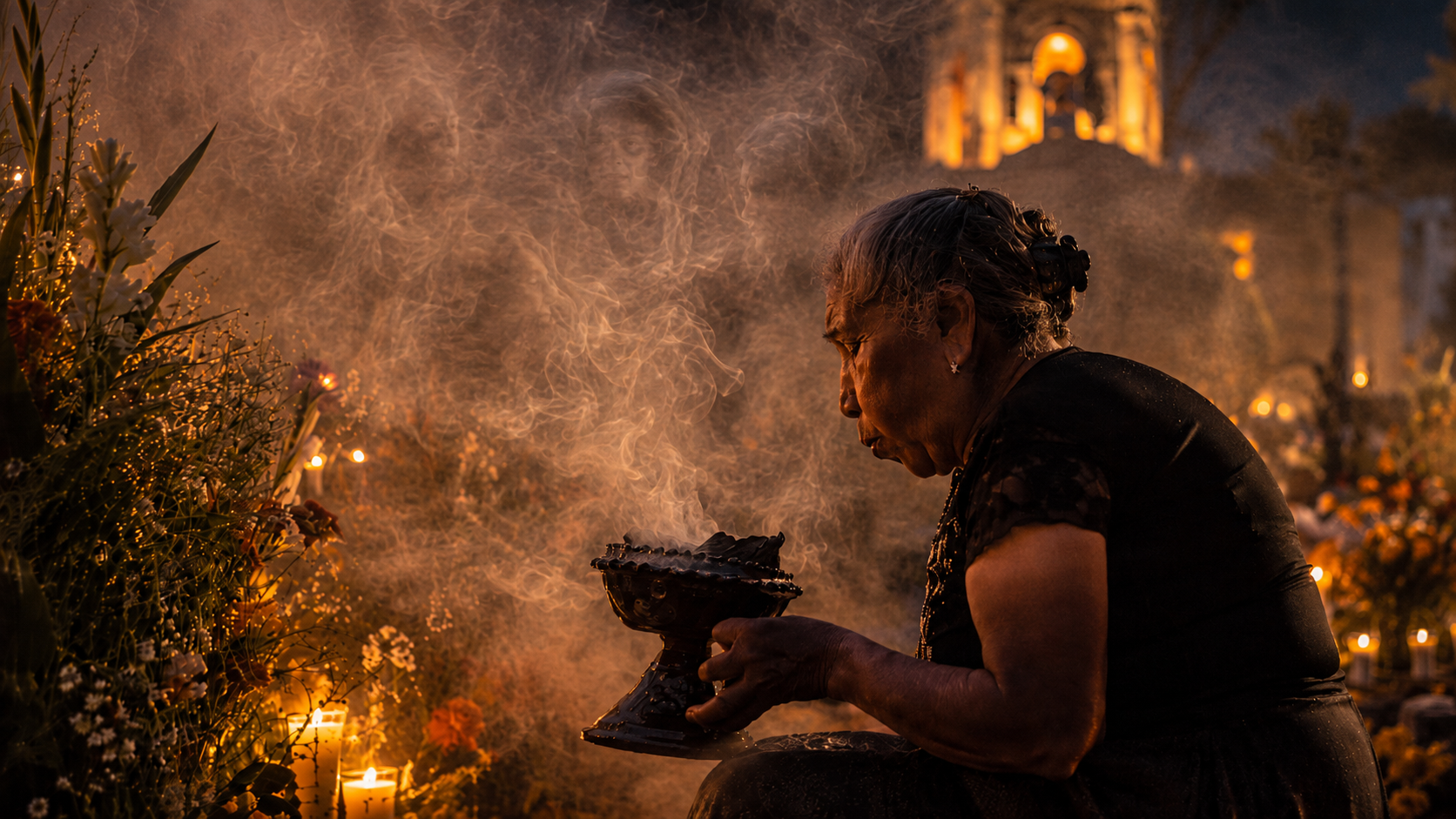
Copal is used so much at Día de Muertos in Oaxaca because families believe its white smoke does three jobs at once. It cleans the house so the right souls can enter in peace. It rises like a path or a lantern so those souls can find their way from the cemetery to the ofrenda. And it turns ordinary food, prayer, and memory into something the dead can receive. That is why a clay sahumerio sits beside almost every home altar in the valleys, the Mixteca, and the Sierra. The resin grows in Oaxaca’s hot country. The meaning is older than the Spanish calendar that now holds November 1 and 2.
What Copal Is
The word comes from Nahuatl copalli, “that which has aroma.” It is the hardened sap of Bursera trees: copal blanco, copal santo, copalillo, and their cousins. Those trees grow in warm, dry country from Guerrero and Puebla into the Mixteca of Oaxaca. Collectors cut the bark with care, let the resin bead and dry, then sell it in pale chunks that look almost like river stones. When you set a piece on live charcoal, it melts and throws a thick, sweet, slightly lemony smoke.
Mesoamerican peoples treated that sap as the blood of trees and as food for the gods. In Tenochtitlan, tribute lists counted copal by the load. Priests burned it toward the four directions. The white coils of smoke were called iztac teteo, the “white gods.” Archaeologists have found copal in offerings at the Templo Mayor, in the crater lake of the Nevado de Toluca, and at Chichén Itzá. The Instituto Nacional de los Pueblos Indígenas still describes copal on a modern ofrenda as the “fragrance of reverence,” the element that lifts prayer and praise.
Church incense arrived later with the Spanish. Copal was already here. In Oaxaca the two often share a table now, but the resin that smells like home is still the local one, gathered from Bursera and burned in a sahumerio the way grandparents burned it.
Why the Smoke Matters When Souls Come Home
Día de Muertos in Oaxaca rests on a simple, stubborn idea: the dead are not gone for good. They travel. Once a year they are allowed, or invited, to return. Children, the angelitos, are welcomed first, often on the night of October 31 into November 1. Adults follow on November 1 into November 2. Families clean the graves in the days before, talk to the people buried there, and ask them to come to the house. Then the house has to be ready.
Copal is part of that readiness. The Instituto Nacional de los Pueblos Indígenas puts it plainly: the smoke cleans the place of harmful spirits so the soul can enter its own house without danger. CONABIO defines sahumar as giving aromatic smoke to something in order to purify it. In practice that means the living light charcoal, add resin, and walk the smoke through the room, around the ofrenda, sometimes through the doorway and out toward the street. The house becomes a clear room. Only then does the banquet make sense.
The same smoke is a guide. Marigold petals make a visible path. Candles make a visible light. Copal makes a path you can smell. People in Teotitlán del Valle and across the valleys will tell you that the moment the resin hits the coal, the welcome has started. In a Zapotec household you may hear an elder invite a grandfather to take mezcal now that he is here. The smoke is the announcement that the invitation was heard.
There is a third job, quieter and just as old. In pre-Hispanic thought, copal smoke could carry an offering upward and change it from matter into nourishment the other world could use. Writers on Mesoamerican ritual still describe that change at the ofrenda: the mole, the bread, the chocolate, and the spoken names become food the visitor can take. The living later eat what is left. Families often say the soul took the essence, the comfort and the aroma, and left the plate looking almost untouched.
Why the Altar Lives in the House
A cemetery vigil is a visit to the dead. An ofrenda is the dead visiting you. That is why the main altar in Oaxaca is so often built in the house, in the room where saints already stand, where birthdays and funerals and engagements already gather the family. Zapotec homes treat that room as the social and spiritual center of the household. During these days it becomes a guest room for people who no longer sleep in a bed.
The altar is hospitality made visible. Photographs tell the traveler this table is theirs. A petate or a small mat is laid so the soul can rest. Chairs may be set for the living who will sit with them. Flowers, especially cempasúchil, scent the air and mark the way. White lilies speak of purification. Purple flowers speak of mourning. Papel picado lets air move through the offering, the element of wind. Candles are fire and also a lantern for the road back. Water waits because the journey is long and the dead are thirsty. Salt protects the body on the trip out and the trip home. Copal is air and prayer and the open door.
None of this is theater for neighbors, though neighbors will come. It is respect. To ofrendar, as the INPI writes, is to share bread, salt, fruit, cooking, and water with the dead, and wine or mezcal if they are adults. It is to stand close enough to talk with a memory until the memory feels like company.
Why There Is Food on the Table
Food is there because a guest who has walked from the other world arrives hungry. That is the plain reason families give, and it is enough. The dishes are not generic festival food. They are the person’s food. Mole negro for someone who loved mole negro. Higaditos, yellow tamales, chocolate-atole, pan de yema with a little face, fruit in season, a cigarette if they smoked, a shot of mezcal if that was their joy. In Teotitlán, families have set out mats so the souls can sit to the banquet. In Zimatlán, cooks speak of tamales de milpa for the first of November and tamales with mole for the second.
Earth is represented by the food itself. Water is in the glass. Fire is in the candles and the coal under the copal. Air is in the smoke and the cut paper. The four elements make a complete welcome. A photograph or a favorite tool makes it personal. This is not an offering to death as an idea. It is dinner for someone whose laugh you can still hear.
On the afternoon of November 2 many towns speak of showing the souls the road back. Copal may be burned again at the grave. Mezcal may be poured to the four directions. The same smoke that called them home now lights the return, so the visit ends with the same courtesy that began it.
Honor, Not Spectacle
If you walk through Oaxaca in late October you will smell copal from doorways, markets, and panteones. Demand rises because the resin is local, because Semana Santa and the patronal fiestas already taught people to trust it, and because Día de Muertos asks for a scent the dead will recognize. Communities in Oaxaca still harvest Bursera with an eye toward leaving the tree alive. A family that works the resin may take dozens of kilos in a good year. The rest of us buy a small bag and keep it near the charcoal.
Use it simply. Light the coal. Add a piece of copal. Let the smoke rise before the plates go down. Keep a window cracked. Stay with the altar a while. Say the names out loud. That is the whole rundown, in the end: the dead are treated as travelers who deserve a clean house, a lit path, a glass of water, the food they loved, and a fragrance that has been carrying messages between worlds for a very long time. Copal is how Oaxaca keeps that promise in the air.


