

The Dogs of the Underworld: The Role of Xoloitzcuintlis in Zapotec Death Myths
The Short Answer
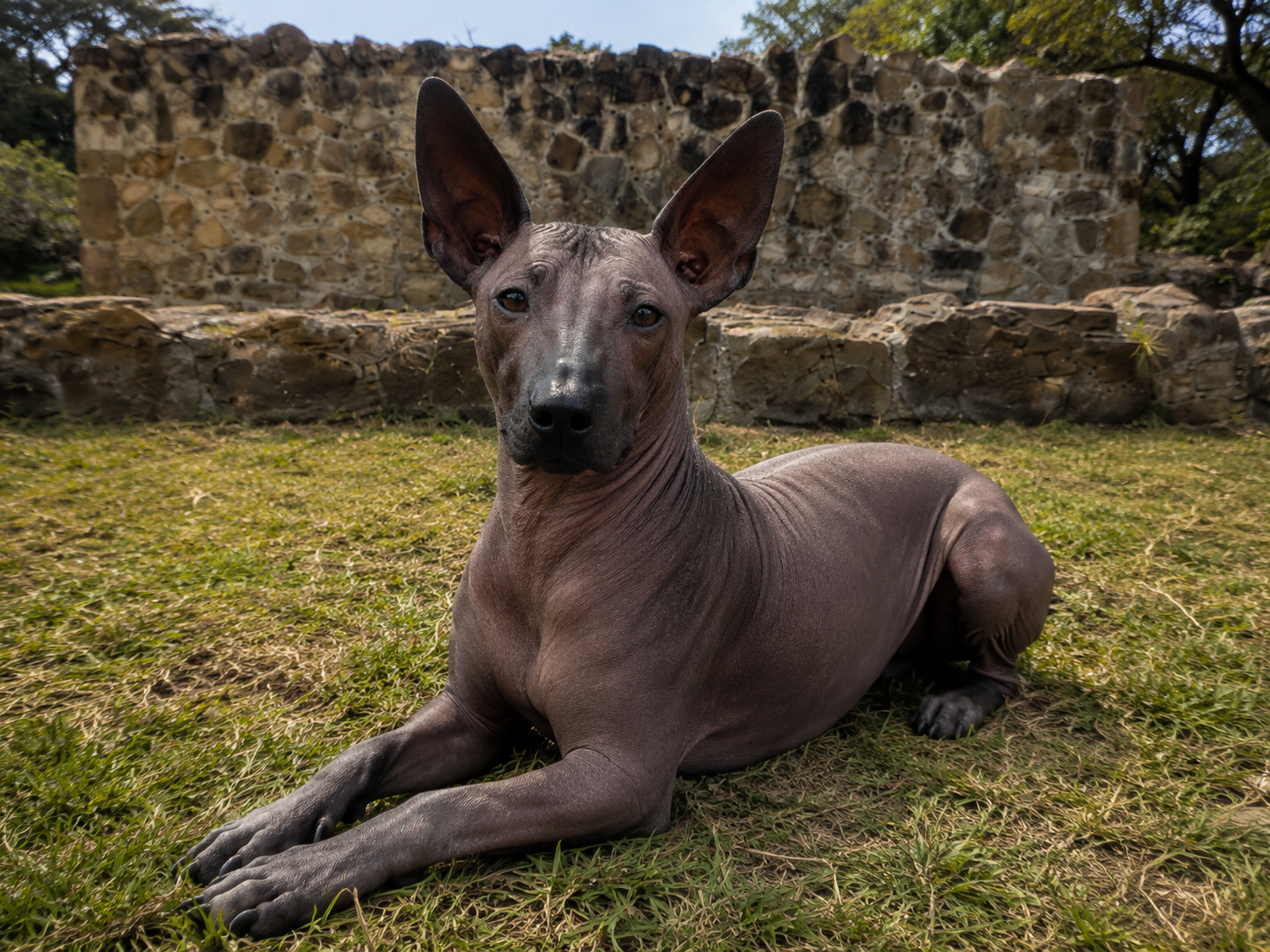
Zapotec death belief does not begin with the famous Mexica story of Xolotl and Mictlan, but it belongs to the same Mesoamerican family. Across the Valley of Oaxaca, from Monte Albán’s tombs to Mitla’s Place of Rest, dogs were buried with people, offered to underworld gods, and remembered as the animals that carry a soul across a river. The hairless Xoloitzcuintli, whose Nahuatl name means the dog of Xolotl, is the breed most often attached to that role in modern telling. Archaeology is more cautious. Zapotec graves held many kinds of dogs, often puppies. What the stories share is simpler and harder: treat a dog well in this life, or you may find yourself mid-river with nothing to hold but a tail.
A Name from One People, a Job Shared by Many
Xoloitzcuintli joins two Nahuatl words: Xolotl, the dog-headed god of twilight, lightning, twins, and the dangerous road of the sun through the night, and itzcuintli, dog. In Mexica tradition Xolotl is the twin and shadow of Quetzalcoatl. He helps steal the bones of an earlier humanity from the underworld so that people can be made again. He also stands behind the hairless dog that waits at a river the living cannot swim.
Fray Bernardino de Sahagún recorded the Mexica version with care. After a natural death the soul wandered for years toward Mictlan. At a wide water, called Apanohuaya or remembered as a place of dogs, Itzcuintlan, the dead looked for an animal that knew them. A yellow or reddish dog, sometimes described as a xolo, would throw itself into the current and carry its person across. White dogs refused to soil themselves. Black dogs, in some tellings, refused to soil the water. Only the right companion said yes. Families therefore raised dogs and, at a funeral, might send one with a cotton cord around its neck so the meeting would not fail.
That is a Mexica story, and it should be named as such. The Zapotecs of the Oaxaca valleys had their own lords of death, their own sacred geography, and their own dogs. The resemblance is not an accident. It is a shared Mesoamerican idea: water marks the border, and a dog knows how to cross it.
Monte Albán: Dogs in the House of Ancestors
Monte Albán rose on a shaved mountaintop after 500 BCE and became the ritual and political heart of the Zapotec world. Its great tombs were not only graves. They were rooms where the noble dead remained present, visited, fed, and consulted. Zooarchaeology in the Valley of Oaxaca shows that dogs were already part of Zapotec households in the Formative period, raised for meat and for ritual. In Classic communities such as Lambityeco, the Mitla Fortress, and El Palmillo, Heather Lapham and colleagues have documented dogs as food and as offerings placed with the dead, from simple graves to masonry tombs.
Javier Urcid, reading the funerary record of Monte Albán and related sites, notes that the sacrifice of dogs, most often puppies, is substantial and widespread. He links that practice to the pan-Mesoamerican belief that a dog helps the dead across a river. Bird offerings tend to appear in higher-ranking tombs. Dogs appear more broadly. The point is not that every Monte Albán burial held a hairless xolo. Raúl Valadez Azúa at UNAM has spent decades showing that early archaeologists often assumed any funerary dog was a xolo, when color, age, and companionship mattered as much as breed. What the mountain city does show is older and local: Zapotecs already sent dogs with their dead centuries before Mexica scribes described Mictlan.
Mitla, Lyobaa, and the Gods Who Received Dogs
When Monte Albán’s political power faded, Mitla rose as a Postclassic center whose Zapotec name, Lyobaa, is commonly rendered Place of Rest. Colonial writers and later scholars also called it a place of tombs, a gate of the dead. The Relación de Tlacolula y Mitla, compiled around 1580, says the people of Mitla worshipped a married pair of underworld deities: Coqui Bezelao, also known as Pitao Pezeelao, and his wife Xonaxi Quecuya. Before those idols they sacrificed children and men, and also small dogs, turkeys, quail, and pigeons. In nearby Tlacolula they offered dogs and turkeys to Coque Cehuiyo, another face of the underworld lord.
So at Mitla the dog is not only a ferryman. It is a gift to the rulers of the place where souls go to rest. Later mural painting in Mitla’s Church Group even shows a dog-headed Xolotl wearing attributes of Ehecatl-Quetzalcoatl, a reminder that by the Postclassic the valleys were in conversation with Central Mexican sacred art. The old Zapotec pair still sat at the center. The dog-headed traveler had found a wall to stand on.
That geography did not die with the temples. Elsie Clews Parsons, working in Mitla in the 1930s, heard that after death one crossed a great river, spoken of as the Río Jordán, on a black dog. White dogs were said to be for other people. A black dog that had been beaten or refused food would refuse you in turn. In San Pedro Quiatoni, valley Zapotecs have described a long walk toward Guichain or toward Mitla itself, the home of Zapotec dead. At a great river the dogs help if they were treated well. You may hold an ear. If you were cruel, they let you take only the tail, and they may leave you in the current. Mixe and Chinantec neighbors in Oaxaca tell related stories of a black dog and a body of water. The destination has Christian names now. The crossing has not changed its animal.
What the Hairless Dog Adds to the Story
Genetic and zooarchaeological work places the hairless breed in central Mexico thousands of years ago, then spreading through Mesoamerica. Claims of xolos in Zapotec, Maya, Toltec, and Aztec tombs circulate widely. The safer statement is this: hairless dogs were known, valued for warmth and strangeness, linked to Xolotl in Nahua thought, and later folded into a national story that made the xolo the face of every ancient psychopomp. In Oaxaca today you will meet living xolos with Zapotec names, painted by artists in the lineage of Francisco Toledo, walking the same streets where Parsons once wrote down the black-dog river.
The deeper Zapotec thread is not a breed standard. It is reciprocity. Ancestors at Monte Albán were kept close in tombs under the patio. Souls still travel toward Mitla in some village maps of the afterlife. A dog stands at the wet edge of that map because dogs already live on the edge of the human house: they eat what we discard, they warm the sick, they know our walk in the dark. Mexica theology gave that edge a god’s name. Zapotec practice put puppies in graves and, centuries later, warned children not to kick a street dog if they hoped to reach Lyobaa with company.
How to Hold the Story Honestly
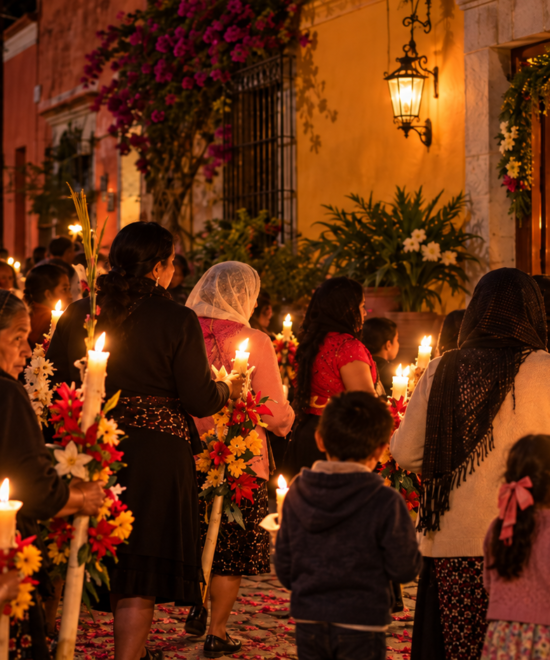
If you come to Monte Albán or Mitla looking for a xolo carved on every wall, you will be disappointed. Look instead for tombs that were opened again and again, for the idea that death is a road with a river on it, and for the living rule that kindness is a ticket. On Día de Muertos the same logic returns in another key. The dead are guests. They need a path, a light, a smell they know, and food. A dog painted on an ofrenda or walking beside a comparsa is not a cartoon from a film. It is a reminder that someone has to get into the water first.
The Xoloitzcuintli deserves its fame. So do the unnamed village dogs of Tlacolula, Mitla, and the Sierra who still, in story, decide whether a soul holds an ear or a tail. Between Monte Albán’s buried rooms and Mitla’s Place of Rest, that is the Zapotec part of the underworld’s pack: not a single sacred breed on a pedestal, but a companion who remembers how you lived.