

Comparsas vs. Muerteadas: Understanding Oaxaca’s Day of the Dead Parades
Two Lively Faces of the Same Celebration
While the candlelit cemeteries and home ofrendas form the quiet heart of Día de Muertos in Oaxaca, the streets come alive with two related but distinct traditions: the comparsa and the muerteada. Both fill the nights with brass bands, elaborate costumes, dancing, and a joyful defiance of death. Yet they are not the same thing. Understanding the difference helps visitors know what they are seeing, where to go, and why these parades matter so deeply to local communities.
At their core, both celebrate the temporary return of the dead with music and movement rather than only with solemn remembrance. They turn the streets into temporary stages where the living and the remembered walk together.
What Is a Muerteada?
The muerteada is the older and more specific of the two forms. It originated and remains strongest in the Valle de Etla (also called the Valle Eteco), especially in San Agustín Etla and nearby communities such as Nazareno Etla, Soledad Etla, and Villa de Etla. Local accounts place its roots at least eighty years back, though the spirit of costumed processions is older.
A classic muerteada usually begins on the afternoon or evening of November 1 and can last well into the morning of November 2, sometimes twelve to twenty hours or more. It often opens with a short theatrical piece known as “la relación.” In this performance a person is treated as recently deceased and is then “revived” through the comic and satirical efforts of doctors, priests, spiritists, and other stock characters. Once the dead are symbolically brought back, the group sets off through the streets.
Participants (often called muerteros) wear heavy, elaborate costumes: diablos covered in bells and mirrors, skeletons, widows in black, priests, and many other figures. Loud traditional banda music drives the procession. The group moves from house to house, dancing, accepting drinks, and keeping the energy high through the night. Some communities also hold an “octava” (a smaller version one week later).
The muerteada is intensely local. It belongs first to the neighborhoods that organize it. Outsiders are often welcome to watch and even join the dancing, but the event is not staged primarily for tourists. Its purpose is communal: to walk with the dead, to laugh at mortality, and to reaffirm belonging through exhaustion, music, and shared ritual.
What Is a Comparsa?
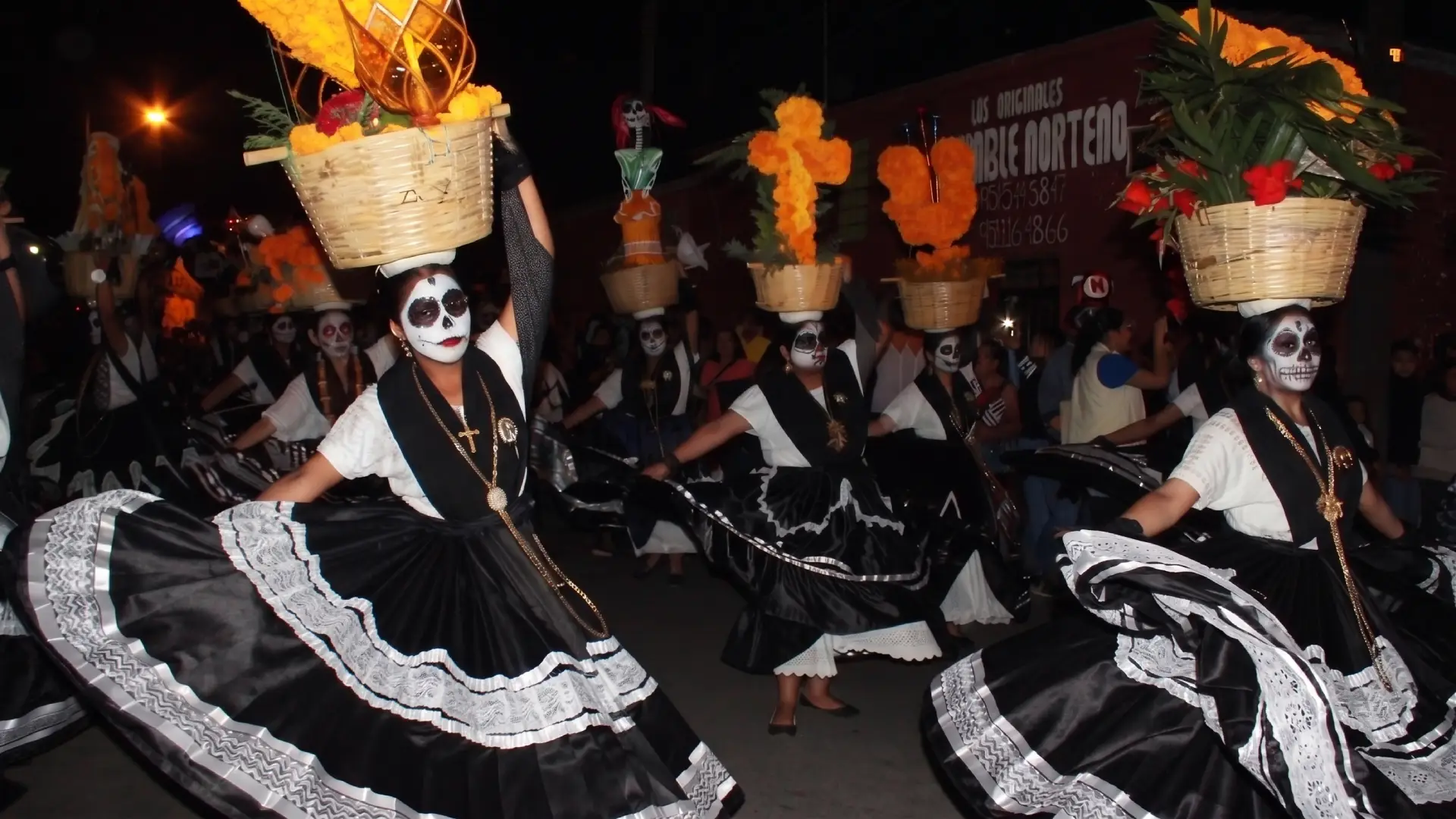
Comparsa is the broader term used across much of Oaxaca City and many other towns. It describes the costumed street processions that appear in neighborhoods such as Jalatlaco, El Polvo, La Trinidad de las Huertas, Cinco Señores, Santa Lucía del Camino, and Atzompa, as well as the larger official “Mega Comparsa” organized in the historic center.
A comparsa is generally shorter and more flexible than a muerteada. Groups form around themes, families, or barrios. Participants dress as catrinas, skeletons, devils, politicians, celebrities, or traditional figures mixed with modern satire. Brass bands or recorded music lead the way. Dancing is constant. Mezcal often circulates. In the city center these processions commonly begin in the evening of October 31 or November 1 and move along main routes such as Macedonio Alcalá, the Zócalo area, and nearby streets.
Comparsas are more open to spontaneous participation. Visitors frequently join for a few blocks. The tone is festive and sometimes playfully irreverent. Social commentary appears often: costumes that poke fun at public figures or current events sit comfortably beside classic death imagery. While the muerteada carries a stronger theatrical and ritual structure, the comparsa feels more like a moving neighborhood party dedicated to the season of the dead.
Key Differences at a Glance
- Origin and place – Muerteadas are rooted in the Valle de Etla, especially San Agustín Etla. Comparsas occur widely in Oaxaca City neighborhoods and many other municipalities.
- Structure – Muerteadas often include a formal theatrical “relación” of revival and can last through the entire night into the next morning. Comparsas are usually shorter evening processions without the same fixed dramatic opening.
- Tone and characters – Both use skeletons, diablos, and widows, yet muerteadas lean more heavily on traditional stock characters and ritual satire. Comparsas freely mix traditional figures with contemporary costume and political humor.
- Duration and intensity – A full muerteada can run twelve to twenty-plus hours. Most urban comparsas last a few hours.
- Access – Comparsas in the historic center and popular neighborhoods are easier for visitors to find and join. Muerteadas reward those willing to travel to Etla and stay late.
When and Where to Experience Them
The peak nights are October 31, November 1, and into the morning of November 2. In Oaxaca City, neighborhood comparsas appear throughout the historic center and surrounding barrios; the official mega comparsa usually takes place on one of the main days and follows a published route through the centro. In the Valle de Etla, San Agustín Etla remains the best-known place for a full muerteada, typically beginning late on November 1. Nearby communities hold their own versions on the same dates or on the following weekends (the octavas).
Because these are living community events rather than fixed tourist performances, exact start times and routes can shift. Listening for the brass band and following the crowd is often the most reliable method once you are in the right area.
Why These Parades Exist
Both traditions grow from the same cultural logic that shapes all of Oaxaca’s Día de Muertos: death is not only loss but also presence, memory, and continuity. By dressing as the dead, dancing through the night, and filling the streets with noise and color, communities assert that the relationship with those who have gone does not end. The satire and humor keep the observance from becoming purely mournful. The physical effort of walking and dancing for hours creates shared experience and strengthens neighborhood ties.
In a state with deep indigenous roots and a long history of community organization, the comparsa and the muerteada also serve as public statements of identity. They are ways of saying that the dead still belong to the living, and that the living still know how to celebrate them.
A Note for Visitors
These parades are joyful and generally welcoming, yet they remain community events first. Dress comfortably for long hours on your feet. Carry small bills for drinks or snacks. If you paint your face or wear a costume, remember that the same look that fits a comparsa in the city center is often considered out of place in a cemetery. Most of all, stay present. The best way to understand the difference between a comparsa and a muerteada is to walk with them for a while, listen to the banda, and feel the particular energy each one carries through the Oaxaca night.