


How to Respectfully Celebrate Día de Muertos in Oaxaca as a Foreigner
You Are a Guest
Día de Muertos in Oaxaca is one of the most open and visually powerful cultural events in Mexico. Families welcome the presence of respectful visitors. At the same time it remains a deeply personal observance of memory, love, and the return of the dead. The difference between a meaningful experience and an uncomfortable one usually comes down to a few clear choices. The guidelines below are drawn from local voices, long-time residents, and careful travelers. Follow them and you will be received with warmth.
Cemetery Etiquette: The Most Important Rules
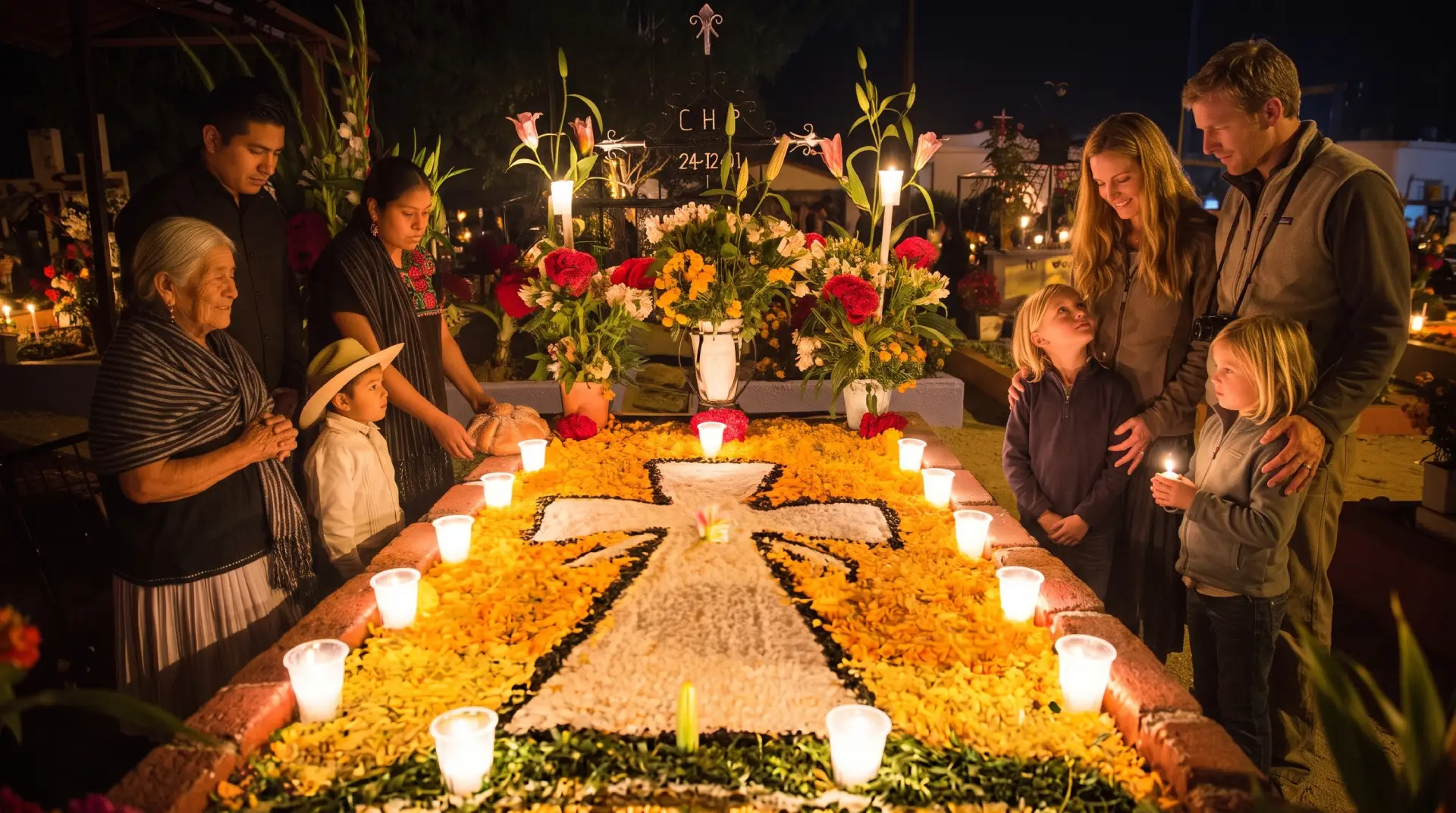
The heart of the celebration for many Oaxacan families is the overnight or evening vigil at the graves. These are sacred family spaces. Behavior that feels normal in a parade or on the street can feel invasive here.
Do this
- Walk slowly and carefully. Graves are close together. Stay on the narrow paths and never step on a grave or a freshly decorated plot.
- Keep your voice low. This is a time of conversation, prayer, and quiet company, not a party.
- Smile, make eye contact, and say a simple “buenas noches” or “hola.” Many families will return the greeting. Some may invite you to sit for a moment.
- If invited to share food or a small drink, accept graciously. Reciprocating with a small offering (a candle, a few marigolds, or pan de muerto) is appreciated.
- Dress modestly and comfortably. Avoid anything that draws attention to yourself.
Avoid this
- Do not wear face paint, Catrina makeup, or costumes inside the cemetery. This is widely regarded as disrespectful at the graves. Save it for the streets and calendas.
- Do not arrive drunk or treat the vigil as a place to drink heavily. Mezcal belongs more naturally with the street celebrations.
- Do not sit on graves, lean on crosses, or move decorations.
- Do not use flash photography. The candlelight is part of the atmosphere.
Photography: Ask First, Then Ask Again
Beautiful scenes are everywhere, but people are not props.
- Always ask permission before photographing a family, a private ofrenda, or anyone at close range. A simple “¿Puedo tomar una foto?” and a smile go a long way. Many will say yes.
- Wide shots of the overall cemetery scene are usually acceptable without individual permission.
- Never photograph children without clear permission from a parent or guardian.
- Public ofrendas in the Zócalo, museums, hotels, and streets are generally fine to photograph.
- Turn the flash off. It destroys the soft candlelight that defines the night.
If you are unsure, leave the camera down for a while and simply be present. Some of the most powerful moments happen when you are not looking through a lens.
Face Paint, Costumes, and Street Celebrations
The streets, calendas, and comparsas are more festive and open. Here Catrina-style face paint and colorful clothing are common among both locals and visitors. Enjoy them.
The key distinction is location. What feels joyful on Macedonio Alcalá or in a neighborhood procession can feel out of place at a family grave. If you paint your face for the evening, wash it off before entering a cemetery. Avoid Halloween-style costumes, gore, or anything that turns the dead into a joke. The tone in Oaxaca is remembrance mixed with warmth, not horror.
Ofrendas and Private Spaces
Home ofrendas and many small neighborhood altars are private. Look, admire from a respectful distance, and do not touch. Public ofrendas set up by the city, museums, or cultural centers are meant to be seen and photographed. If a family invites you into their home or to their table, treat it as an honor. A small contribution of flowers or candles is a kind gesture.
Practical Ways to Show Respect
- Support local vendors. Buy your cempasúchil, candles, pan de muerto, and food from the people selling in the markets and near the cemeteries. Your money stays in the community.
- Hire local guides when visiting village cemeteries. A good local guide helps you navigate both logistics and cultural boundaries.
- Learn a few words. “Buenas noches,” “gracias,” “qué bonito,” and “¿puedo?” open doors.
- Move with the rhythm of the place. Families arrive at dusk, settle in, and stay late. Rushing through or treating the night as a checklist misses the point.
- Be mindful of alcohol. Street celebrations often include mezcal. Cemetery vigils do not. Know the difference and act accordingly.
What to Wear and Bring
Comfortable walking shoes are essential. Nights in late October and early November can be cool, so dress in layers. For cemetery visits choose modest, dark or neutral clothing that does not draw attention. A small flashlight (used sparingly and pointed at the ground) helps you see paths without disturbing others. Carry cash in small bills for flowers, candles, and food.
The Spirit of Participation
Oaxacans are generally proud to share this tradition and generous with visitors who approach it with sincerity. The goal is not to disappear or to perform. It is to observe carefully, accept invitations when they are offered, and leave the spaces as you found them—quiet, cared for, and centered on the families who live this ritual every year.
When you treat the cemeteries as sacred, the ofrendas as personal, and the people as hosts rather than background, you will find that the welcome is real. That is how a foreigner celebrates Día de Muertos in Oaxaca correctly: with open eyes, a quiet step, and genuine respect.


