


Is it Disrespectful to Paint Your Face as a Catrina in Oaxaca?
The Direct Answer
Yes, it is generally considered disrespectful to paint your face as a Catrina when visiting cemeteries on November 1 and 2. No, it is not considered disrespectful, and is in fact widely accepted and common, during street celebrations, comparsas, calendas, and the festive public events in the historic center and neighborhoods such as Jalatlaco. The difference lies in the two distinct sides of Oaxaca’s Día de Muertos: the intimate, family-centered rituals of remembrance and the more open, celebratory, and sometimes tourist-influenced street culture.
Understanding the Two Faces of the Celebration
Día de Muertos in Oaxaca is not a single uniform event. It contains a quieter, deeply personal dimension and a louder, more public one. Visitors who understand this distinction move through the days with greater grace and cause far less friction.
The first side is the family ritual. This is the heart of the tradition for most Oaxacan families, especially in the surrounding villages and more intimate city cemeteries. Homes fill with ofrendas. Graves are cleaned, decorated with cempasúchil, candles, photographs, and the favorite foods and drinks of the departed. Families keep vigil, talk, pray, share mezcal or chocolate, and simply sit with their dead. The atmosphere is one of reunion and quiet companionship rather than performance. In these spaces, especially on the nights of November 1 and 2, locals almost never paint their faces or wear elaborate costumes. Older generations in particular view face paint as something foreign to the ritual, often associating it with the influence of films, social media, or Halloween crossover culture.
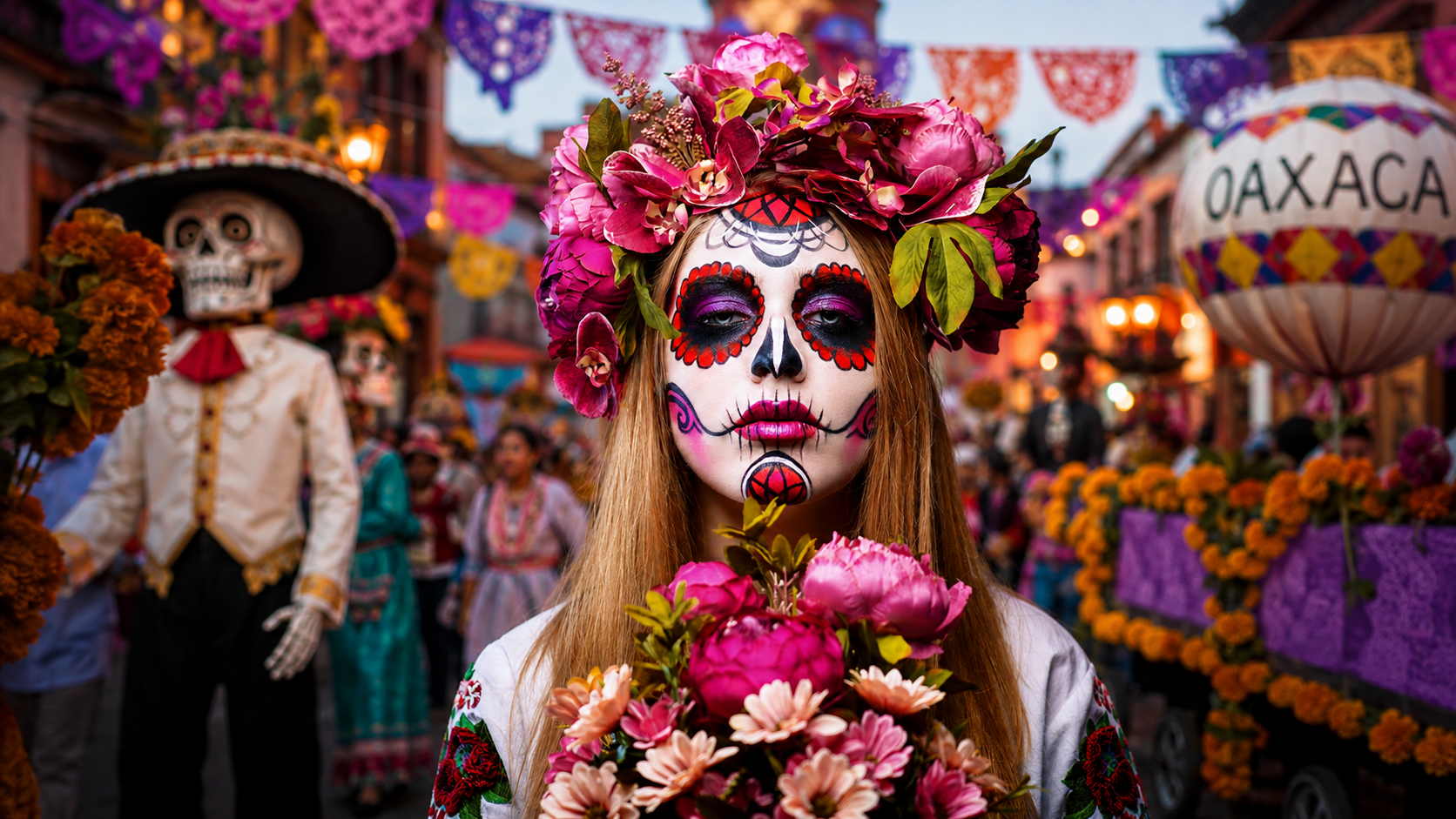
The second side is the public, festive expression that has grown strongly in Oaxaca City. Comparsas (costumed processions with live bands), neighborhood calendas, large public ofrendas, and the lively nighttime energy along Macedonio Alcalá and in places like Jalatlaco are joyful, theatrical, and open. Here Catrina face paint is common among both locals and visitors. It has become part of the visual language of the urban celebration. In these settings the paint is read as participation in the festive spirit rather than as intrusion into a private mourning space.
Why Cemeteries Are Different
Multiple local voices and long-term observers in Oaxaca are consistent on this point. Arriving at a cemetery, particularly a village panteón such as those in Teotitlán del Valle, Santa María Atzompa, or San Felipe del Agua, with a full Catrina face is widely seen as out of place. Families are there to keep company with their own dead. The space is sacred in a personal rather than touristic sense. Face paint can signal that the visitor is treating the vigil as a costume event or a photo opportunity. It draws attention to the outsider at a moment when the focus should remain on the graves and the living relatives gathered around them.
Even in the larger and more visited cemeteries, including parts of Xoxocotlán and the Panteón General, many guides and residents still recommend washing the paint off before entering the more intimate sections. The further one moves from the city center and the more traditional the community, the stronger this expectation becomes. Locals do not paint their faces for these vigils. Matching their sobriety of dress and demeanor is one of the simplest ways to show respect.
Why the Streets Are Different
On the streets the rules relax considerably. Comparsas and calendas are designed as public performance. Brass bands, dancers, giant puppets, and elaborately dressed participants fill the night. Catrina makeup fits naturally into this visual abundance. Many local young people and artists participate. Face-painting stations appear around the Zócalo and Santo Domingo precisely because the demand is high and the context is celebratory rather than solemn.
La Catrina herself is a relatively modern symbol. Created by José Guadalupe Posada in the early twentieth century and later popularized by Diego Rivera, she began as social satire and evolved into an emblem of Mexican identity and the equality of all in death. She was never an ancient indigenous figure of the cemetery vigil. Her adoption into street festivities therefore feels organic to many Oaxacans in the urban setting, even while it remains foreign to the older village practices.
Practical Guidance for Visitors
If your evening includes both a comparsa and a cemetery visit, plan accordingly. Get painted for the street events. Carry makeup remover wipes or plan to wash your face before entering any panteón. Dress simply and modestly for the cemeteries. Bring flowers or candles if you wish to make a small offering. Walk slowly, keep your voice low, and always ask before photographing people or their ofrendas.
In the historic center and during organized public events, enjoy the paint. It is part of the contemporary Oaxacan street celebration and is generally welcomed when done with some awareness of its meaning. The key is never to treat the face paint as a Halloween costume detached from the deeper purpose of the days: remembering and accompanying the dead.
Reading the Room Is the Real Etiquette
Oaxaca’s Día de Muertos holds both a profound family intimacy and a exuberant public theater. The same action, painting your face as a Catrina, lands differently in each. In the cemeteries on the first and second of November it risks turning a private act of remembrance into spectacle. In the comparsas, calendas, and lively streets it joins a shared, colorful expression that many locals themselves embrace.
Visitors who understand this distinction rarely go wrong. They participate fully in the festive side without carrying the costume into the quieter, more sacred spaces. That simple awareness allows both the joy of the streets and the dignity of the cemeteries to remain intact. In the end, respect is less about rigid prohibition and more about knowing which face of the celebration you are standing in front of, and responding accordingly.


