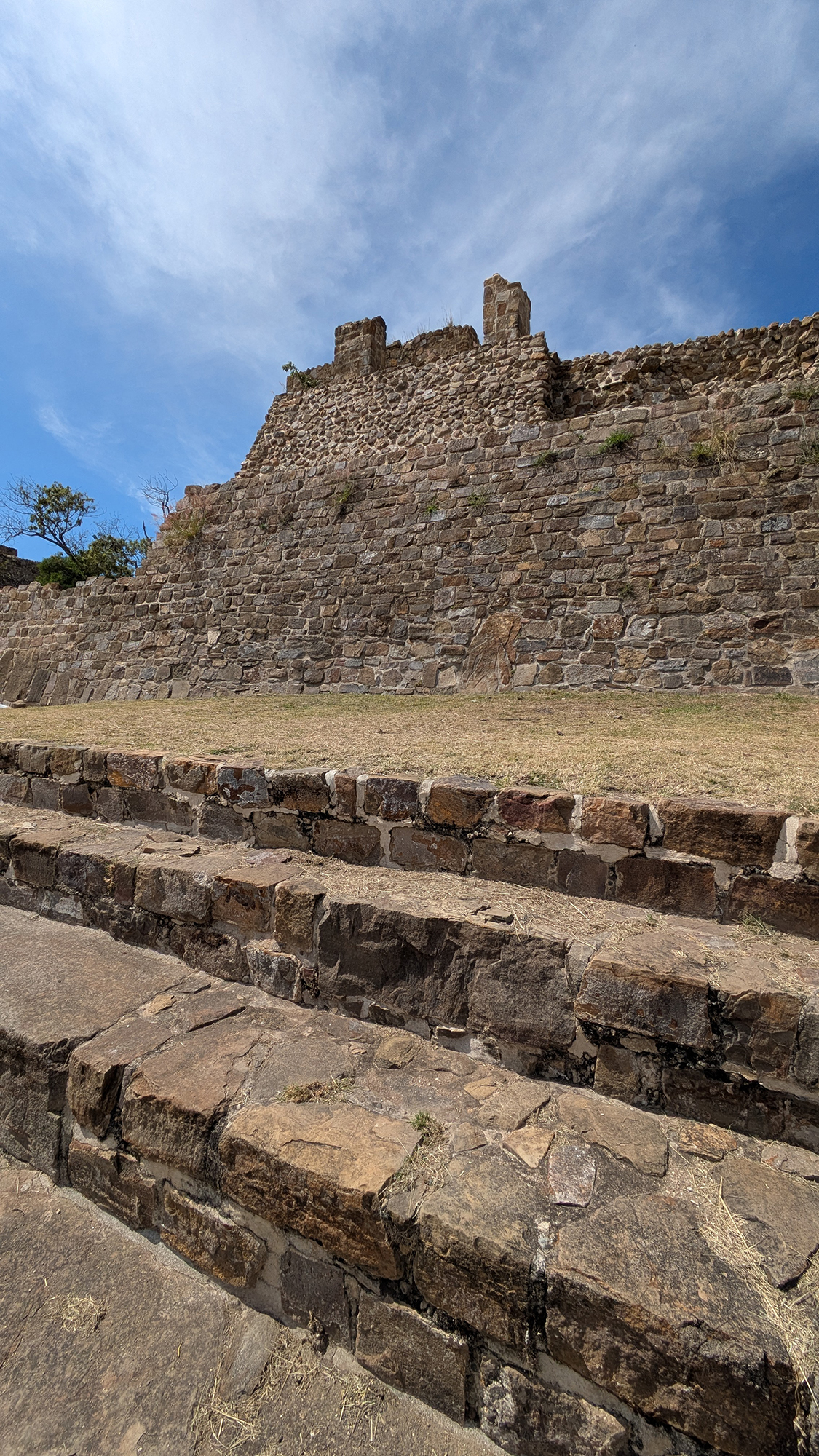
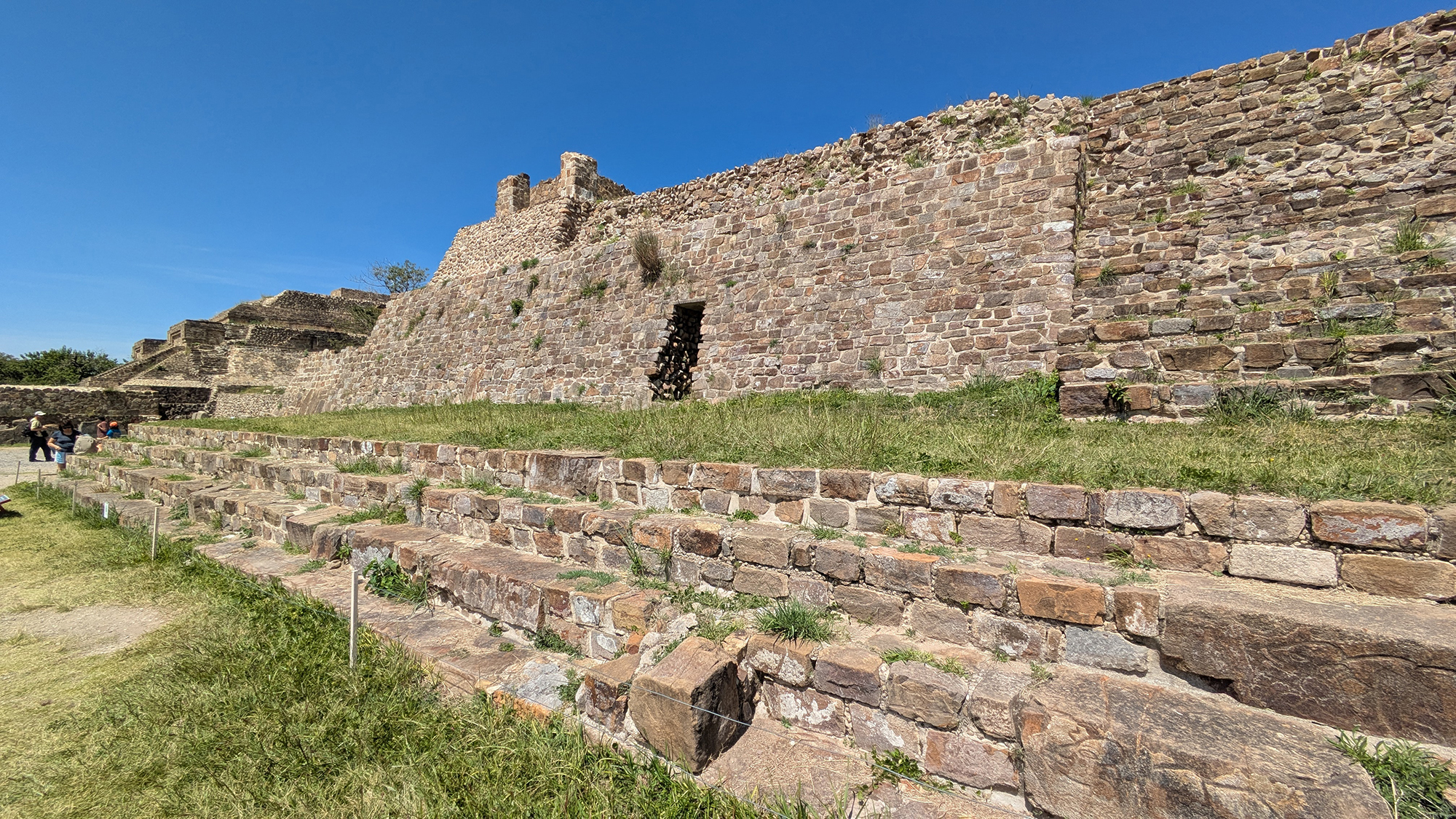
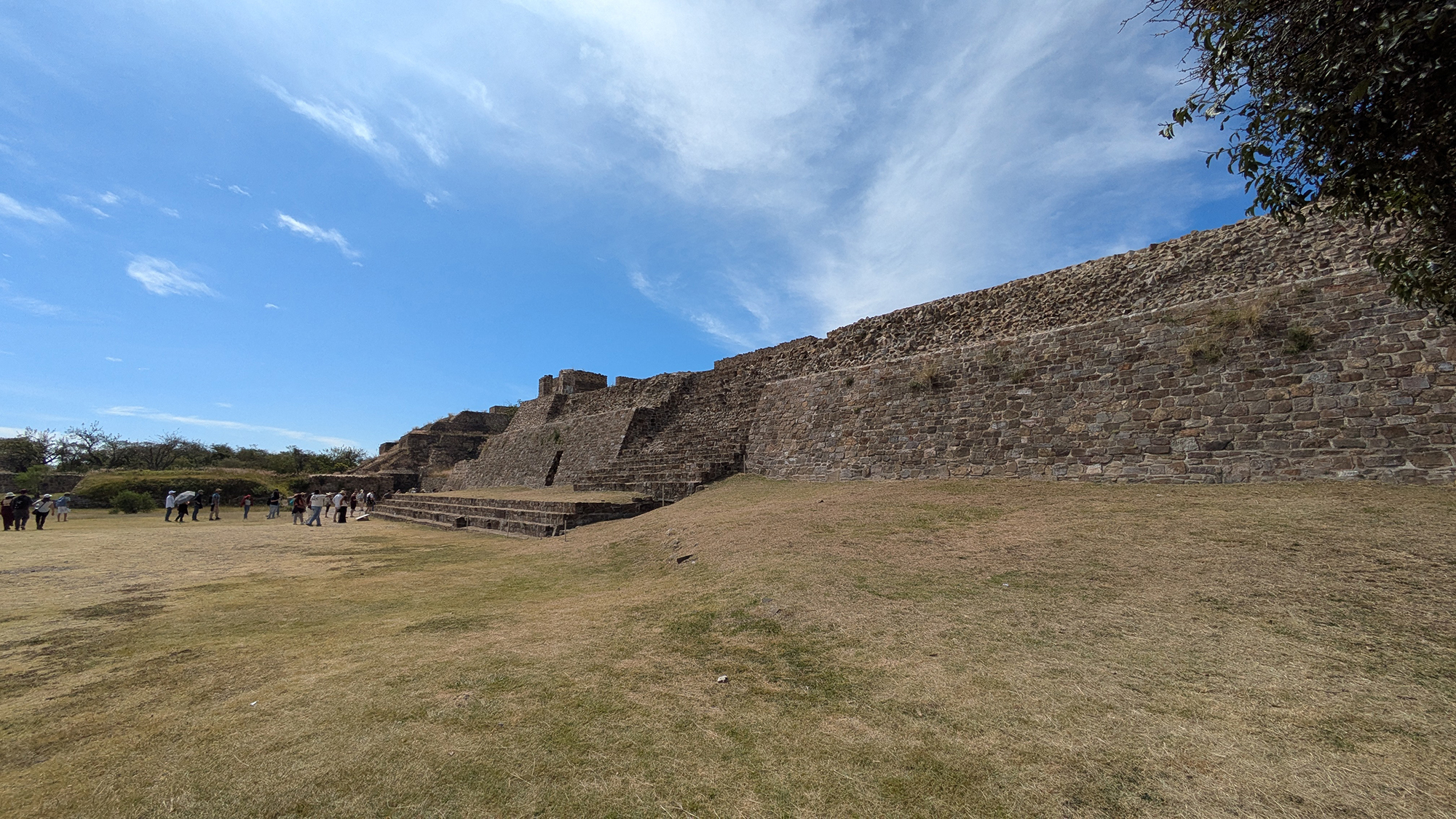
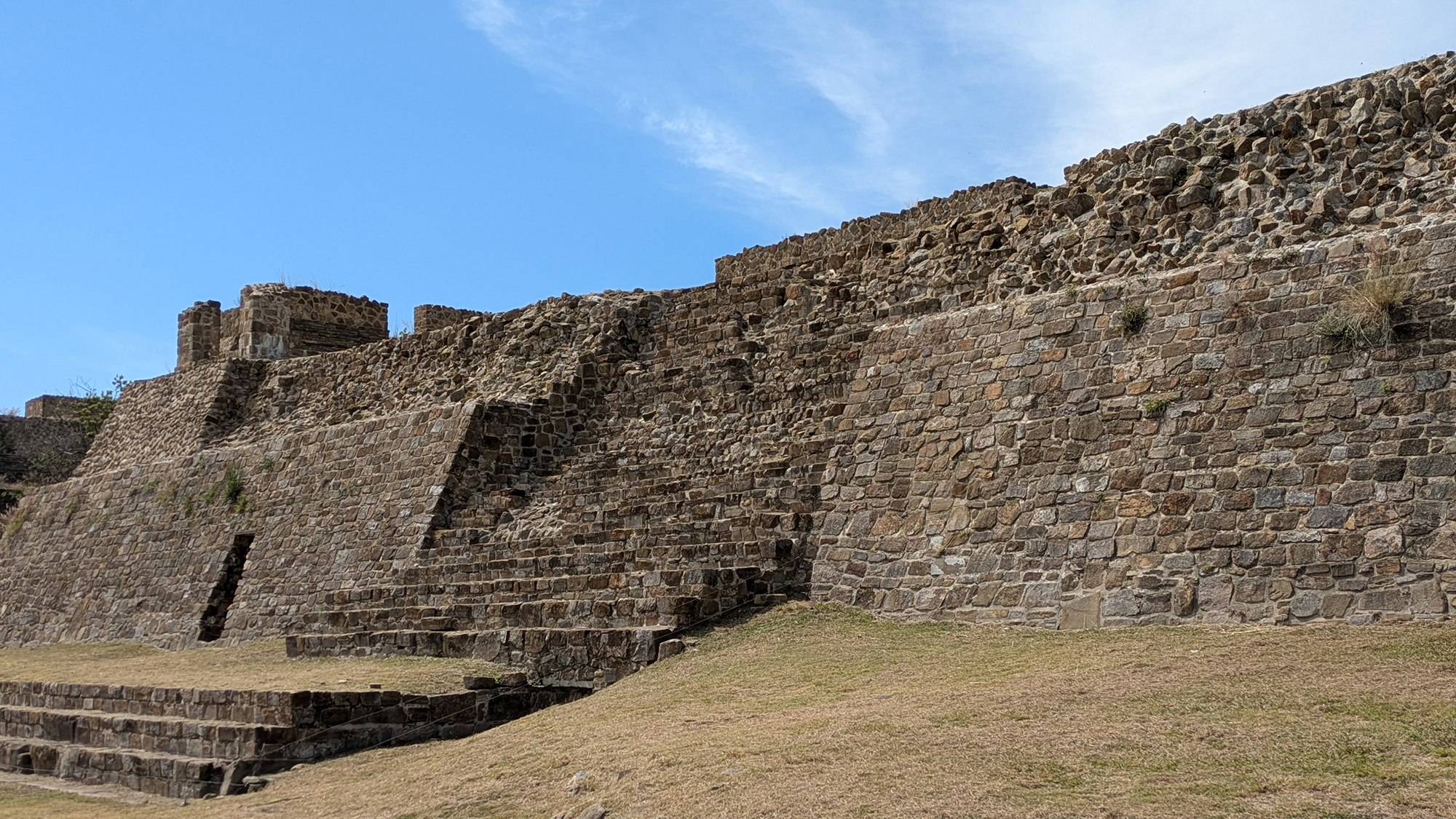
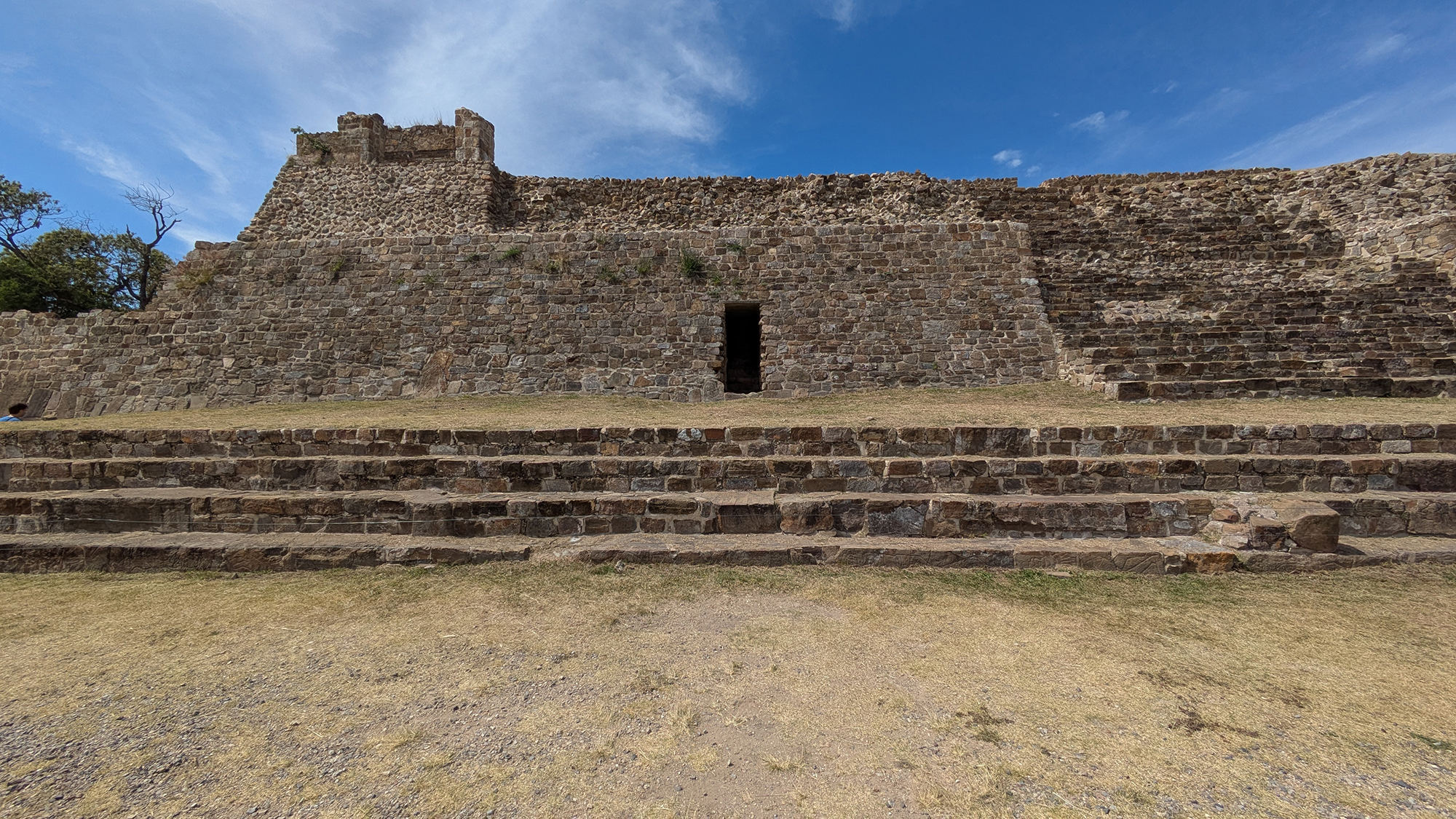
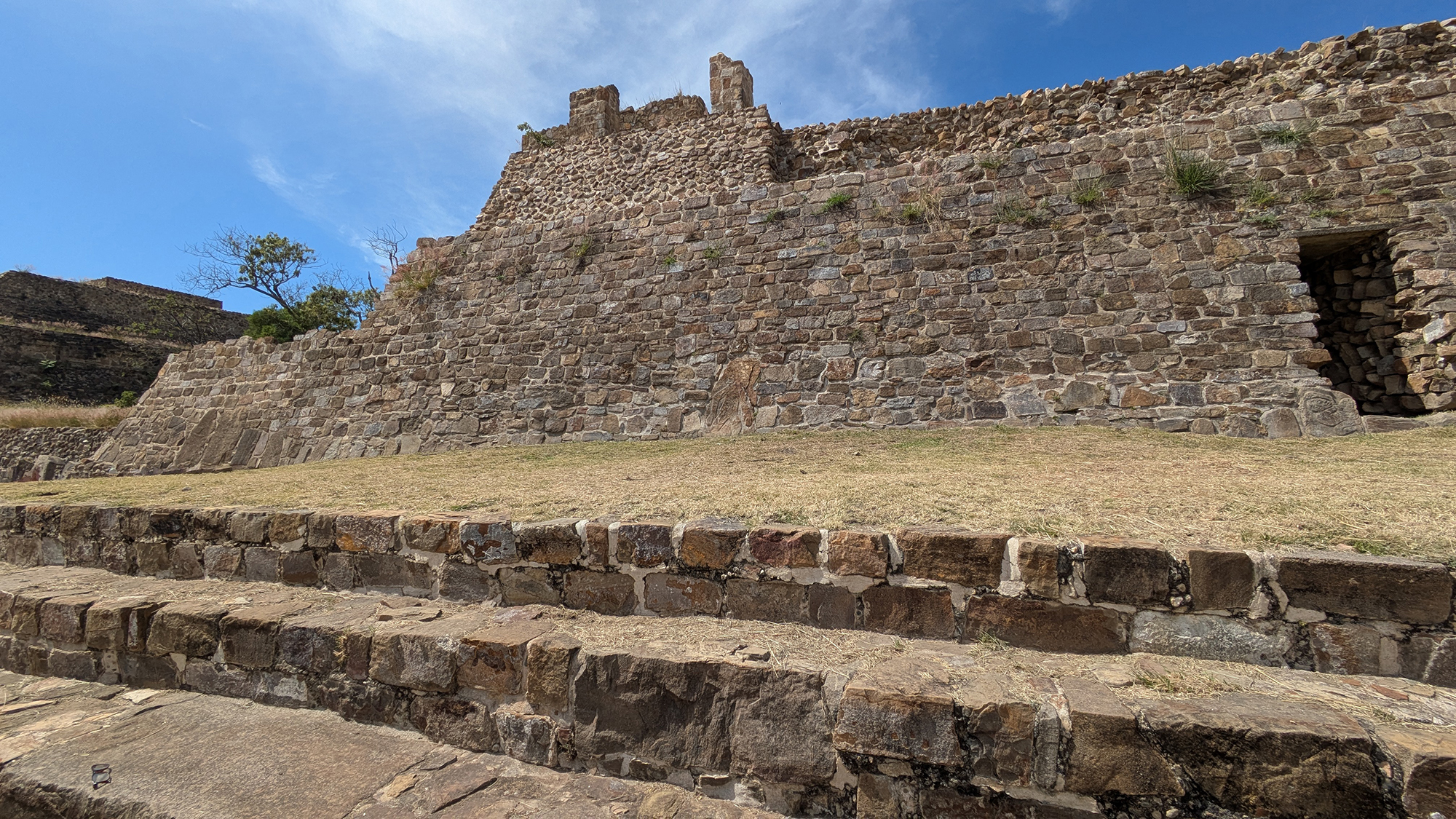
Building L, also widely known as Edificio L or the Building of the Danzantes, is a prominent ceremonial structure situated in the southwest corner of Monte Albán's Main Plaza. Dating primarily to the site's critical founding phase (Monte Albán I, approx. 500–100 BCE), it stands as one of the earliest monumental buildings at this Zapotec ceremonial center in Oaxaca. Featuring a deeply buried substructure, Building L functioned as a primary platform for ritualistic and political displays, underscoring the rapid consolidation of religious and militaristic authority by early Monte Albán elites. Its significance lies in marking the valley's transition to urbanism, with highly evolved architectural elements—such as complex stairways and megalithic revetment walls—highlighting advanced Zapotec engineering prowess.13
Morphology and Spatial Layout
Building L is strategically positioned in the southwest corner of Monte Albán's Main Plaza, forming a foundational part of the western row of structures that border the massive central esplanade, which measures approximately 300 m (984 ft) by 200 m (656 ft). The building overlooks the plaza from an elevated platform, accessible via a central stairway comprising 11 steps that lead to a flat stucco surface.
To the north, a complex subterranean tunnel connects to adjacent areas, revealing additional structural stairways and balustrades. Its orientation aligns meticulously with the overall north-south axis of the plaza, establishing a close spatial relationship with nearby monumental features, such as Building M to the south and the central, off-grid Building J. This emphasizes its intended integration into the site's processional and ritual layout. Topographical measurements indicate a complex internal spatial relationship, with architectural features like internal retaining walls deliberately offset by about 52 cm (20.5 in).14
Architectural Stratigraphy and Construction Phases
Constructed during Monte Albán I (500–100 BCE), Building L exemplifies the paradigm of early Zapotec building techniques. The structural core consists of rubble-fill platforms faced with massive rectangular stone slabs (orthostats) arranged in alternating vertical and horizontal courses.
The structure includes a stepped pyramidal platform utilizing talud-sloping walls, geometrically similar to a 6 m (19.7 ft) high contemporaneous example found in nearby Mound K, alongside a primary stairway flanked by heavy balustrades. Stratigraphic analysis reveals a distinct sequence of construction phases: an initial megalithic revetment wall, followed by a subsequent pyramidal platform, and finally, later additions that were ultimately buried beneath Classic period (100 BCE–AD 900) architectural overlays. These subsequent Classic modifications truncated the original Early Formative edifice to the north and south.
Original surfaces were finished with thick stucco plaster, and primary alignments suggest heavily targeted ritual orientations. Contemporary scholarly analysis correctly attributes variations in wall placements to these phased expansions, purposefully avoiding speculation on unconfirmed, unexcavated structural elements.15
Epigraphy and Iconography: The Danzantes
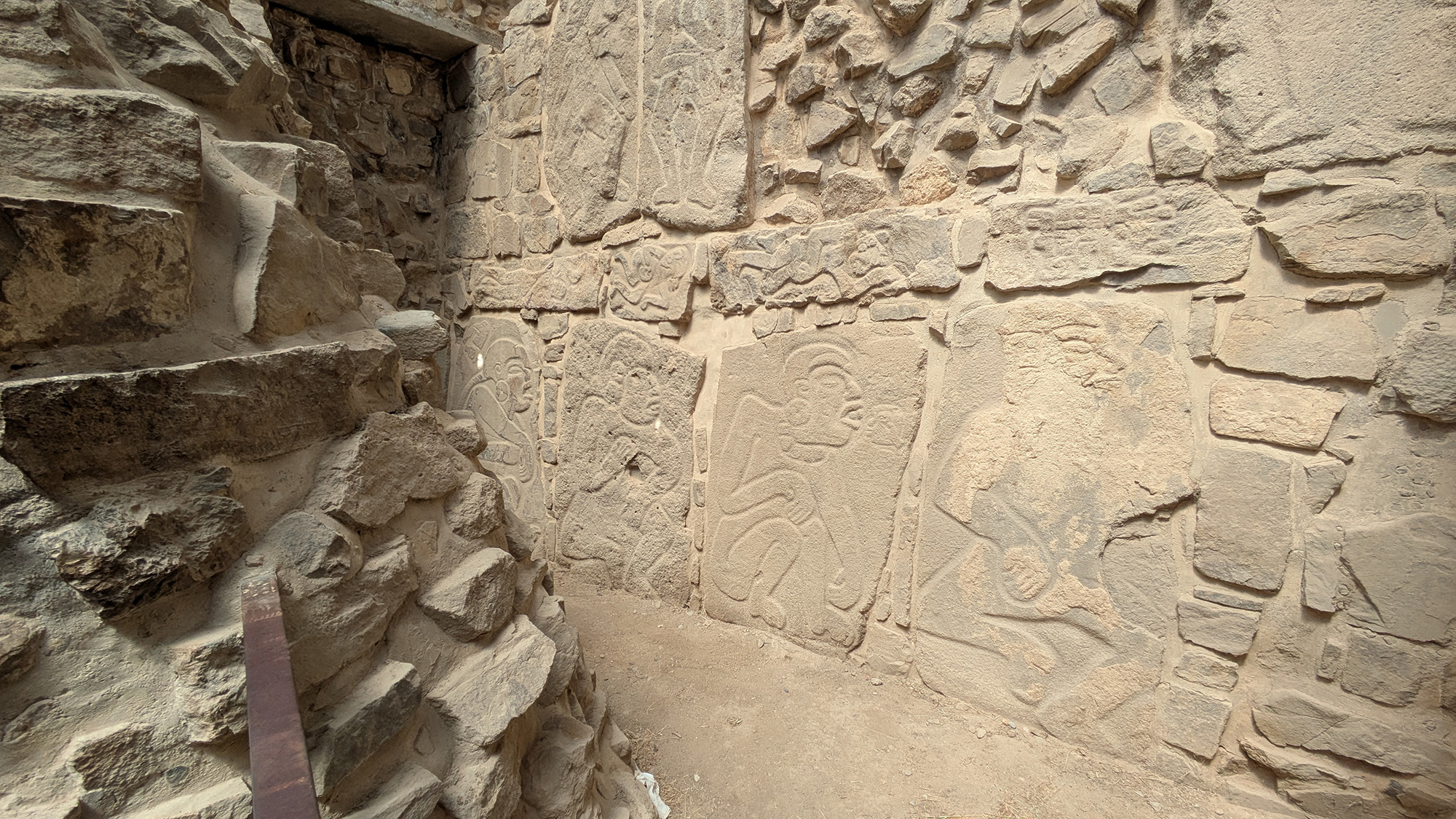
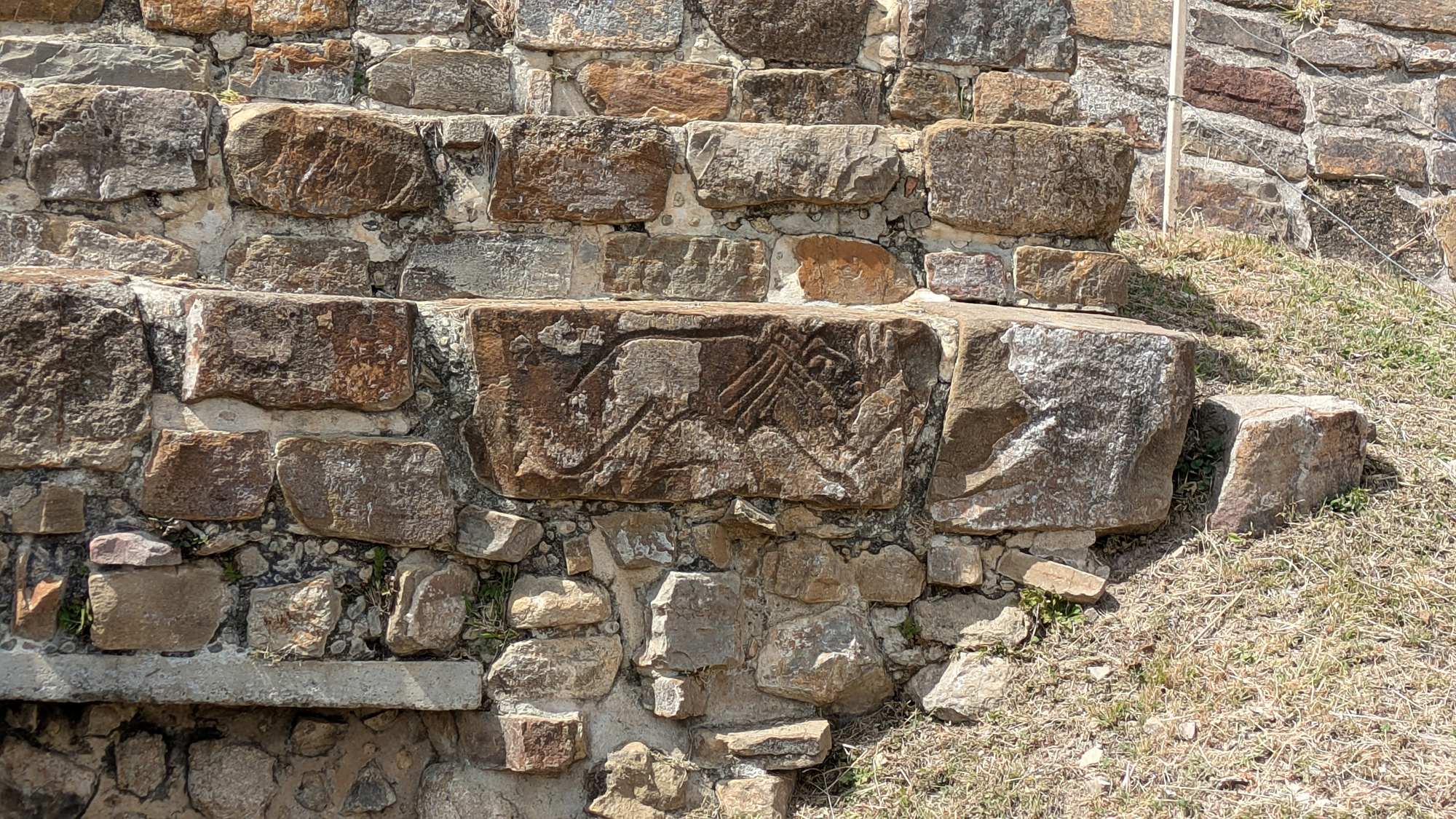
Building L is undoubtedly most distinguished by its monumental revetment wall adorned with the carved stone slabs known universally as the Danzantes. This extensive gallery depicts over 300 nude, contorted figures, broadly interpreted by scholars as sacrificial victims or captive rival elites. These figures are frequently accompanied by localized hieroglyphic elements, including toponymic naming signs, calendrical dates, and iconographic blood scrolls.
These pecked, low-relief carvings are arranged in an alternating lattice of upright and horizontal rows, reflecting the earliest corpus of Zapotec iconography and state-sponsored writing, carrying distinct stylistic influences from the Gulf Coast Olmec. While the Danzantes are inextricably central to Building L's identity and original sociopolitical function, detailed semiotic analysis of their symbolism and academic interpretations is covered in the related institutional entry specifically dedicated to the Danzantes. It is also of archaeological note that several of these original foundation slabs were uprooted and reused as functional masonry fill in later constructions across the site.13
History of Archaeological Excavation
Early historical documentation of Building L commenced in 1806 through the expeditions of Guillermo Dupaix, subsequently followed by Leopoldo Batres' initial 1902 excavations. The primary, major scientific investigations were spearheaded by Alfonso Caso during the seminal 1931–1949 Monte Albán Project. Caso's interventions successfully uncovered the primary stairway, the stepped platform, and the monumental Danzantes wall, utilizing ceramic sherd seriation to confidently confirm a late Monte Albán I dating.
During the 1990s, Marcus Winter's Proyecto Especial Monte Albán (PEMA) methodically explored the North Tunnel complex, revealing intricate construction sequences and human burials. In 2002, Heather S. Orr's structural analysis meticulously documented Area L-North through deep test pits (reaching 7.05 m in depth) and stratigraphic studies, integrating new geophysical data. Modern institutional research continues to employ radiocarbon dating and refined ceramic phasing to affirm the structure's integral role in early state formation, acknowledging that exact primary dimensions remain a subject of debate due to the profound Classic period architectural overlays.16
Phenomenological Visiting Notes
Visitors and students can best appreciate the scale and intent of Building L from the Main Plaza's ground level in the southwest quadrant. Ascending the central stairway allows one to observe the revetment wall and the Danzantes gallery up close. Following a counterclockwise interpretive path highlights the processional ascent likely utilized by early Zapotec elites. The site's elevated position upon the platform offers superb vantage points that integrate the structure visually with the surrounding grand plaza, aiding a comprehensive understanding of ritual movement, access control, and spatial dominance from the site's primary southwest entry.4
Scholarly References
- Orr, Heather S. (2002). "Danzantes of Building L at Monte Albán." Foundation for the Advancement of Mesoamerican Studies, Inc. (FAMSI). Technical report on excavations and analysis.
- UNESCO World Heritage Centre. (1987). "Historic Centre of Oaxaca and Archaeological Site of Monte Albán." Official listing and description.
- Marcus, Joyce, and Kent V. Flannery. (1996). Zapotec Civilization: How Urban Society Evolved in Mexico's Oaxaca Valley. Thames & Hudson. Scholarly overview of Zapotec archaeology.
- INAH. "Monte Albán." Lugares INAH. Official site description and visitor information.
- Urcid, Javier, and Arthur A. Joyce. (2014). "Early Transformations of Monte Albán’s Main Plaza and Their Political Implications, 500 BC–AD 200." In Mesoamerican Plazas. University Press of Colorado. Analysis of architectural phases.
- Caso, Alfonso, Ignacio Bernal, and Jorge R. Acosta. (1967). La Cerámica de Monte Albán. Instituto Nacional de Antropología e Historia (INAH). Ceramic chronology and excavation reports.