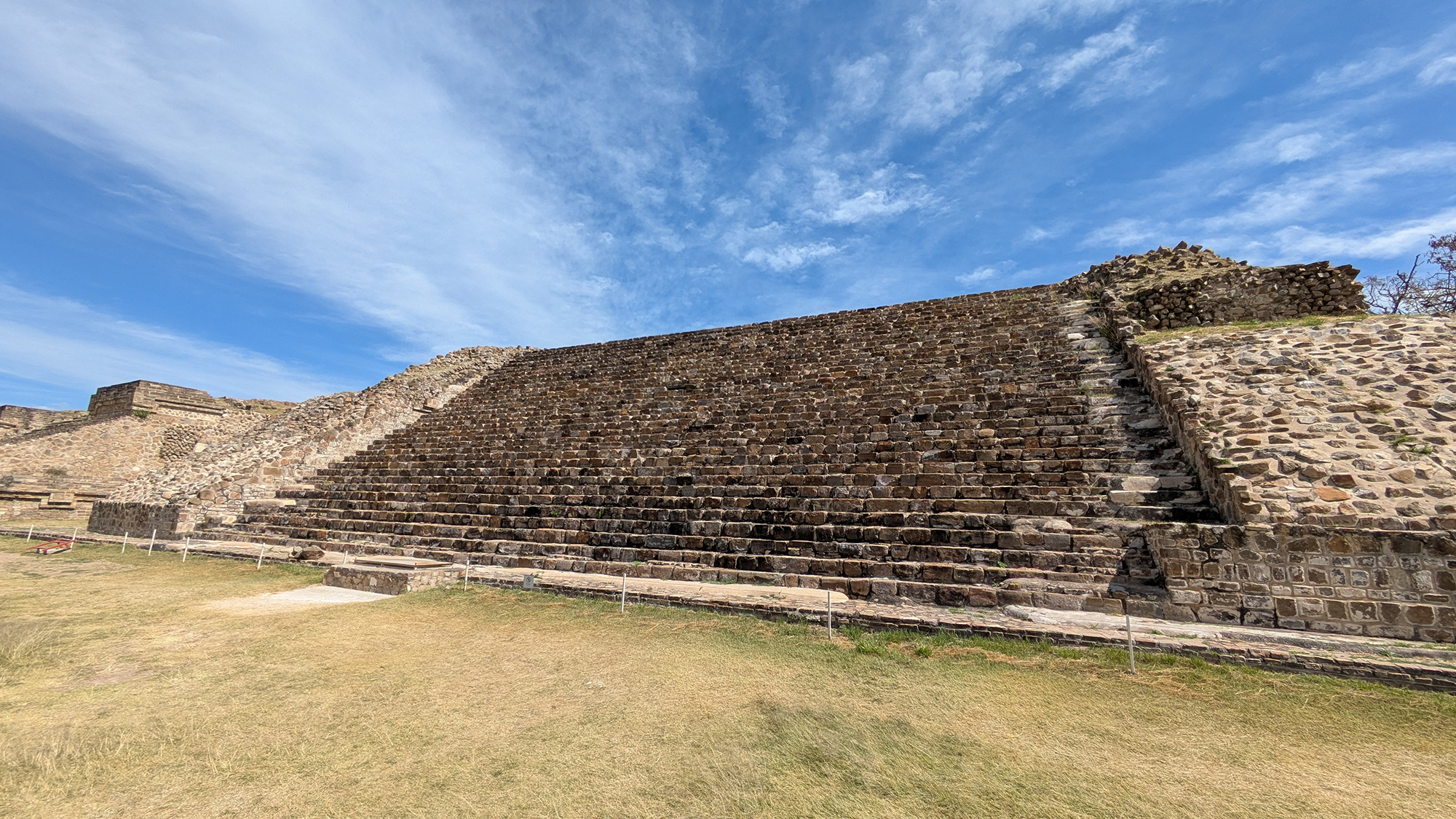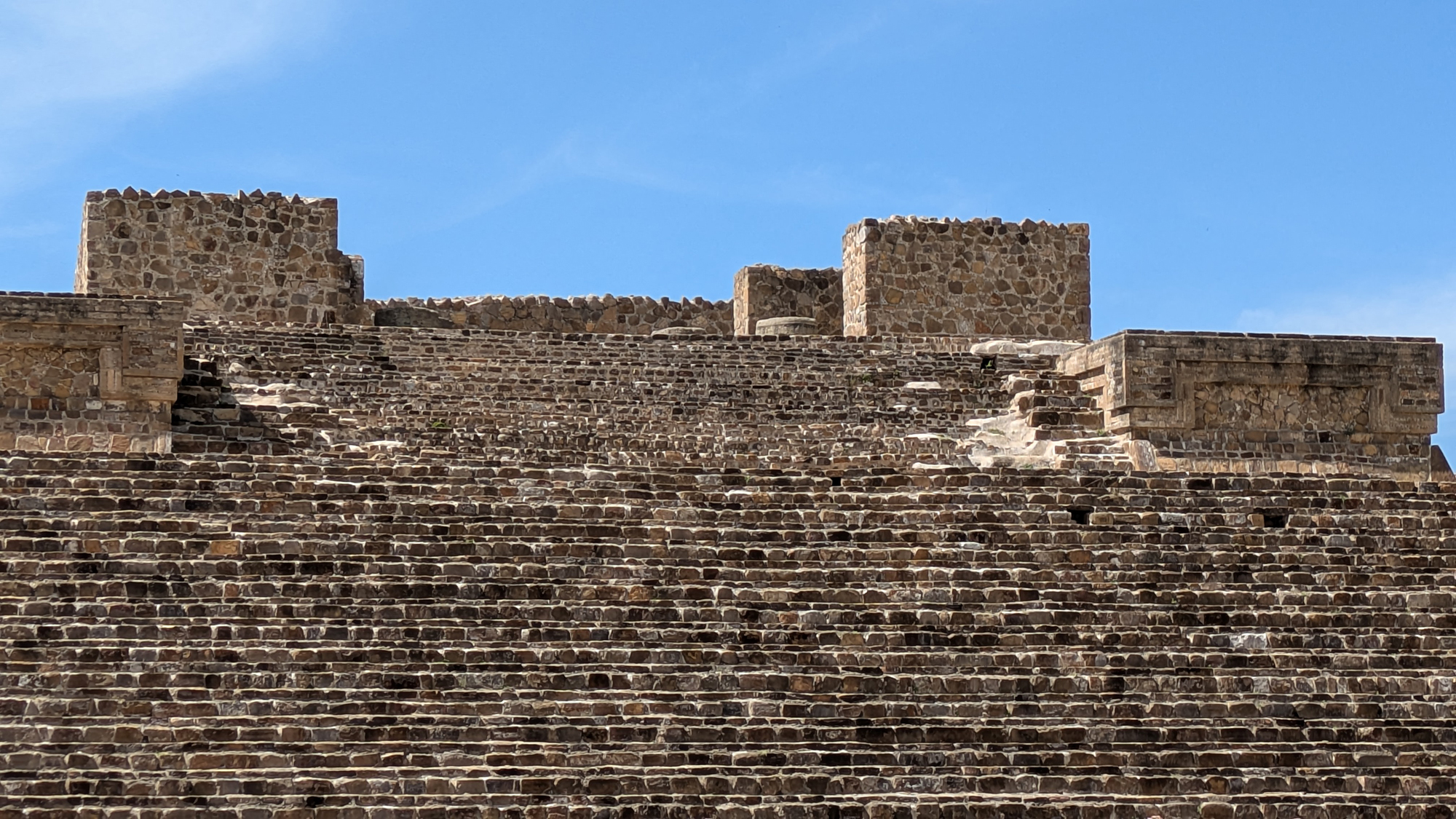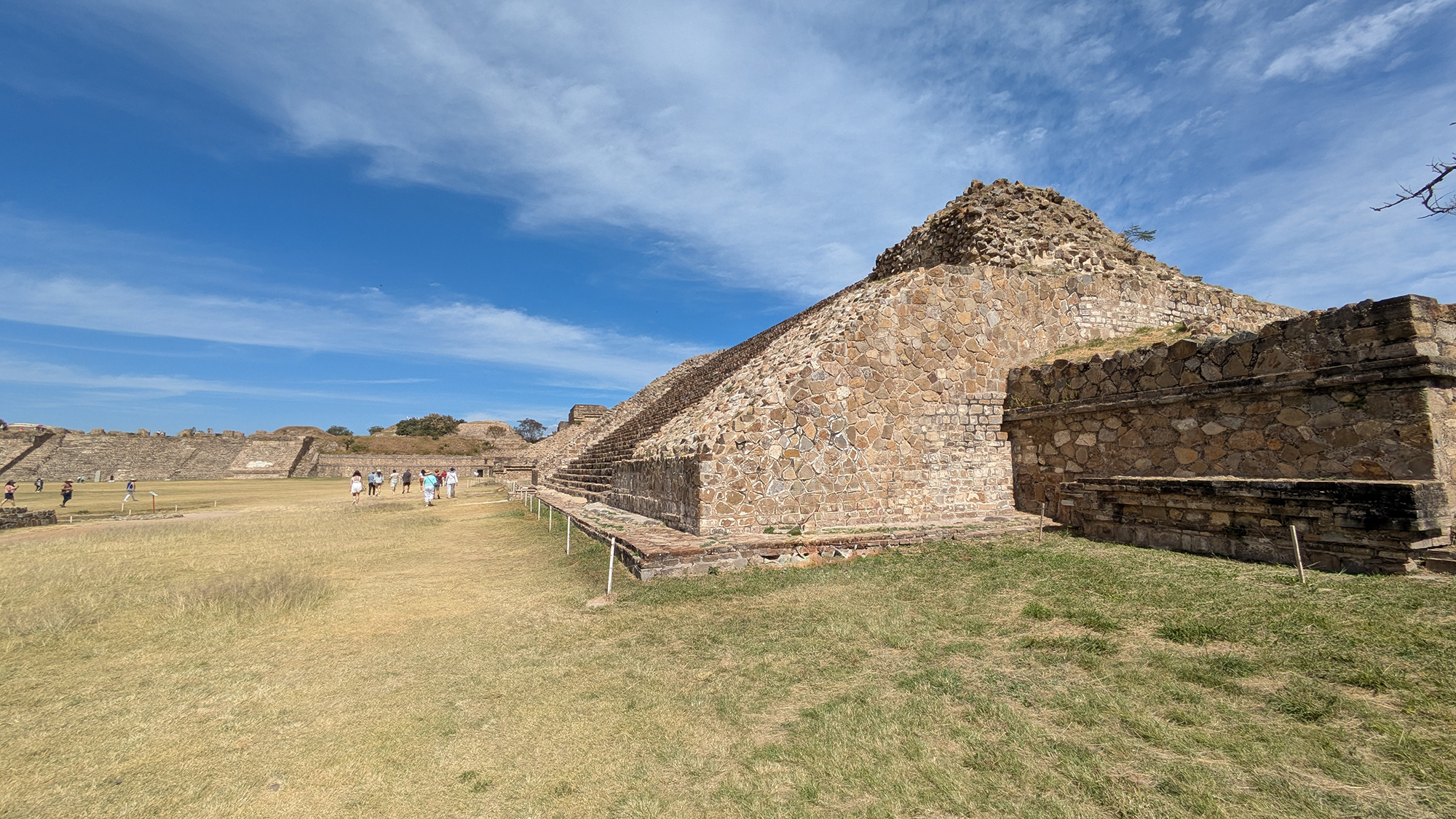




Building P (Edificio P) constitutes one of the most intellectually significant and architecturally complex monuments within the Great Plaza of Monte Albán. Situated on the eastern perimeter of the monumental core, this Classic-period temple platform stands at the intersection of astronomical precision, ritual authority, and urban planning. The structure is defined by its role in the Zapotec observation of solar phenomena—specifically the zenith passage—and serves as a critical node for understanding how celestial knowledge was anchored within the city's ceremonial geography. More than a singular platform, Building P functioned as a theater of power, utilizing engineered space and solar events to project religious legitimacy.³⁵
The Zenith Shaft: Integration of Astronomical Order and Ritual Authority
The diagnostic hallmark of Building P is a vertical shaft integrated into its monumental staircase, leading to a subterranean chamber. Interpreted by numerous scholars as a "zenith tube," this feature was designed to admit vertical sunlight during the sun's overhead passage, transforming a celestial event into a controlled, visible, and authoritative ritual experience. Whether viewed as a precise observational instrument or a symbolic conduit, the structure remains a primary example of how the Zapotec state embedded astronomical order into the physical fabric of the capital.³⁸
Location and Urban Configuration
Building P occupies a central position on the eastern perimeter of the Great Plaza, directly facing the western ceremonial range. Institutional documentation by Mary Ann Sullivan situates the structure between Building II to the north and Building Q to the south, with the Adoratorio and the expansive esplanade extending directly before its western façade. This placement establishes Building P as a critical anchor in the eastern architectural range, visually balancing the monumental core.¹
The structure is characterized by a broad monumental staircase facing west. This orientation is of critical importance; by facing the center of the plaza, Building P is placed in full visual dialogue with the city’s primary ritual space. Scholarly interpretations suggest this configuration was not merely aesthetic but intended to integrate celestial observation into the site’s public ceremonial geography. Some archaeoastronomical models further suggest a geometric and conceptual alignment with Building J across the plaza, indicating a coordinated sacred landscape.³
Architectural Morphology and Construction
Morphologically, Building P is a temple platform featuring a broad western staircase, a summit precinct, and evidence of columns at the upper level. Diagnostic analysis dates the primary visible form to the mature Classic period (c. AD 350–800). Like much of the site's monumental core, the structure utilized a stone-and-stucco construction method that adheres to the established architectural vocabulary of Monte Albán. Archaeological evidence indicates that the visible Classic structure likely masks earlier construction phases, reflecting a cumulative architectural history typical of the site's prolonged development.¹
The Staircase Shaft and Zenith Chamber
The defining structural attribute of Building P is the vertical shaft (often termed a "zenith tube" or solar chimney) integrated into the staircase and descending into a restricted chamber below. Archoastronomer Anthony Aveni identified this feature as a solar observation instrument, specifically calibrated for monitoring the sun's passage through the local zenith. At Monte Albán's latitude, this occurs biannually in early May and August. During these moments, the vertical sun casts no lateral shadow, and a direct beam of light enters the subterranean chamber.³⁸
This phenomenon transformed technical timekeeping into a strike-controlled ritual event, potentially reinforcing sacerdotal authority and agricultural precision. However, this interpretation is subject to scholarly debate. UNESCO’s comparative analysis of ancient solar observatories notes that while many researchers accept the zenith-tube model, some specialists remain skeptical, suggesting the shaft may have functioned as a chimney or vertical conduit. Despite these alternative readings, the structure’s specialized engineering clearly distinguishes it from standard ceremonial platforms.⁸
Astronomy and Observational Significance
Building P is embedded within a broader archaeoastronomical network where sightlines and orientations served state ritual and governance. Aveni and Linsley’s analysis of Building J noted that a line perpendicular to its steps aligned with the rising point of the star Capella; furthermore, they identified the shaft in Building P as a potential sighting node in that same alignment. This places the structure within a coordinated system of observations intended to mark agriculturally and ritually significant dates. In this context, Building P functioned as part of a ceremonial calendar system where the sky was inseparable from the organization of sacred time.⁴⁵
Ofrenda 1 and the Liturgy of Sound
Modern conservation initiatives, specifically the PACMA projects, have identified significant ritual deposits within Building P, notably Ofrenda 1. This assemblage included cylindrical cup-shaped drums, an anthropomorphic whistle, claw vessels associated with bat iconography, plates, bowls, and miniature pots.⁷ The presence of these musical instruments suggests that Building P was more than a passive observatory; it was a stage for a multi-sensory liturgy. Sound likely augmented the solar events, indicating that Building P served as a precinct where astronomy, sound, and elite ritual performance intersected to project state power.
The Jade Bat Mask and Sacred Context
Building P is further contextualized by the discovery of the famous Jade Bat Mask. Sullivan notes that this iconic artifact was found in a burial situated between the Adoratorio and Building P. While the mask was not located inside the building itself, its immediate ritual environment is highly relevant. The proximity of such a major ritual object reinforces the symbolic richness of the eastern plaza sector and suggests Building P operated within a zone of high-status ritual activity characterized by underworld and nocturnal associations (caves, sacrifice, fertility).¹
Scholarly Debate and Theoretical Frameworks
Building P remains a subject of rigorous scholarly debate. The prevailing interpretation favors its function as a zenith station, a view championed by Aveni and central to the "observatory" narrative.³⁸ Skepticism remains regarding the exact mechanics of the shaft, with alternative theories suggesting use as a chimney or specialized conduit for ritual offerings. Modern interpretations, however, emphasize that these functions are not mutually exclusive. Building P is best understood as a polyvalent monument where scientific observation, ritual performance, and political legitimacy were fused into a singular architectural instrument.³⁵
Institutional Visiting Protocol
Building P is situated on the eastern side of the Great Plaza and remains one of the site's most intellectually engaging monuments. While the staircase and its diagnostic aperture are visible, the internal chamber remains restricted to maintain micro-climatic stability and ensure structural preservation. INAH’s official site information underscores the monument's importance within the protected zone. Objects associated with the building’s ritual life, including Ofrenda 1 and materials tied to the bat-mask tradition, are curated within the institutional museum system.⁶
Institutional Significance
Building P exemplifies the Zapotec fusion of architecture and sacred knowledge. Whether serving as a zenith station, a ceremonial stage, or a ritual chamber, it demonstrates that Monte Albán's monumental core was designed to function as an instrument of authority. Its significance lies in the precision and placement by which light, sound, and monumental scale were utilized to anchor political legitimacy within the celestial order.
Scholarly References & Primary Sources
- Sullivan, Mary Ann. "Monte Albán: Buildings on East Side of Great Plaza." Bluffton University.
- UNESCO World Heritage Centre. (1987). "Historic Centre of Oaxaca and Archaeological Site of Monte Albán."
- Aveni, Anthony F. (1981). "The Observation of the Sun at the Time of Passage through the Zenith." Journal for the History of Astronomy.
- Aveni, Anthony F., and Linsley, Robert M. (1972). "Mound J, Monte Albán: Possible Astronomical Orientation." American Antiquity.
- Marcus, Joyce, and Flannery, Kent V. (1996). Zapotec Civilization: How Urban Society Evolved in Mexico’s Oaxaca Valley. Thames & Hudson.
- INAH. "Monte Albán: Official Institutional Resource."
- García Ríos, César Dante, et al. "Una ofrenda musical en Monte Albán." Arqueología Mexicana.
- UNESCO / ICOMOS. "Comparative discussion of ancient solar observatories: Structure P (Monte Albán)."