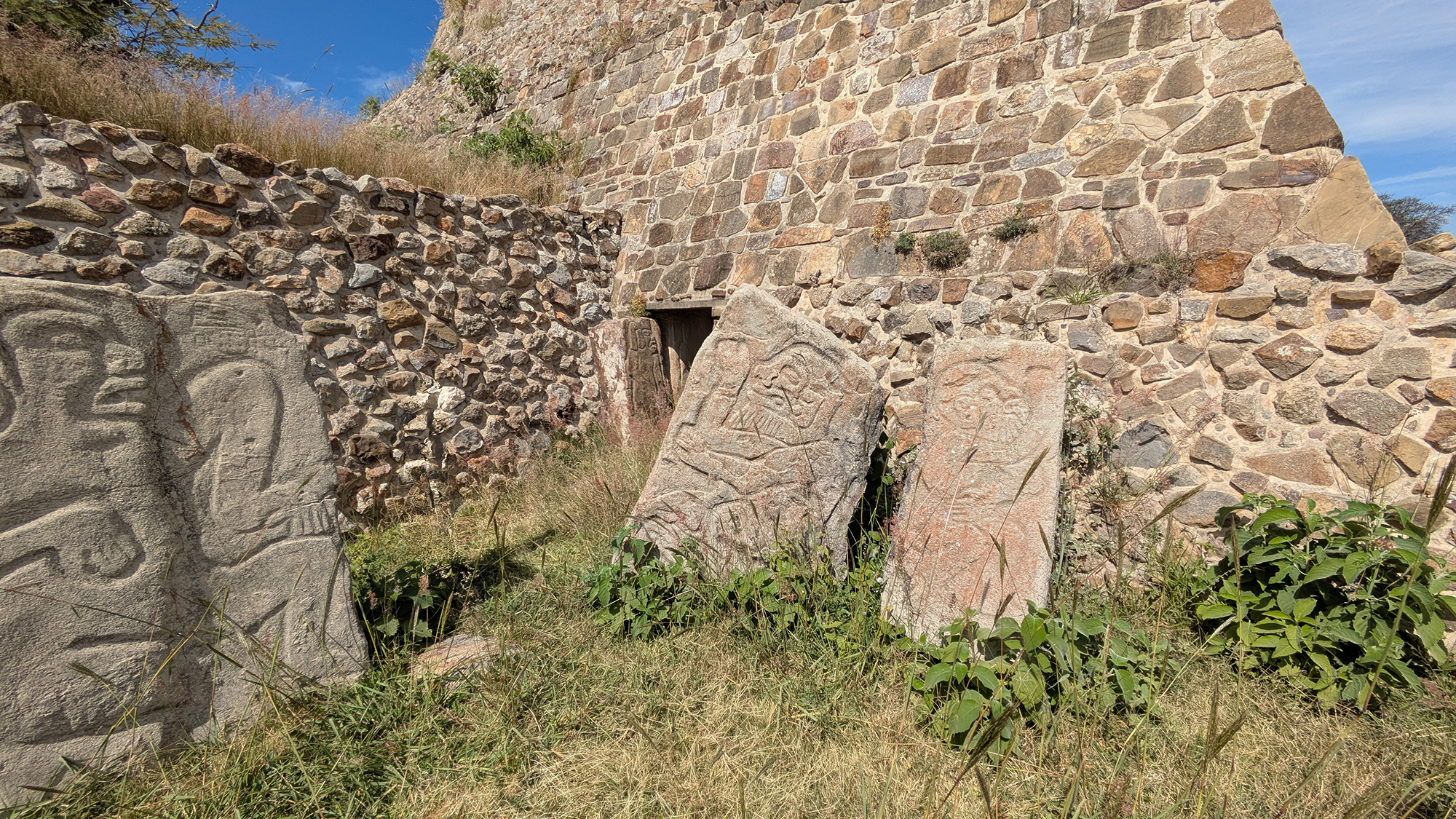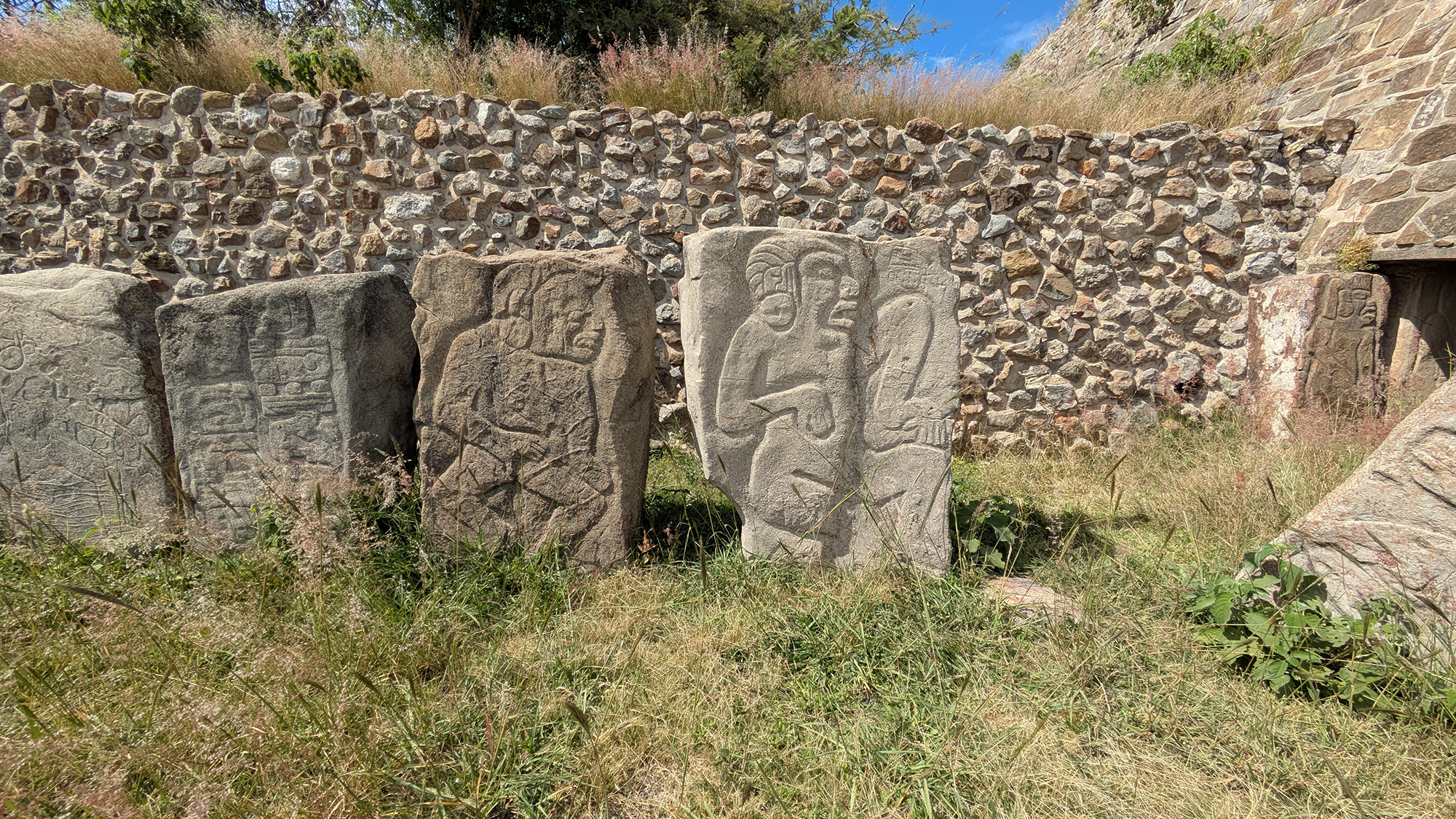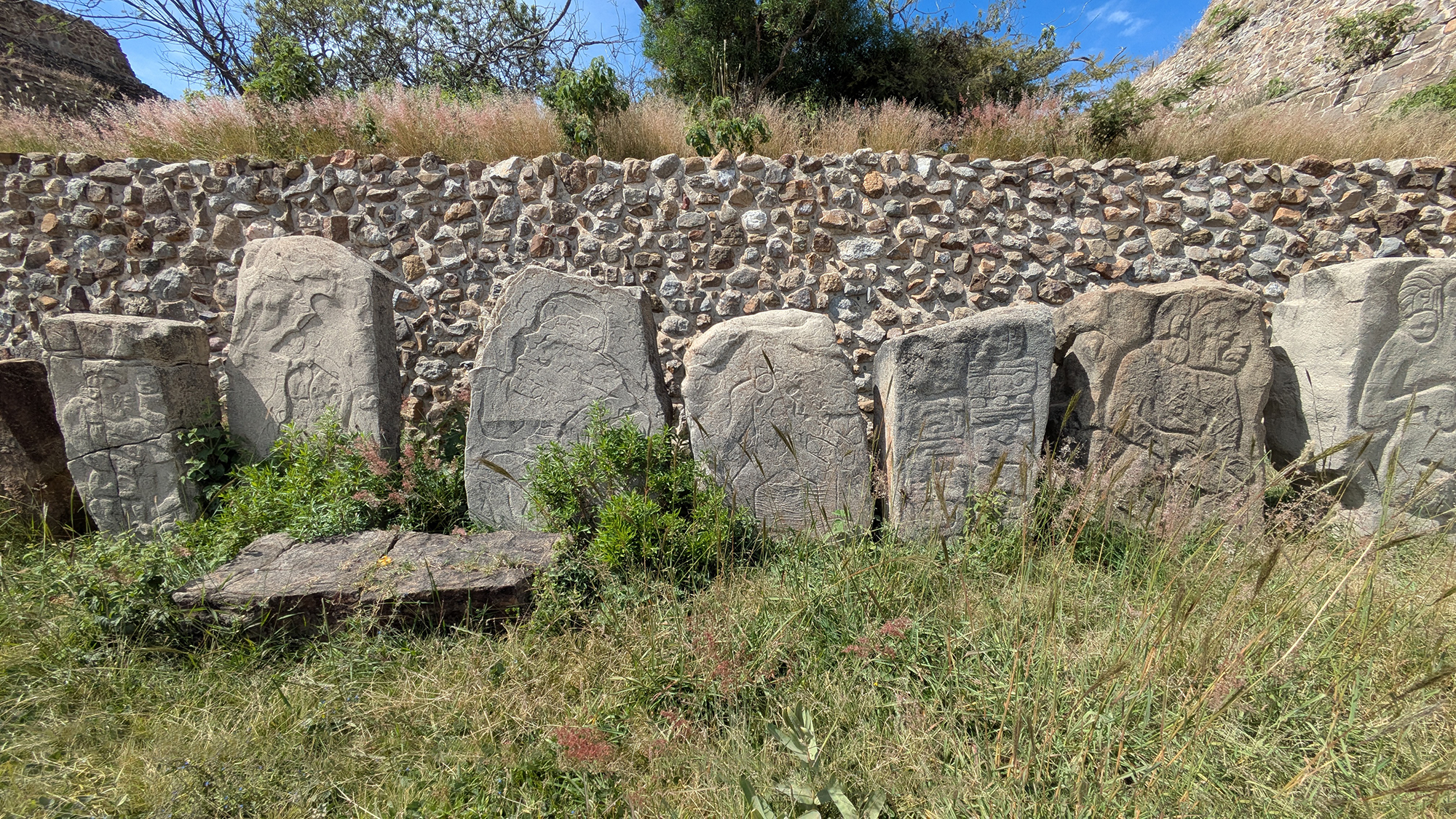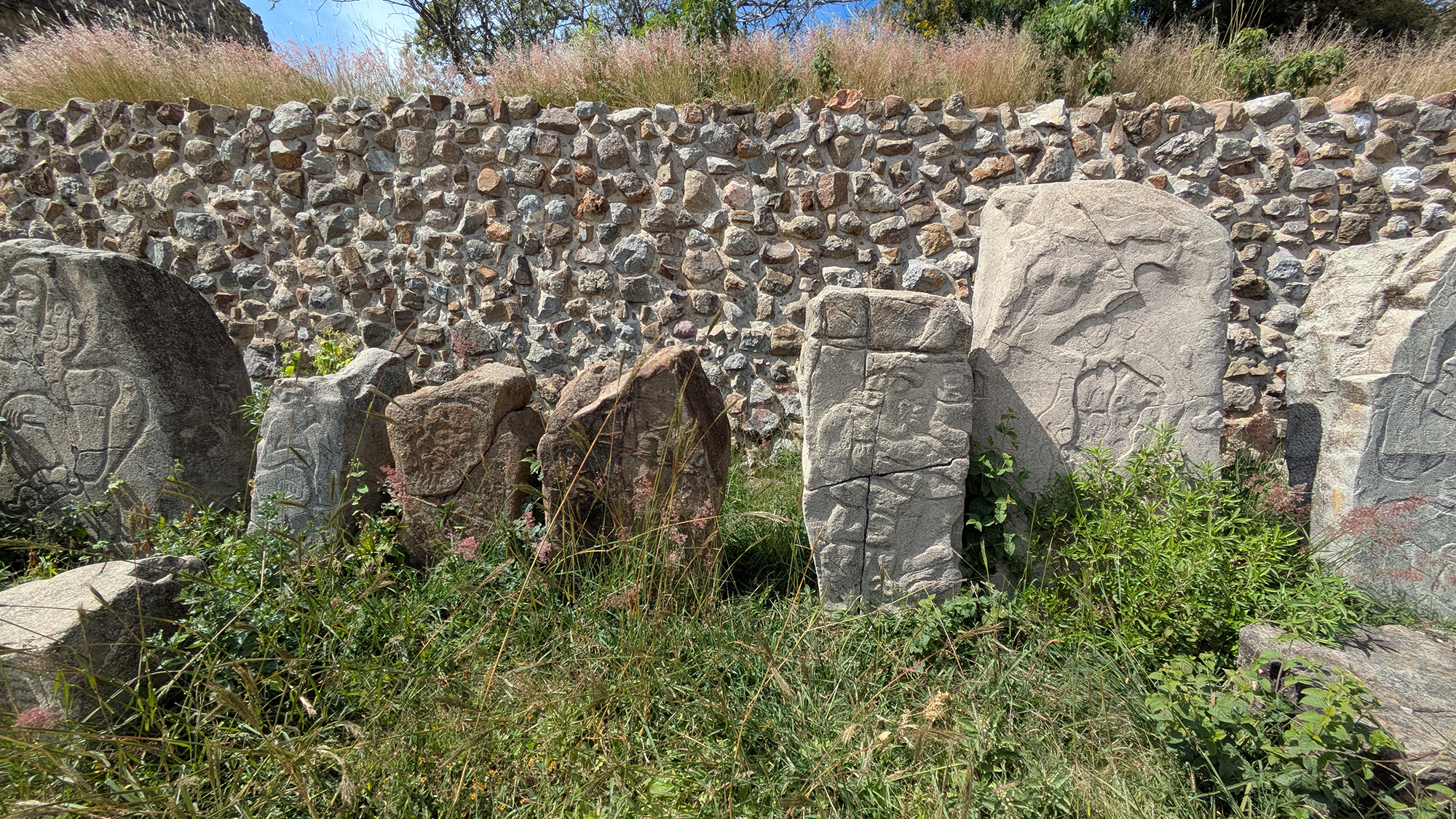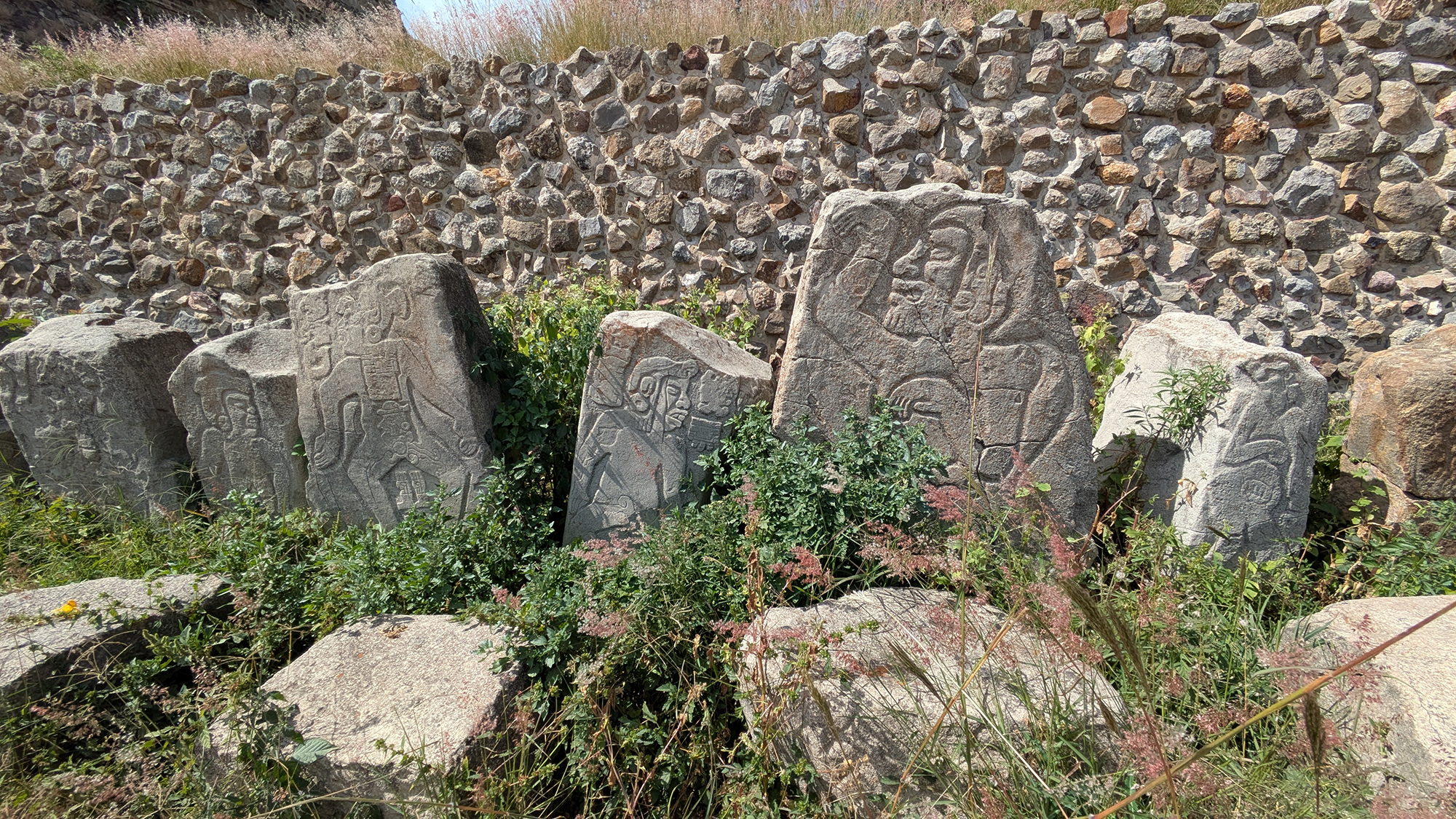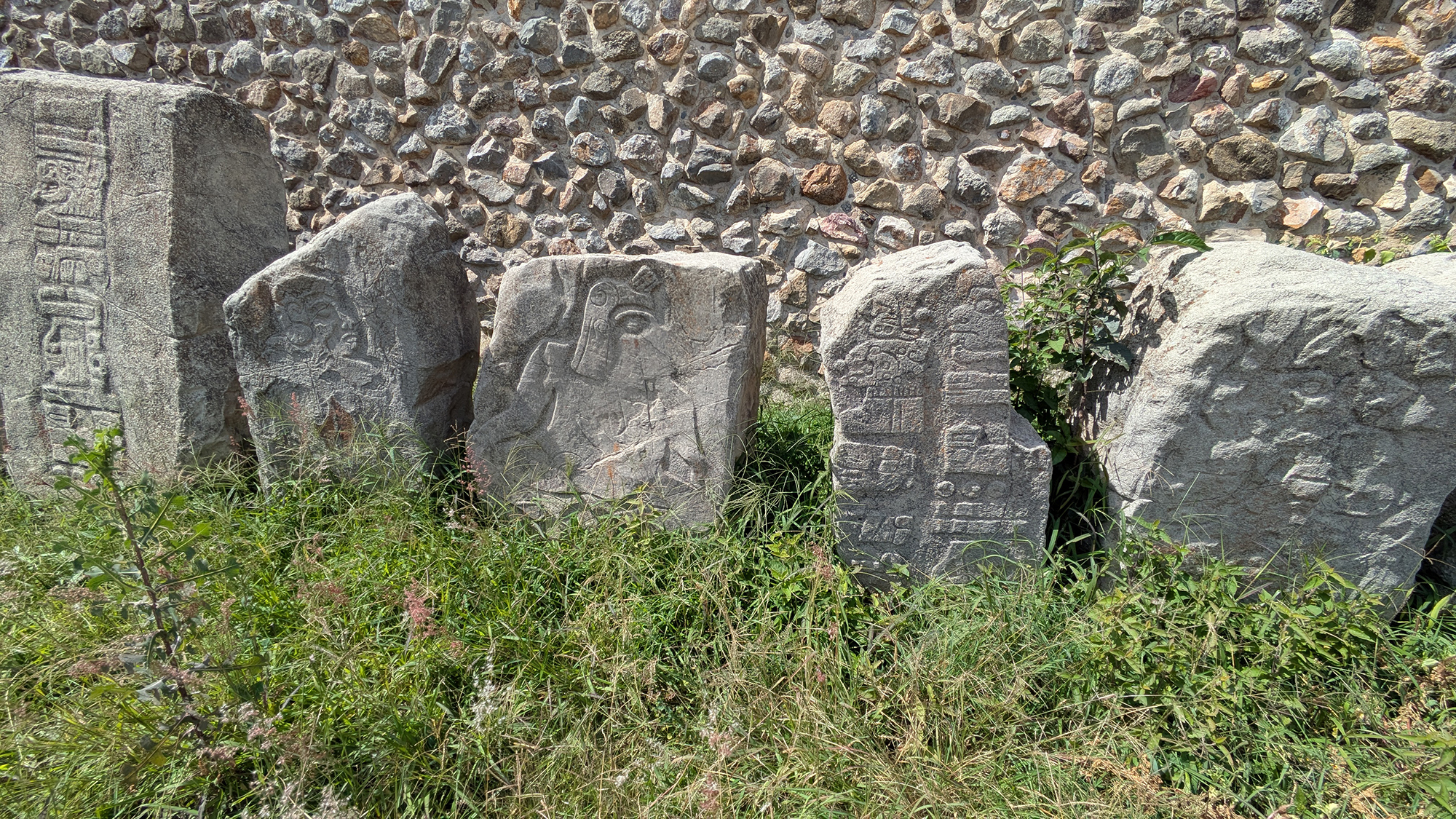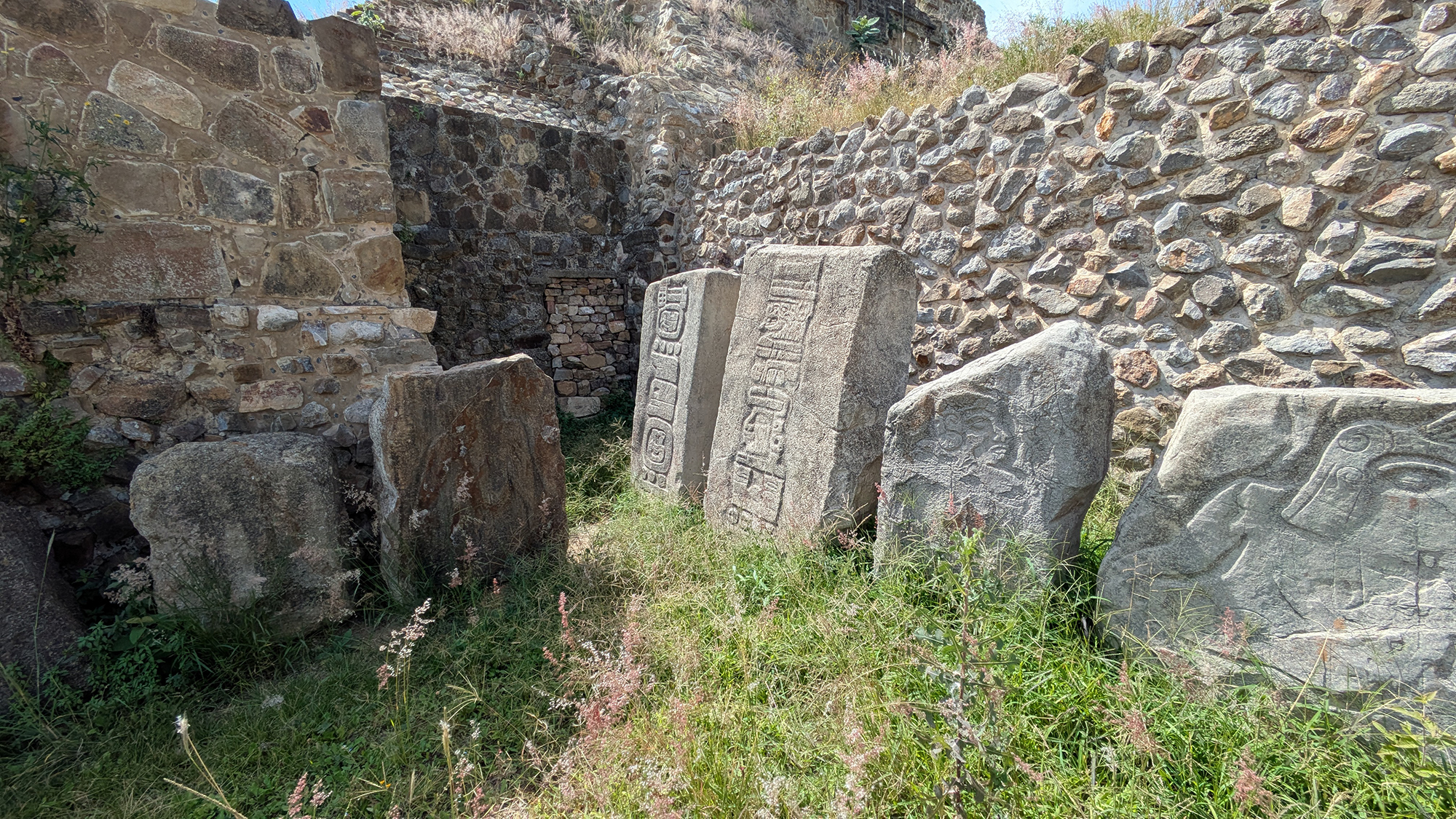


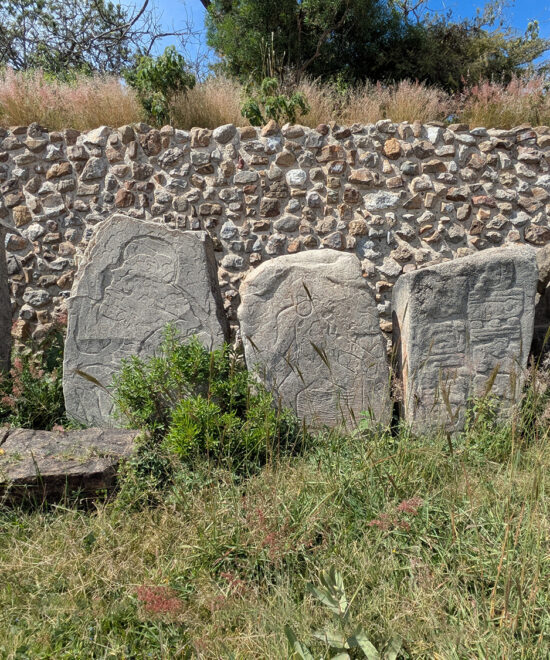
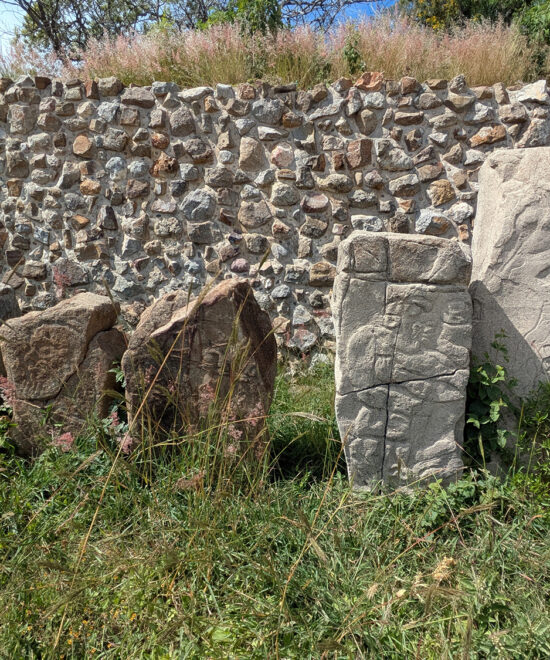
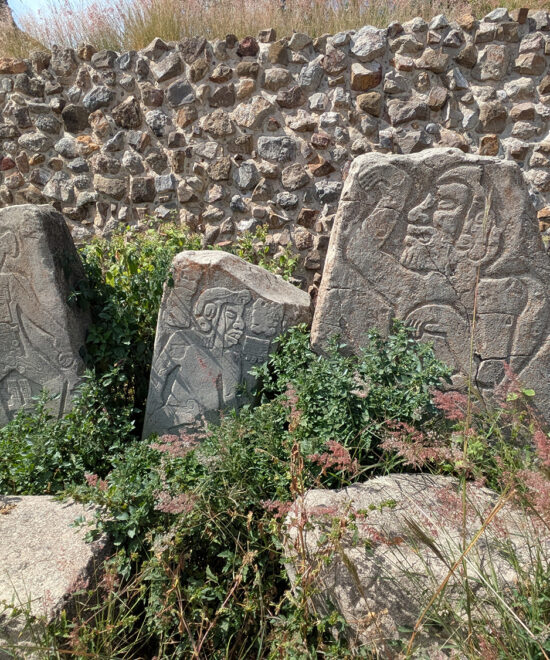


The monumental stone carvings universally known as "Los Danzantes" constitute the most potent visceral expression of early Zapotec ideological display. Concentrated along the foundational revetment walls of Building L in the southwestern sector of the Main Plaza, this corpus of over 300 intricately carved Formative period (approx. 500–100 BCE) slabs features depictions of naked, contorted, and mutilated male figures. Accompanied by some of the earliest attested hieroglyphic writing in Mesoamerica, the gallery provides an unparalleled view into the genesis of the Zapotec state, the institutionalization of warfare, and the complex mechanisms of social memory in early antiquity.¹
The Architectural Context: Building L-sub
The physical and spatial context of the Danzantes is inextricably linked to the complex architectural evolution of the Main Plaza, specifically the structure designated as Building L (Edificio L). During the initial founding of the city (Monte Albán I phase, 500–100 BCE), the earliest iteration of this structure—known archaeologically as Building L-sub—functioned as a colossal basal platform and revetment wall facing directly into the plaza.² It was upon the façade of this early substructure that the original Gallery of the Dancers was presented. The original arrangement was highly regimented, featuring four alternating rows incorporating both vertically oriented figures (the classic "danzantes") and smaller rectangular blocks containing horizontally oriented figures (the "swimmers" or nadadores).Hydrology and Ritual Framing
The monumental gallery was designed to be viewed during grand ceremonial processions. Geological surveys indicate a bedrock depression directly in front of the wall covered by a natural layer of clay, which allowed rainwater to pool. In Mesoamerican cosmology, the juxtaposition of a massive monument dedicated to bloodletting and sacrifice directly behind a life-giving pool of water suggests a ritual environment where the shedding of human blood was viewed as a reciprocal offering to the Zapotec lightning and rain deity, Cocijo.³Stratigraphy and the Life History of the Wall
The structural history of Building L is defined by a turbulent sequence of construction, violent dismantling, and architectural erasure.| Chronological Phase | Time Period | Architectural & Ideological Developments |
|---|---|---|
| Danibaan Phase | Early Monte Albán I (c. 500 BCE) | Founding of the site. Construction of the primary revetment wall of Building L-sub. The vast majority of the 300+ Danzantes slabs were quarried, carved, and installed, creating the foundational visual narrative. |
| Pe & Early Nisa | Late MA I to II (c. 300–100 BCE) | Structural elaboration. The platform expands into a pyramidal structure. Surfaces are meticulously finished with stucco plaster. |
| Late Nisa Phase | Terminal Formative (c. 100 CE) | Radical ideological shift. The original narrative of L-sub is targeted for obliteration. The carved orthostats are covered with stucco or physically removed. |
| Pitao & Xoo Phases | Classic Period (c. 200–800 CE) | The massive Classic-period overlay is constructed, burying L-sub. The southern half is completely dismantled, and Building L is walled off from the main concourse. |
Geospatial Placement
Desecration, Reuse, and the Ideological Precursor
The obliteration of the Danzantes wall during the Late Nisa phase was an internal reform of social memory. Hundreds of carved orthostats were physically pried from Building L-sub. Dozens were laid flat and reused as foundational steps for a new staircase abutted to the substructure, ensuring these early figures would be perpetually trampled underfoot by ascending priests. Other dismantled stones were incorporated as structural fill in Building J, signaling a shift from displaying tortured bodies to displaying conquered territories.⁴San José Mogote Monument 3: The Precursor
The direct conceptual prototype for the Danzantes was discovered 15 km north at San José Mogote. Monument 3 (c. 600–500 BCE) depicts a naked, disemboweled man identified by the hieroglyph "1 Earthquake." Like the reused Danzantes, this monument was intentionally laid flat as a corridor threshold so elites would step directly upon the victim. When San José Mogote collapsed, its founders brought this potent psychological weapon to Monte Albán, scaling a single threshold stone into a 300-slab gallery of state terror.⁵
Physical, Stylistic, and Iconographic Analysis
The Danzantes represent roughly 80 percent of the total monument record from the Formative period. Executed via deep bas-relief incision with heavy emphasis on outer contours and hybrid perspectives (frontal torso with profile limbs), the figures are rigidly isolated, compartmentalized within individual blocks rather than interacting in a continuous mural.⁶The Olmec Question
The physiological traits of the figures—short stature, thickset physiques, broad noses, and full, downturned lips—bear striking similarities to the earlier Olmec civilization of the Gulf Coast. While direct Olmec colonization is discounted, early Zapotec elites consciously adopted this prestigious, pan-Mesoamerican iconographic vocabulary to legitimize their authority to a multi-regional audience.The Iconography of Violence
The figures are overwhelmingly male and entirely nude—a profound social taboo denoting extreme degradation and loss of identity. A hallmark of the corpus is genital mutilation, where intricate, stylized "flowery" scrolls (blood) emanate from the groin. At least four carvings depict severed heads, corroborated by Formative period mortuary data revealing numerous skull-less burials and trophy skulls.⁷The Historiography of Interpretation
The scholarly framework surrounding the stones has shifted dramatically as Mesoamerican archaeology matured from antiquarianism to modern epigraphic science.| Interpretative Era | Primary Proponents | Theoretical Framework |
|---|---|---|
| Antiquarian (Early 19th C.) | Guillermo Dupaix (1806) | Interpreted the splayed poses literally as an ecstatic ritual dance, birthing the enduring, erroneous misnomer "Los Danzantes." |
| Medical Pathology (Mid-20th C.) | Various observers | Viewed the contorted limbs and "rubbery" facial features as a medical catalog of congenital deformities (e.g., polio or syphilis). Fully rejected today. |
| Militarism & Captives (Late 20th C.) | M. Coe, J. Marcus, K. Flannery | The paradigm shift. Identified figures as tortured, castrated war prisoners, broadcasting a message of absolute state terror and expansionist supremacy. |
| Social Memory & Ancestors (Contemporary) | Javier Urcid, Arthur Joyce | Re-evaluates the monolithic "captive" model. Argues the horizontal "swimmers" represent revered dead founders/ancestors, while upright figures include live celebrants engaged in elite bloodletting, forming a multi-generational tableau of social memory. |
Epigraphy: The Genesis of Zapotec Writing
Approximately 15 to 20 slabs bear distinct glyphic inscriptions, providing some of the earliest unequivocal evidence of hieroglyphic writing in the Americas. The Formative Zapotec script operates through logographic and phonetic elements, read vertically from top to bottom, utilizing the 260-day sacred calendar (piye) and a bar-and-dot numerical system.⁸ Through the rigorous studies of epigrapher Javier Urcid, these glyphs are confidently identified as personal names and calendrical dates. A vital emblem is the "Hill" glyph (tani/dani) used as a toponym. Urcid identified the "hill-diagonal bands-noseplugs" compound as a reference to the "Hill-Lord(s)"—the high nobility of Monte Albán.Stelae 12 and 13
The complexity of the script is best exemplified by Stelae 12 and 13. Originally located within the Building L gallery, these massive, 2-meter tall monuments feature highly structured texts interpreted as accession records. They detail the political lineage and ritual ascension of early Zapotec rulers. Their presence proves the Danzantes wall functioned as a comprehensive historical archive where the state monopolized social memory in stone.⁹Modern Conservation & Curation
The modern classification of the Danzantes began in 1931 when Alfonso Caso initiated scientific excavations, instituting the "L-series" inventory numbering (e.g., L-1, L-41) still used by epigraphers today. Because the gray cantera limestone is highly susceptible to weathering and seismic activity, the INAH mandated the removal of the original monuments in the 1990s. The originals, including Stelae 12 and 13, are now securely housed in Area Two of the Museo de Sitio de Monte Albán. To preserve the phenomenological experience of the UNESCO World Heritage site, meticulously crafted replicas have been installed in situ along the revetment walls of Building L, allowing visitors to view the gallery exactly as ancient Zapotec architects intended over two millennia ago.Scholarly References & Primary Sources
- Marcus, Joyce, and Kent V. Flannery. Zapotec Civilization: How Urban Society Evolved in Mexico's Oaxaca Valley. Thames & Hudson, 1996.
- Orr, Heather S. "Danzantes of Building L at Monte Albán." Foundation for the Advancement of Mesoamerican Studies, Inc. (FAMSI), 2002.
- Joyce, Arthur A. Mixtecs, Zapotecs, and Chatinos: Ancient Peoples of Southern Mexico. Wiley-Blackwell, 2010.
- Levine, Marc N. "Monte Albán’s Hidden Past: Buried Buildings and Sociopolitical Transformation." Latin American Antiquity, 2021.
- Flannery, Kent V., and Joyce Marcus. "The Origins of Mesoamerican Writing." Annual Reviews of Anthropology, 2003.
- Scott, John F. "The Danzantes of Monte Albán (Part 1)" and "(Part 2)." Dumbarton Oaks Pre-Columbian Studies, 1978.
- Coe, Michael D. Mexico: From the Olmecs to the Aztecs. Thames & Hudson, 1962.
- Caso, Alfonso. Las Estelas Zapotecas. Secretaría de Educación Pública, 1928.
- Urcid, Javier. "Zapotec Hieroglyphic Writing." Dumbarton Oaks, 2001.
- Castañeda, L., & Dupaix, G. Antiquités Mexicaines, 1806 Expedition Records.