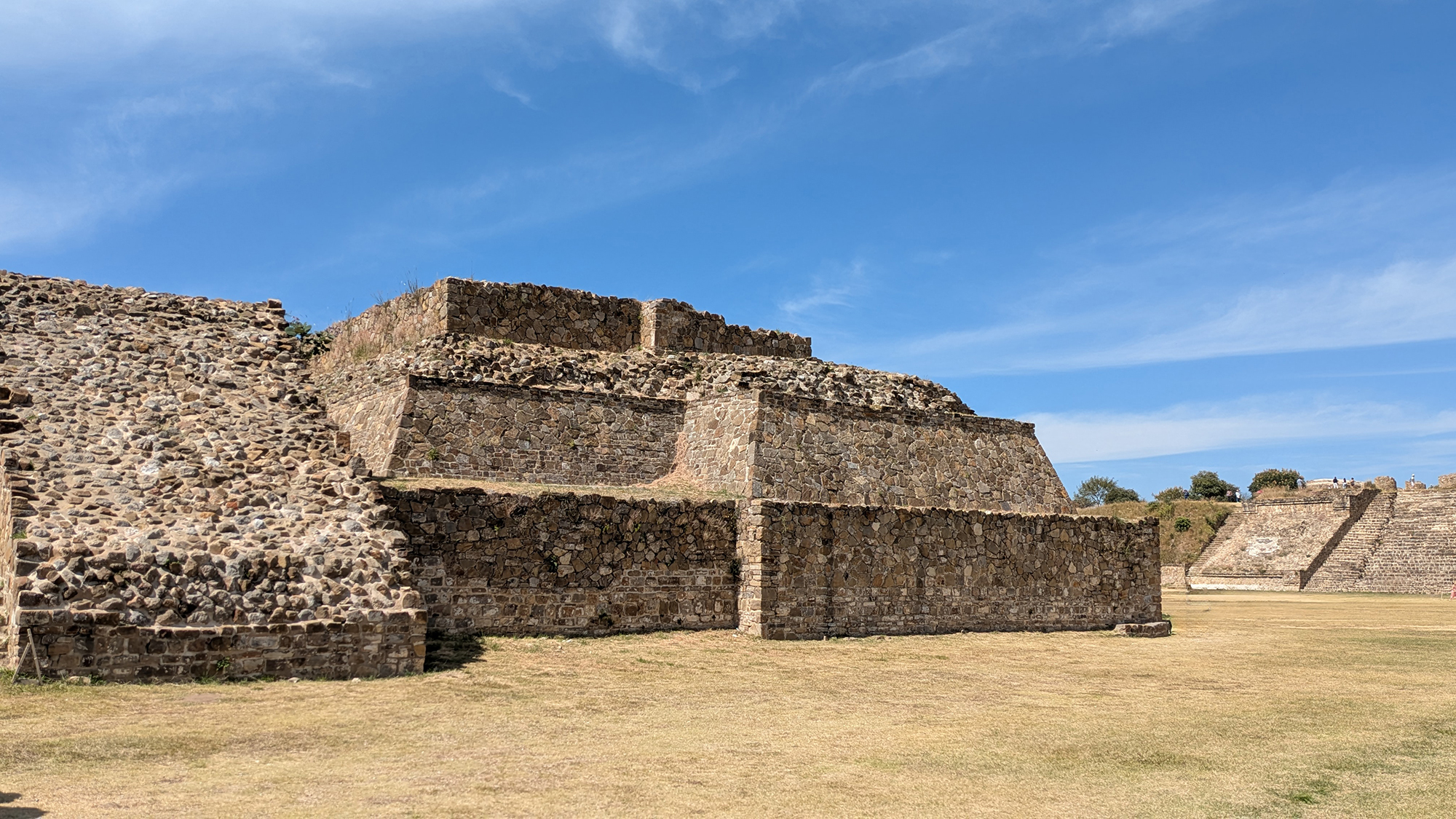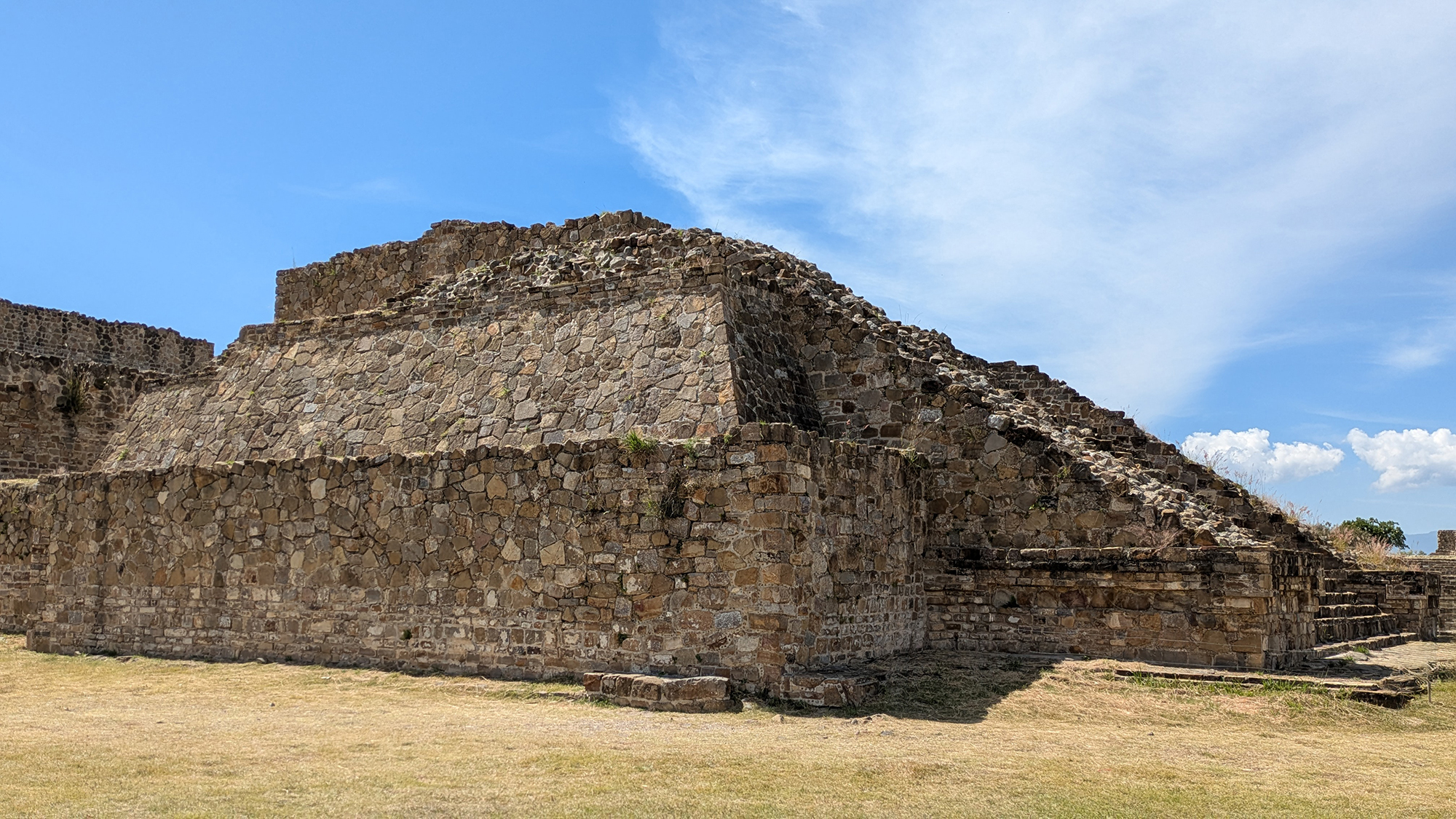


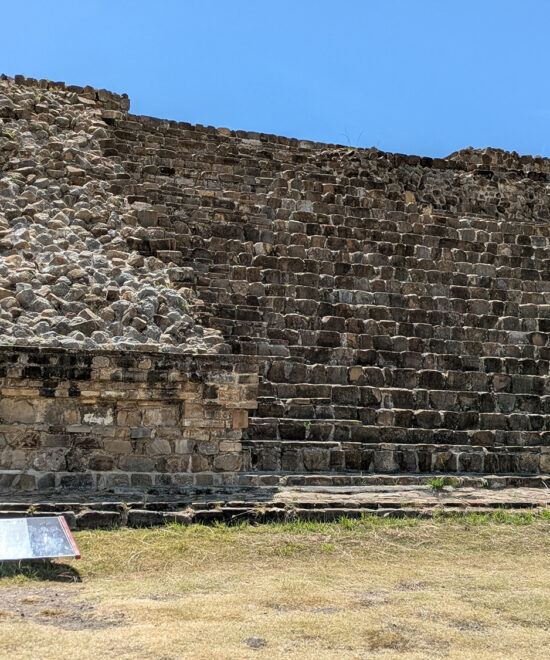
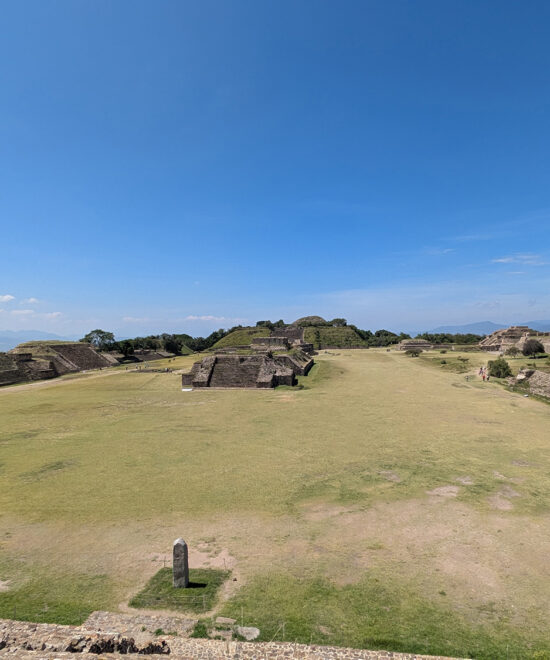
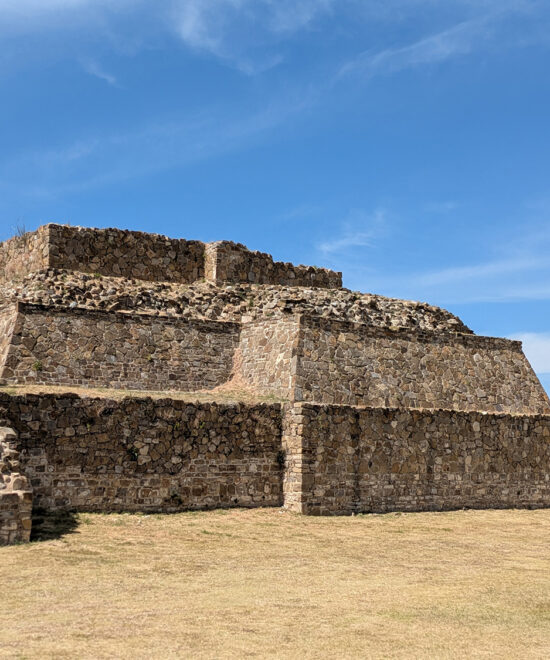
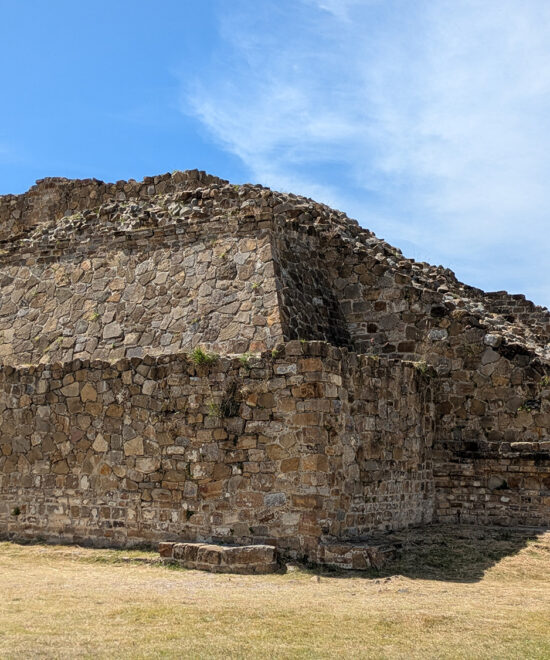
Building G (Edificio G) constitutes the northernmost structural component of the terminal longitudinal spine (G-H-I complex) that bisects the Great Plaza of Monte Albán. Dating to the site's Classic period (Monte Albán III, c. 250–700 CE), this temple platform represents a critical node in the city's ceremonial and administrative choreography. By functioning as the northern terminus of this centralized precinct, Building G facilitates the formal division of the esplanade into eastern and western fields of action. Its physical orientation toward the North Platform and Building J underscores its role as a primary liturgical locus for state rituals during the Zapotec urban apogee.¹³⁴
Location and Urban Choreography
Building G is positioned as the northernmost terminal of the G-H-I chain, a structural unit that visually and ritually partitions the Great Plaza into longitudinal fields. Facing north toward Building J and the North Platform, its placement underscores its role in the site's processional landscape. This structure acts as a critical visual and ritual pivot point for congregants entering the esplanade from the northern high-status residential zones, anchoring the liturgical spine that centralizes religious authority within the city's heart.³⁴
Architectural Morphology and Construction Phases
Morphologically, Building G is a two-tiered *basamento* constructed of high-rigor stone masonry. While the surviving architectural envelope dates primarily to 500–750 CE, archaeological data indicates that its foundations were established as early as 200–300 BCE, illustrating the phased evolution of the plaza core.¹⁵
As part of a conjoined group with H and I, scholars such as Marcus and Flannery analyze this complex as a unified administrative and liturgical core. The lack of documented exterior epigraphy suggests that the structure communicated state power through monumental presence and strategic spatial occupation rather than inscribed narrative.³⁶
Geospatial Placement
Archaeological Research and Ritual Offerings
Initial scientific excavation was directed by Alfonso Caso during the 1931–1953 Monte Albán Project, where Building G was identified as a primary divider of the plaza's ceremonial action. A significant finding was the recovery of an offering box containing ceremonial pottery, which confirmed the structure's status as a sanctified locus for state rituals.³
Recent geophysical prospecting (2021) by Levine et al. has revealed buried structural precursors beneath the Classic-period plaza floor, providing essential context for the long-term sociopolitical development of the central spine. Scholars continue to debate whether G, H, and I functioned as autonomous entities or as a singular, unified platform for grand liturgical displays.⁷
Institutional Visiting Protocol
Building G is best observed from the ground level of the Great Plaza or from the elevated vantage point of the North Platform. From the north, the structure's cardinal orientation and its role as the anchor of the central axial division are most apparent. Visitors are encouraged to observe the symmetry between Building G and the southern components of the spine to appreciate the rigor of Zapotec urban planning.⁸
Scholarly References & Primary Sources
- Marcus, Joyce, and Kent V. Flannery. (1996). Zapotec Civilization: How Urban Society Evolved in Mexico's Oaxaca Valley. Thames & Hudson.
- UNESCO World Heritage Centre. (1987). "Historic Centre of Oaxaca and Archaeological Site of Monte Albán."
- Sullivan, Mary Ann. "Monte Albán: Buildings in the Center of the Grand Plaza." Bluffton University.
- On the Road in Mexico. "Monte Albán - Central Plaza Buildings."
- Texas Tech University Libraries. "Arch Design Images: Structural Analysis of Building G."
- Metropolitan Museum of Art. "Monte Albán: Sacred Architecture." Heilbrunn Timeline.
- Levine, Marc N., et al. (2021). "Monte Albán’s Hidden Past: Buried Buildings and Sociopolitical Transformation." Latin American Antiquity.
- Sailing Stone Travel. (2023). "Visiting Monte Albán: A Guide to the Axial Spine."