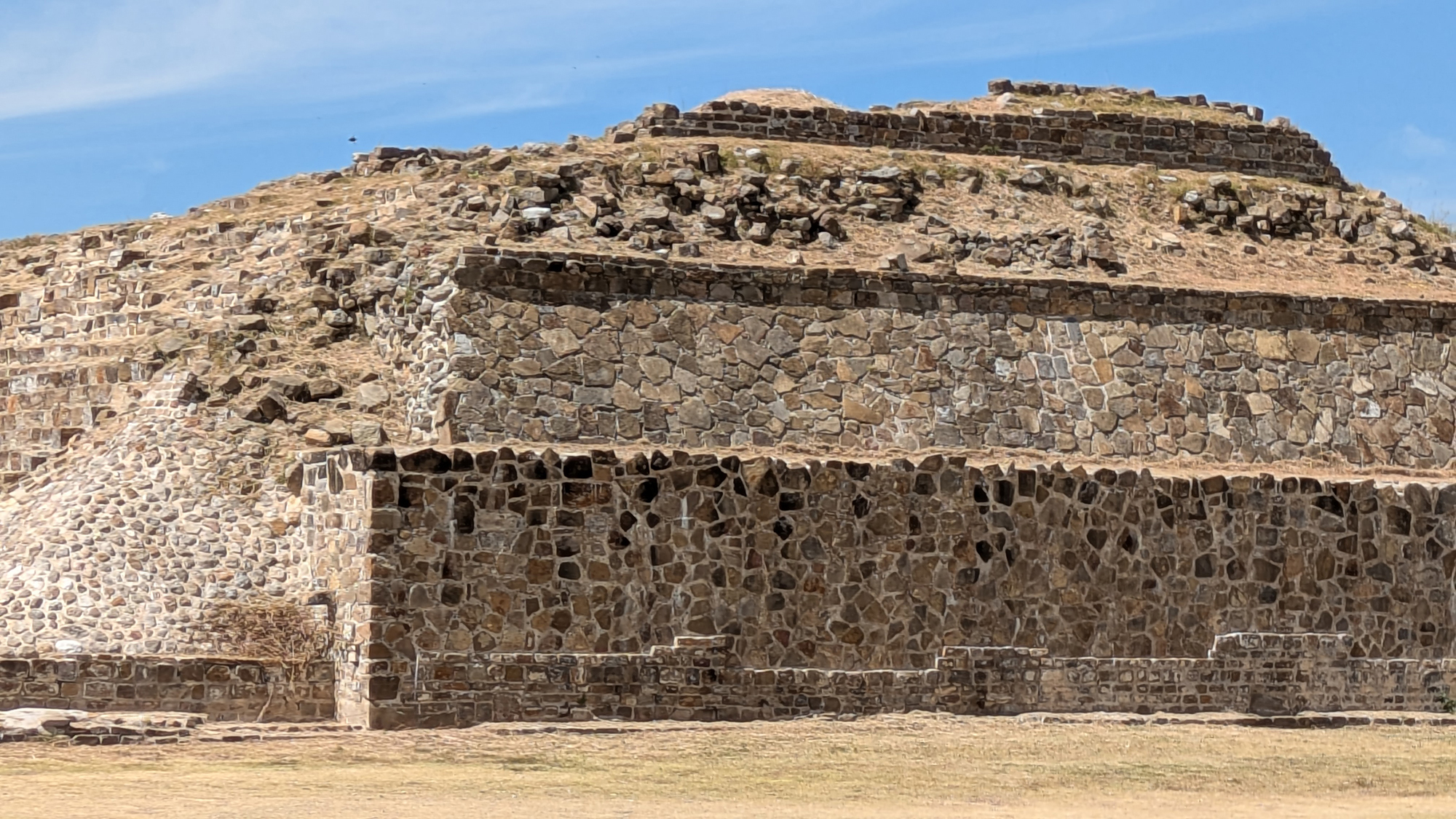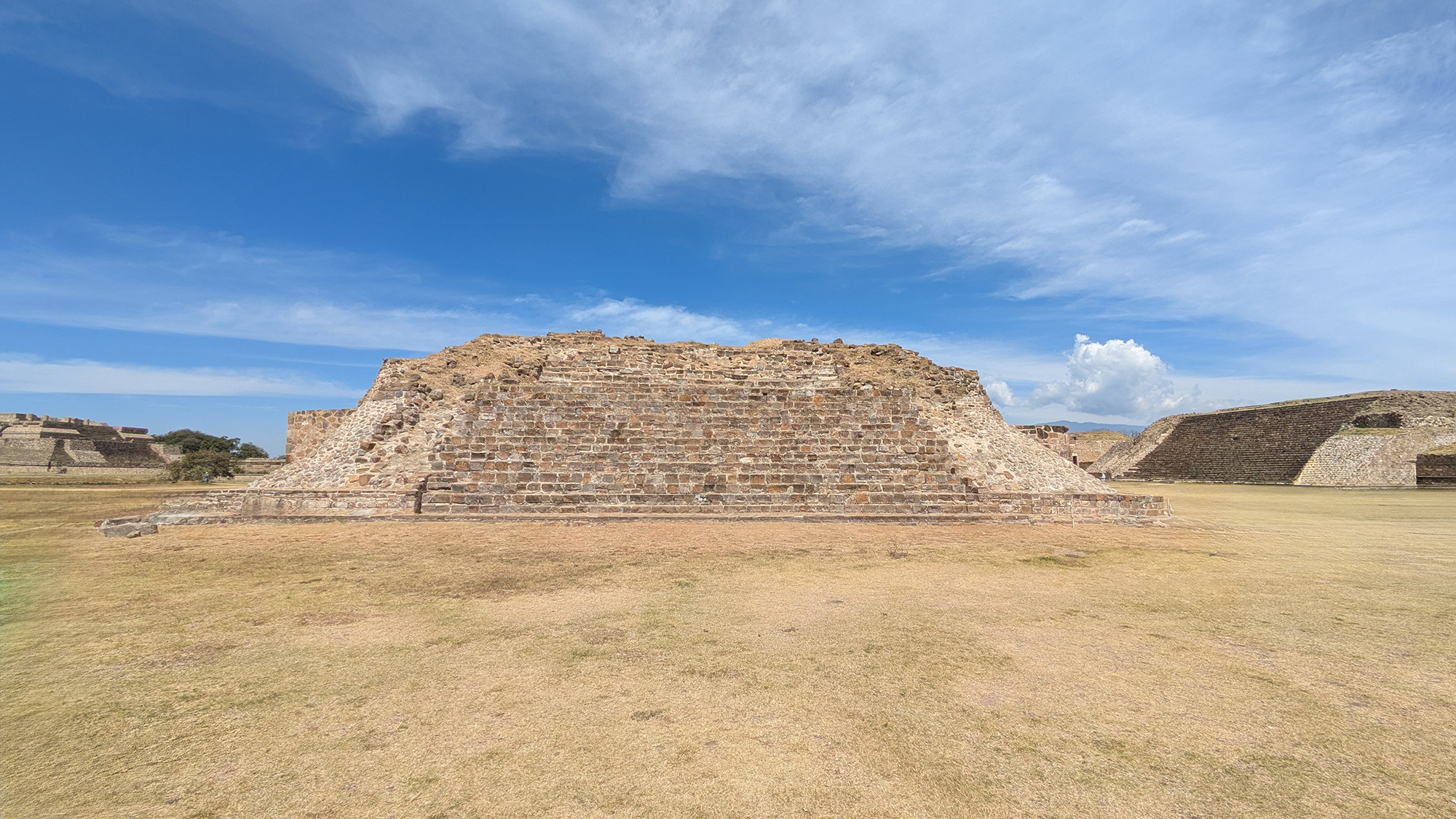


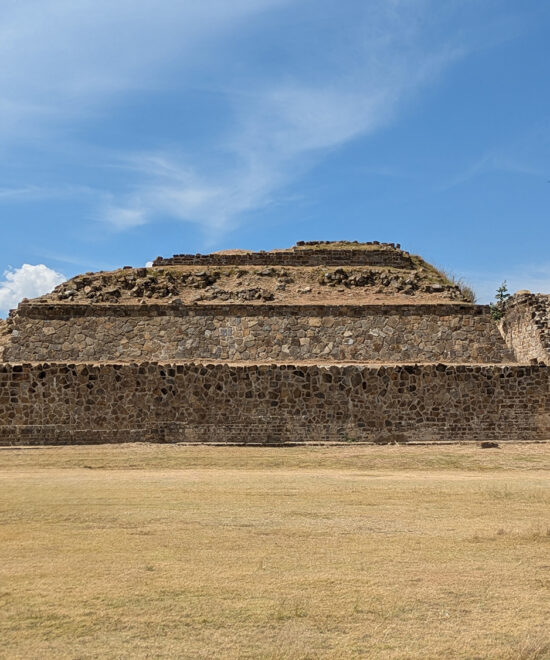
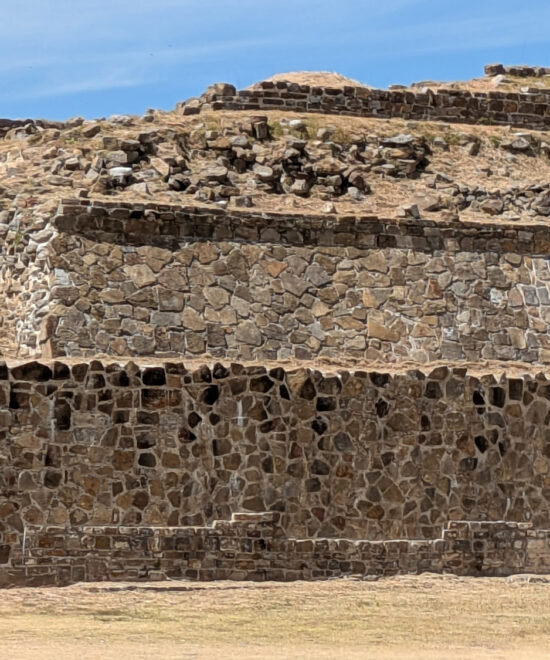
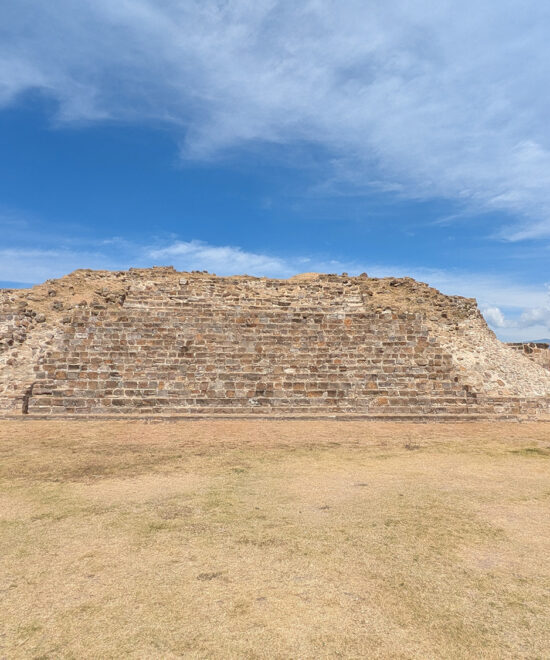
Building I (Edificio I) constitutes the southernmost structural element of the central G-H-I complex, an axial spine of temple platforms that bisects the Great Plaza of Monte Albán. Established primarily during the Classic period (Monte Albán III, c. 200–900 CE), this temple platform represents a critical node in the city's ceremonial choreography. By anchoring the southern end of the central structural unit, Building I facilitates the site's profound architectural symmetry and served as a focal point for elite-led rituals. Its physical integration with subterranean passage networks underscores the Zapotec state's emphasis on controlled, private movement for sacerdotal figures between the sacred esplanade and adjacent administrative quarters.¹³⁴
Axial Alignment and the Central Spine
Building I is situated at the southern terminus of the central G-H-I structural chain, a significant architectural spine that visually divides the Great Plaza into longitudinal halves. This alignment represents a deliberate effort by Zapotec urban planners to impose cardinal order and ritual compartmentalization upon the site's primary public arena. Oriented toward the south, Building I functions as a structural counterweight to the northern components of the group, maintaining the axial balance that defines the Zapotec capital's mature Classic-period phase.¹⁴
Architectural Morphology and Subterranean Networks
The structure's morphological characteristics include a two-tiered *basamento* (stepped platform) typical of Classic-period Zapotec religious architecture. While its primary visible construction dates to the period between 500 and 750 CE, archaeological data indicates that the foundations were established as early as the late Formative period (c. 200–300 BCE).³⁵
A distinctive feature of Building I is its integration with a subterranean tunnel system. This passage connects the temple platform to adjacent residential and administrative palaces. Such features are interpreted as mechanisms for controlled sacerdotal movement, allowing elites to transition between domestic quarters and ceremonial stages without traversing public concourses, thereby heightening the theatricality and exclusivity of ritual appearances.¹⁶
Excavation History and Ceremonial Offerings
Initial scientific excavation of Building I was directed by Alfonso Caso during the multi-decade Monte Albán Project (1931–1953). These investigations revealed a dedicated offering box containing ceremonial pottery, confirming the structure's status as a sanctified precinct for ritual activity. Subsequent geophysical surveys conducted in 2021 by Marc N. Levine et al. utilizing non-invasive prospecting have further clarified the structural relationship between Building I and earlier buried predecessors beneath the plaza floor, illustrating the long-term evolution of the central ceremonial group.⁷
Sociopolitical Integration and State Ritual
Scholars such as Joyce Marcus and Kent Flannery emphasize that the G-H-I group was vital to the sociopolitical professionalization of the Zapotec state. By centralizing ritual performance in the heart of the Great Plaza, the state consolidated religious authority into a specialized, elite-managed environment. Building I, as the leading structure when viewed from the South Platform, served as the visual gateway to this sacred zone, reinforcing motifs of ritual authority and state-sponsored religion through its monumental presence.¹⁴⁶
Institutional Visiting Protocol
Building I is best observed from the ground level of the Great Plaza or from the elevated vantage point of the South Platform. From these perspectives, the structure's southern orientation and its role as the anchor of the central axial division are most apparent. Visitors are encouraged to analyze the symmetry between Building I and its northern counterparts (G and H) to appreciate the rigor of Zapotec capital planning. Institutional site maps clearly designate the structure as part of the primary ceremonial circuit.⁸
Scholarly References & Primary Sources
- Marcus, Joyce, and Kent V. Flannery. (1996). Zapotec Civilization: How Urban Society Evolved in Mexico's Oaxaca Valley. Thames & Hudson.
- UNESCO World Heritage Centre. (1987). "Historic Centre of Oaxaca and Archaeological Site of Monte Albán."
- Sullivan, Mary Ann. "Monte Albán: Buildings in the Center of the Grand Plaza." Bluffton University.
- On the Road in Mexico. "Monte Albán - Central Plaza Buildings."
- Texas Tech University Libraries. "Arch Design Images: Structural Analysis of Building I."
- Metropolitan Museum of Art. "Monte Albán: Sacred Architecture." Heilbrunn Timeline.
- Levine, Marc N., et al. (2021). "Monte Albán’s Hidden Past: Buried Buildings and Sociopolitical Transformation." Latin American Antiquity.
- Sailing Stone Travel. (2023). "Visiting Monte Albán: A Guide to the Axial Spine."