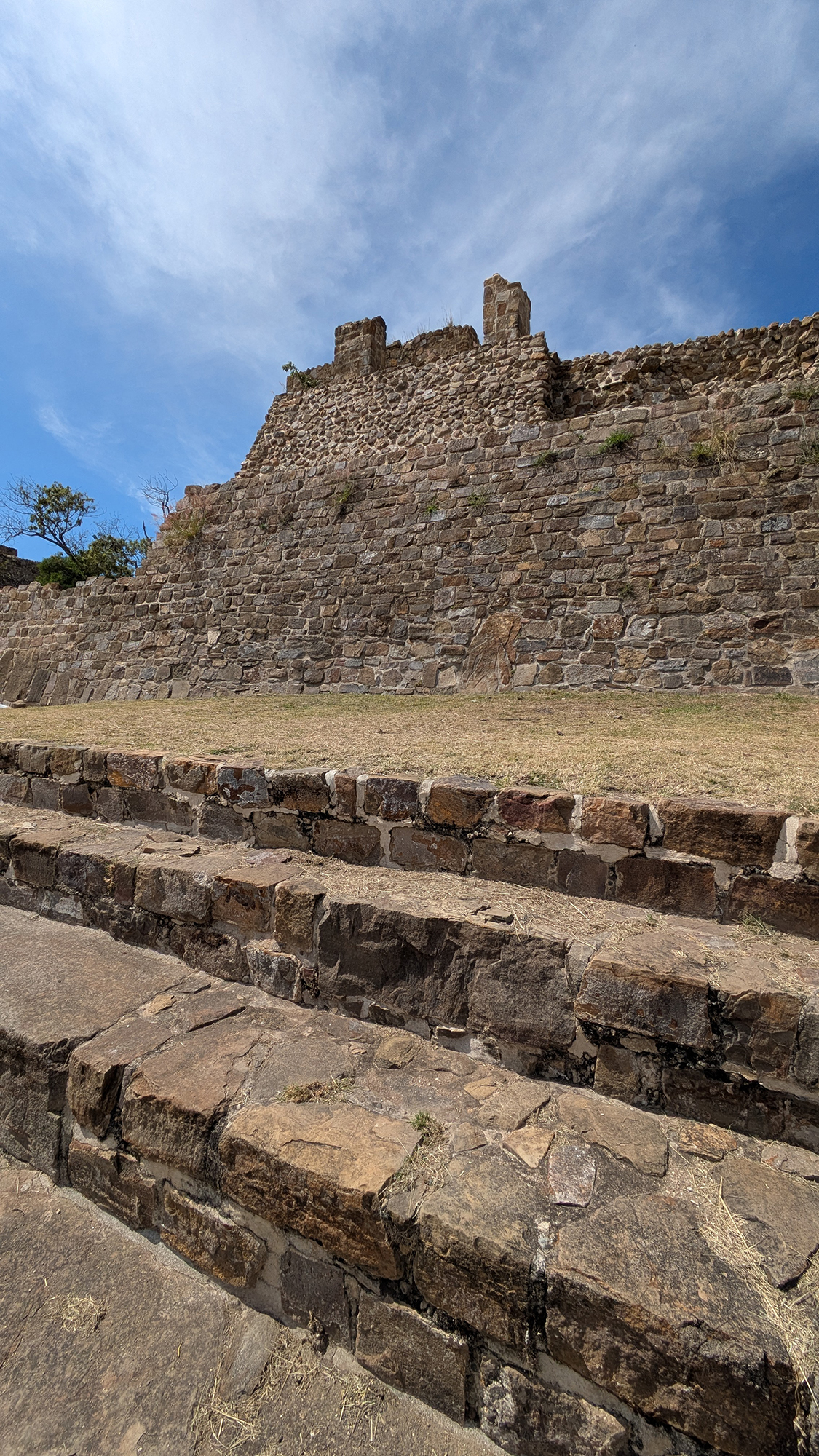
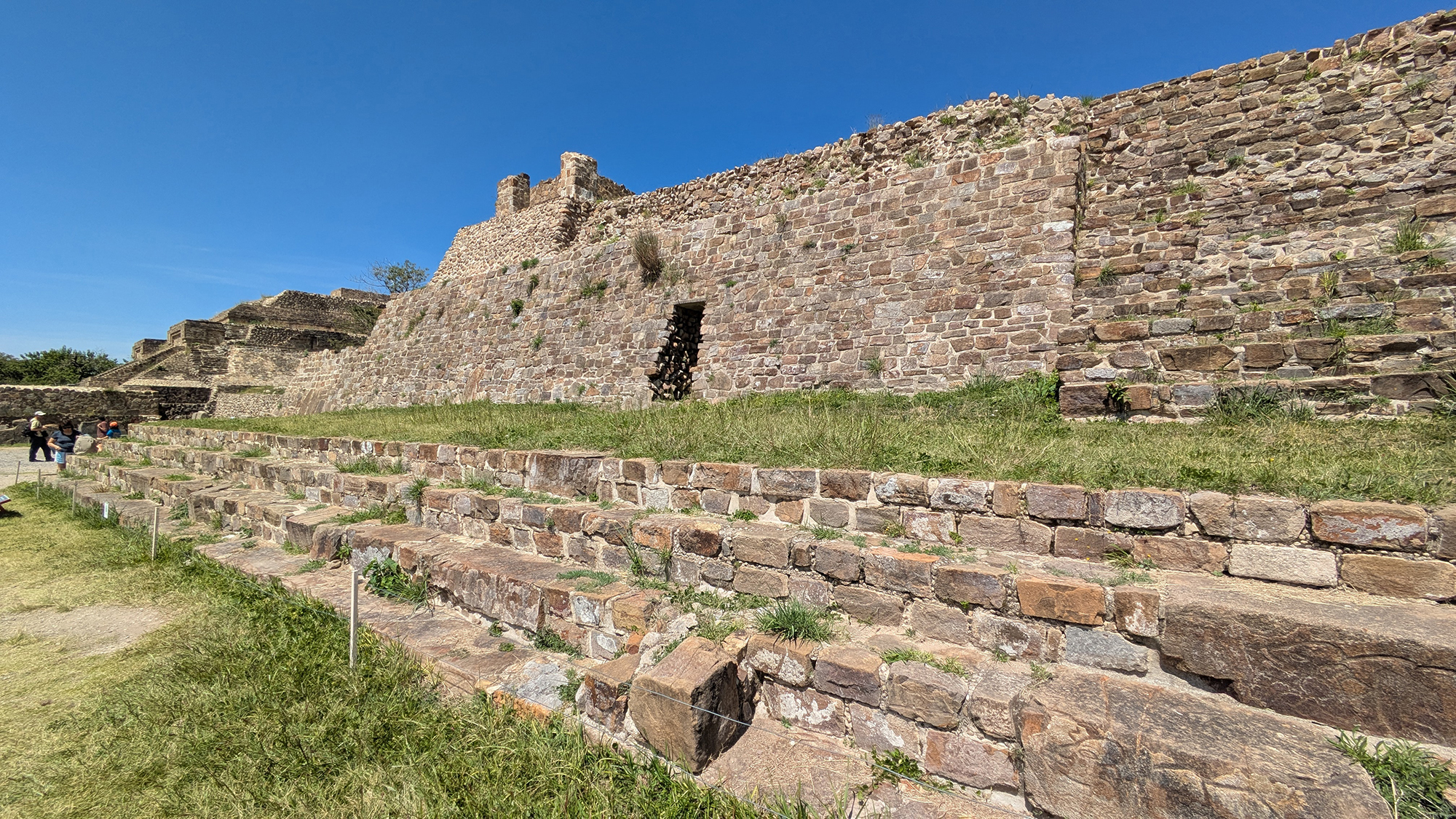
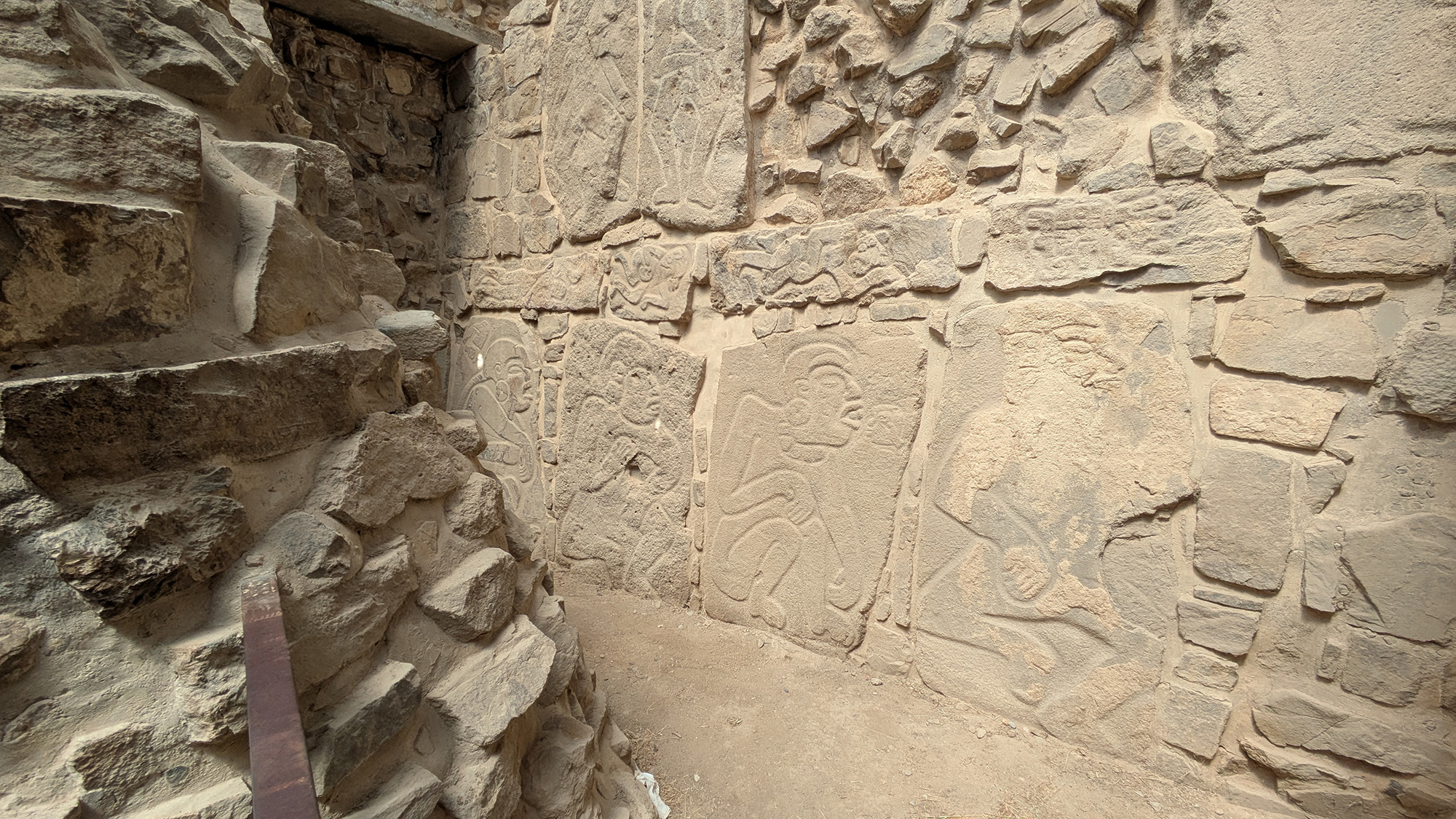
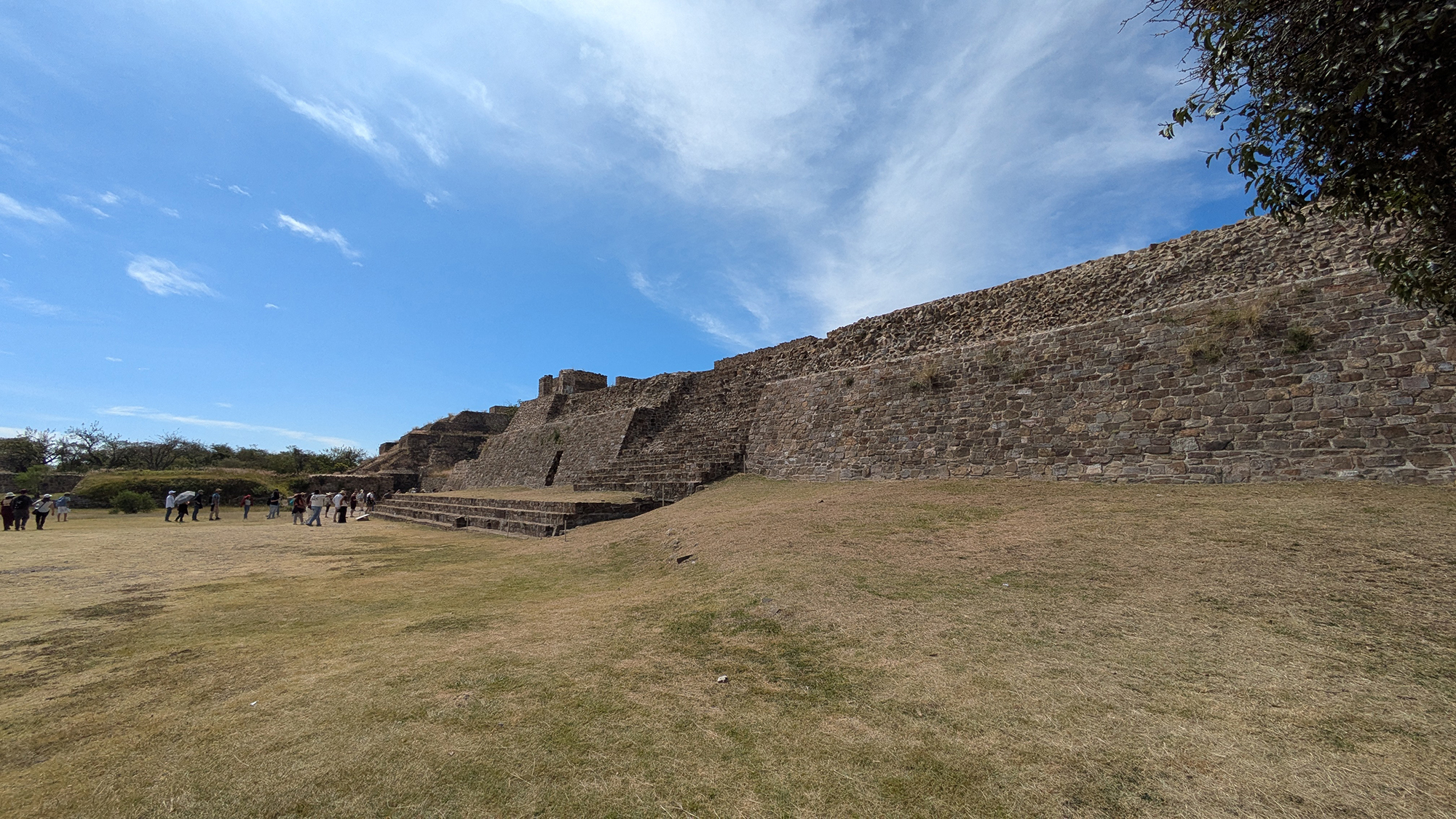
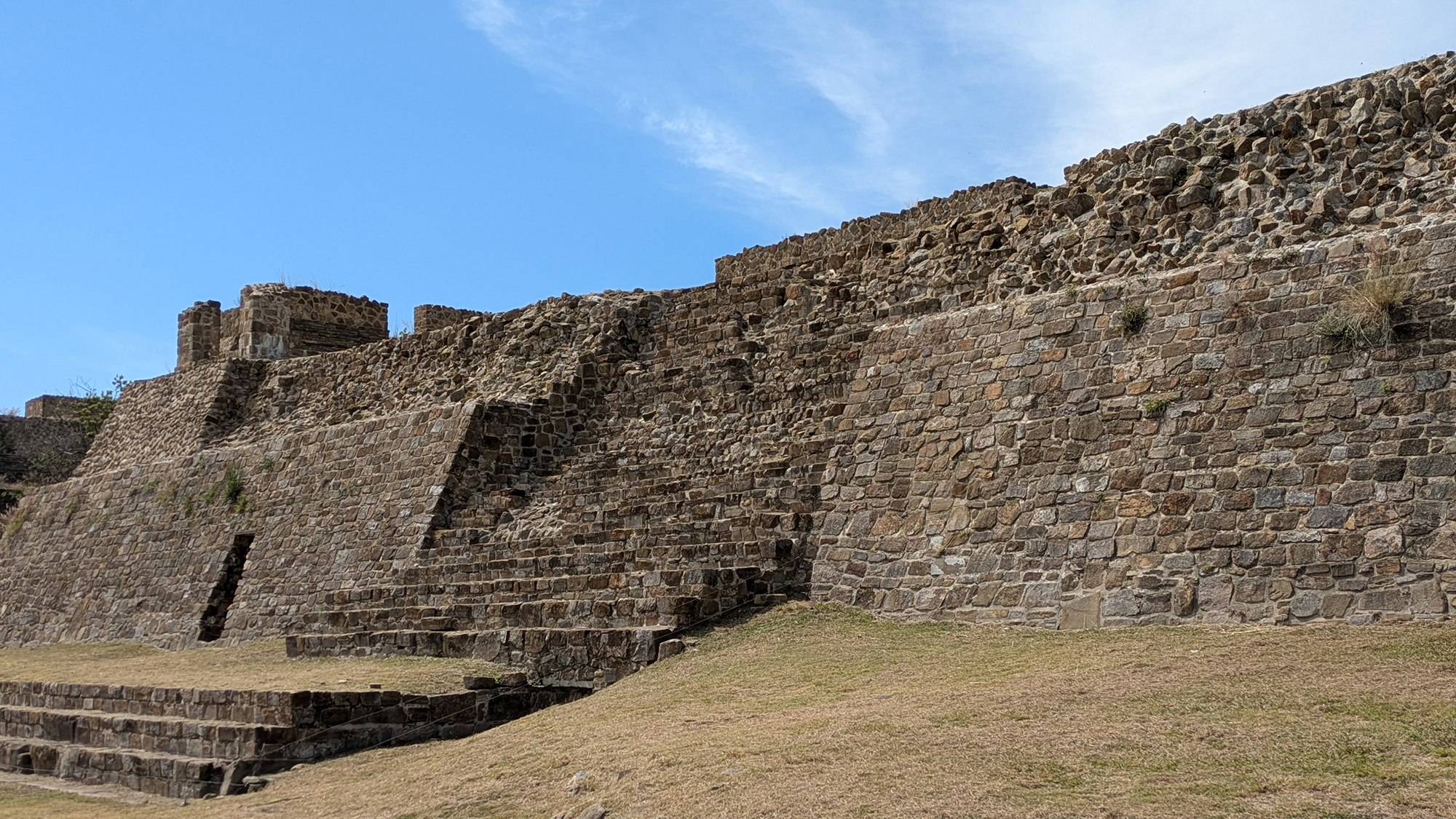
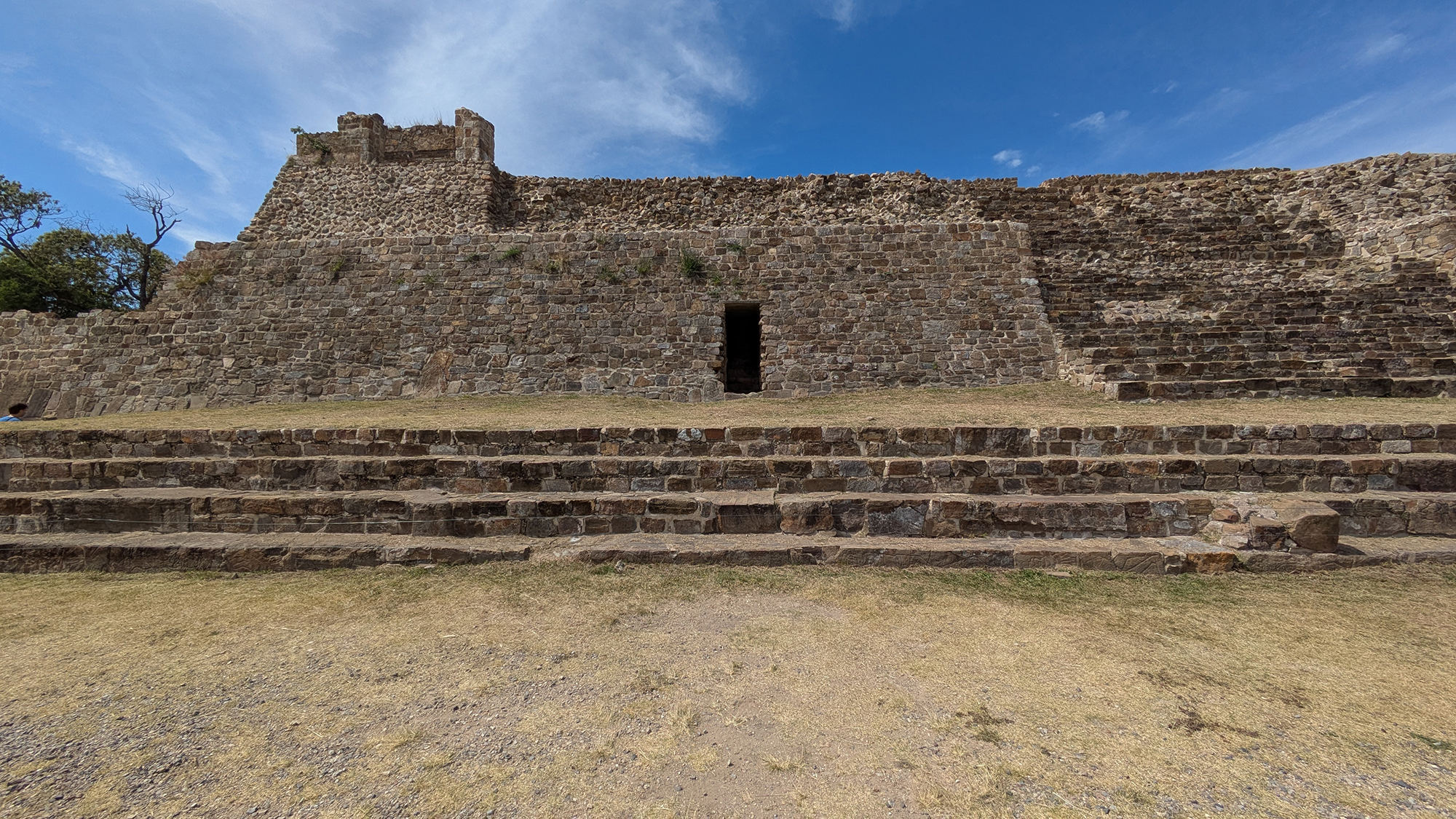
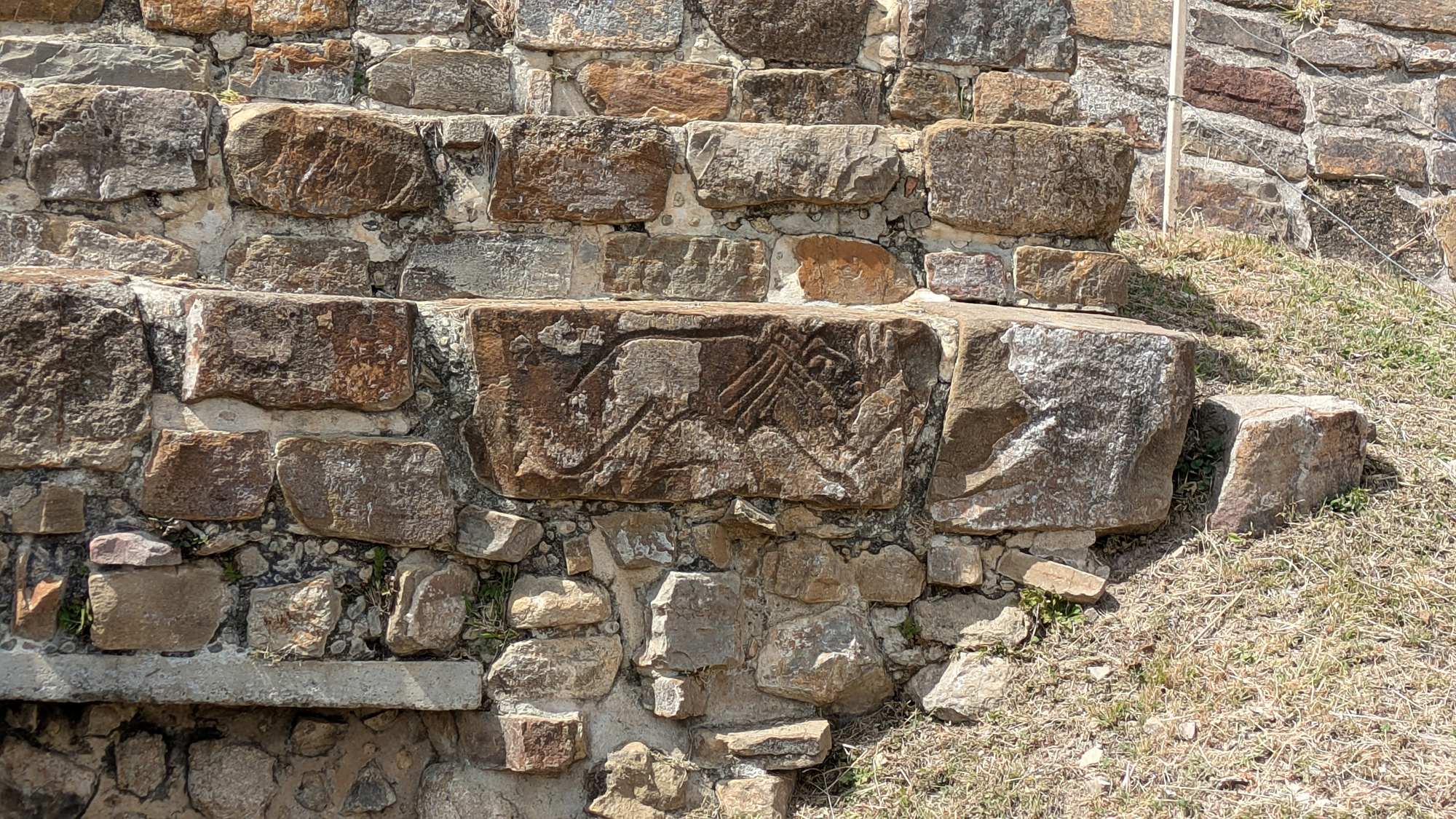
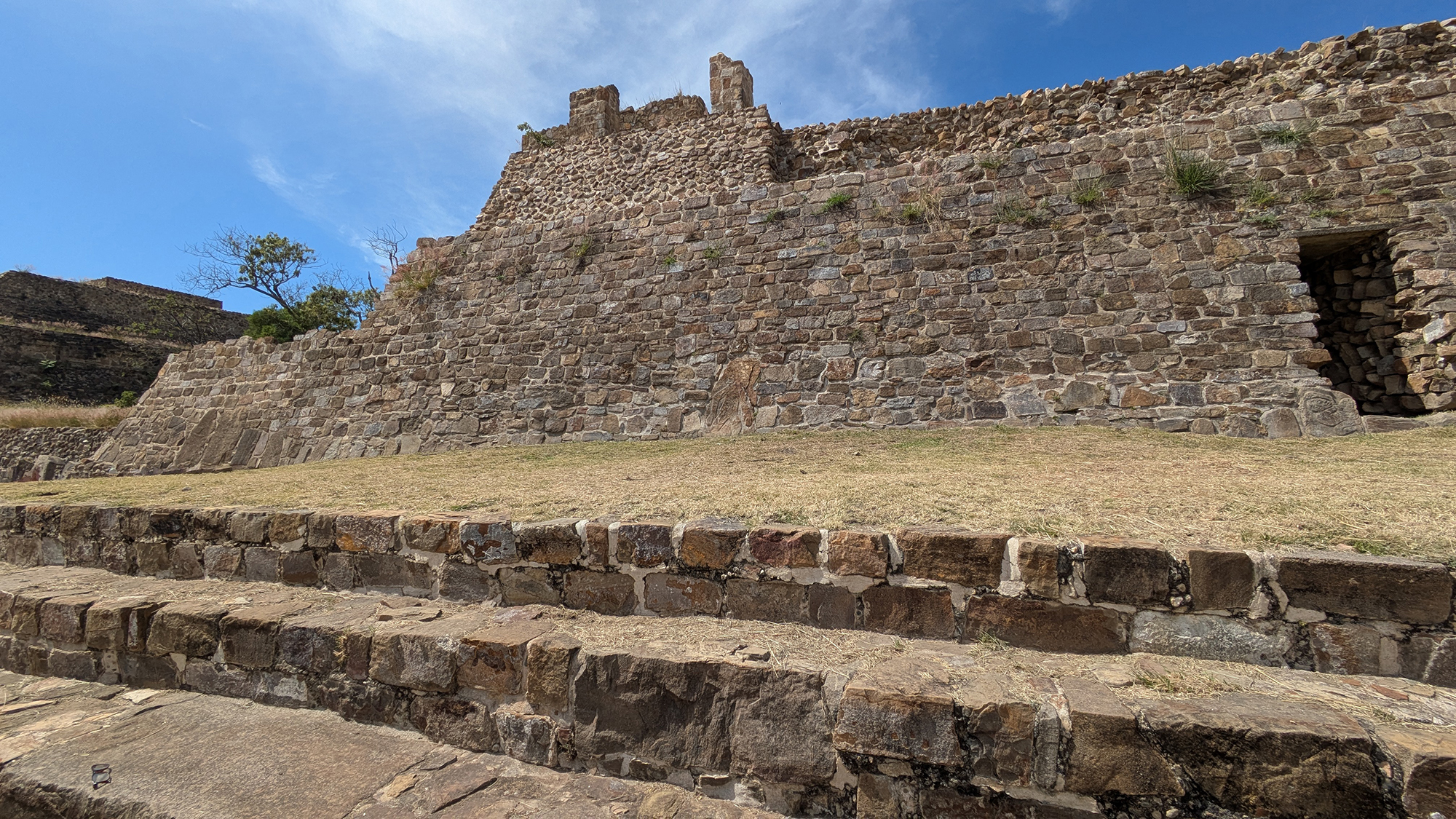
L号建筑(又称 Edificio L 或“舞者之屋”)位于蒙特阿尔班主广场的西南角,主要建于公元前500–100年间,即遗址的奠基阶段。作为瓦哈卡地区萨波特克文明最早的纪念性建筑之一,它包含一个埋入式地基平台,用于礼仪性展示,象征早期统治精英的政治与宗教权威。其重要性在于标志着区域城市化的开始,阶梯与护墙等结构展现了萨波特克人的工程水平。[1][3]
L号建筑建于蒙特阿尔班 I 期(公元前500–100年),体现了萨波特克早期建筑技术:以大块矩形石板(立石)垂直与水平交替砌筑包面,内部为碎石填充。建筑为阶梯式平台,墙体倾斜(talud样式),与附近K号土墩中6米高的例子类似。中央有台阶,两侧设栏杆。建筑经历多个阶段:最初为护墙,随后增建为金字塔式平台;后来被古典时期(公元前100–公元900年)的新建层覆盖,使原结构的南北部分被截短。表面覆盖灰泥,并与礼仪朝向保持一致。考古学分析表明,墙体位置的差异源于阶段性扩建,没有未经证实的推测。[1][5]
关于L号建筑的最早记录可追溯至1806年,由吉列尔莫·杜帕克斯(Guillermo Dupaix)撰写。1902年,莱奥波尔多·巴特雷斯(Leopoldo Batres)进行了早期发掘。1931–1949年,阿方索·卡索(Alfonso Caso)主持的蒙特阿尔班项目揭露了楼梯、分层平台与舞者浮雕墙,并通过陶片确立其属晚期蒙特阿尔班 I 期。1990年代,马库斯·温特(Marcus Winter)的“蒙特阿尔班特别项目”探索了北部隧道,揭示了建造序列与墓葬。希瑟·S·奥尔(Heather S. Orr)于2002年的研究通过探坑(深7.05米)与地层分析记录了L北区,并结合地球物理数据。现代研究运用放射性碳测定与陶器分期法,确认其在早期国家形成中的作用,但由于后期覆盖,确切尺寸仍存在争议。[1][6]
You’re already planning Oaxaca. Make Monte Albán easy to explore.
If Monte Albán is part of your trip, the 5-stop self-guided
audio tour gives you a clear route through the site, audio at
each stop and practical visitor information on your phone.
Set it up before you go and use it offline at the site.
★★★★★
“It was fantastic! I really appreciated how
comprehensive it was. It was an essential part
of our visit to Monte Albán.” Alicia, USA · Self-guided tour guest
One tour. Six parts of your visit covered.
1
5-Stop Route Follow the main highlights in order.
2
Audio at Each Stop Hear the story at the structure.
3
Tap Any Stop Jump directly to where you are.
4
Arrival Guide Timing, tickets, transport and what to expect.
5
Before-You-Go Checklist Know what to bring before you head up.
6
Works Offline No mobile service needed at the site.